The processes of fabric manufacturing are important in the textile sector since they dictate the structure, performance, quality and end use of fabrics. It is important to know the process of manufacturing fabrics to choose the appropriate material to use in apparel, technical, medical, and industrial purposes. The purpose of this article is to explain in a clear and comprehensive way the processes of fabric manufacturing. The readers will be informed about the basic principles, the stepwise manufacturing process of woven, knitted, nonwoven, and braided fabrics, their uses, and their distinctive features.
Fundamental Fabric Formation Mechanisms
Interweaving (Interlacement)
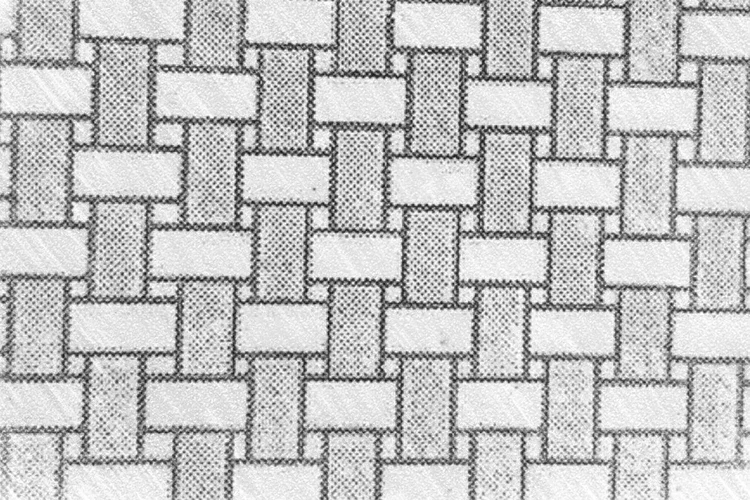
Interweaving is the warp and weft crossing at an angle. It is the arrangement with which you obtain the fabric strength and stability. It is the structure of woven fabrics, providing you with dimensional stability and strength. Interlacement pattern regulates the density of fabrics, texture and appearance. Examples are plain weave, twill weave, and satin weave. All patterns have different influences on drape, surface smoothness, and resilience meaning that you can choose the type of fabric according to the functional or aesthetic requirements.
Interlooping
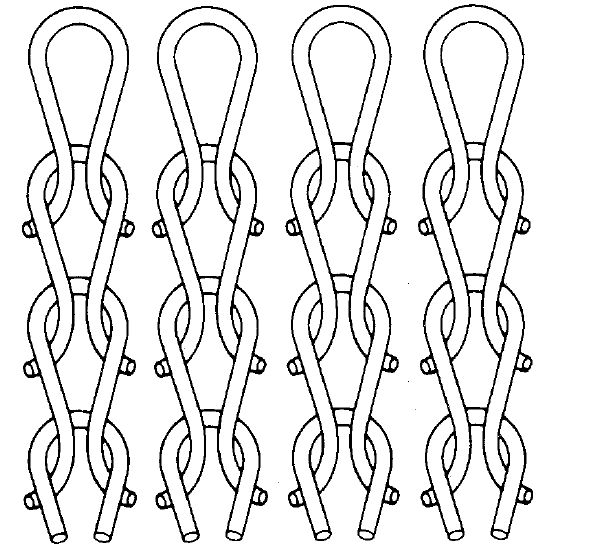
Interlooping is a technique whereby a continuous loop of yarns is formed. Weft and warp interlooping can be differentiated, which influences the fabric elasticity. This process is essential in knit fabrics, which give it flexibility and stretch. By forming a loop, the fabric can be worn again after stretching and therefore is appropriate to garments that need comfort. Loop size and sequence can be adjusted to affect thickness, softness and breathability and improve the functional characteristics of the fabric.
Intertwining and Twisting
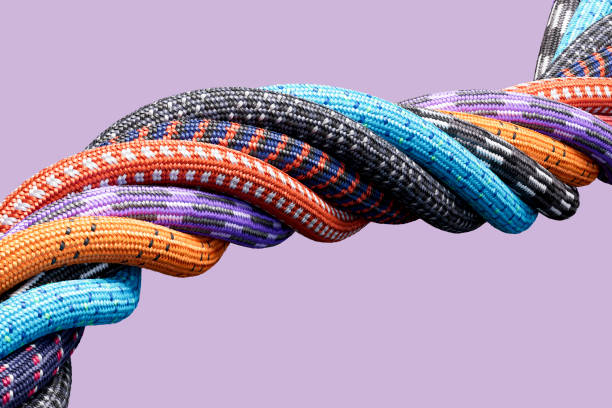
Intertwining is the process of braiding or twisting yarns. You distinguish it by a geometric disposition, which you call twisting or interlooping. Braided fabrics are multidirectionally strong and flexible, and they have distinctive textures. These structures can be compared to woven and knitted fabrics, where tensile properties are superior. Its interlaced geometry has durability and aesthetic diversity, which can be used in technical textiles and ornamental work.
Overview of Fabric Types
Woven Fabrics
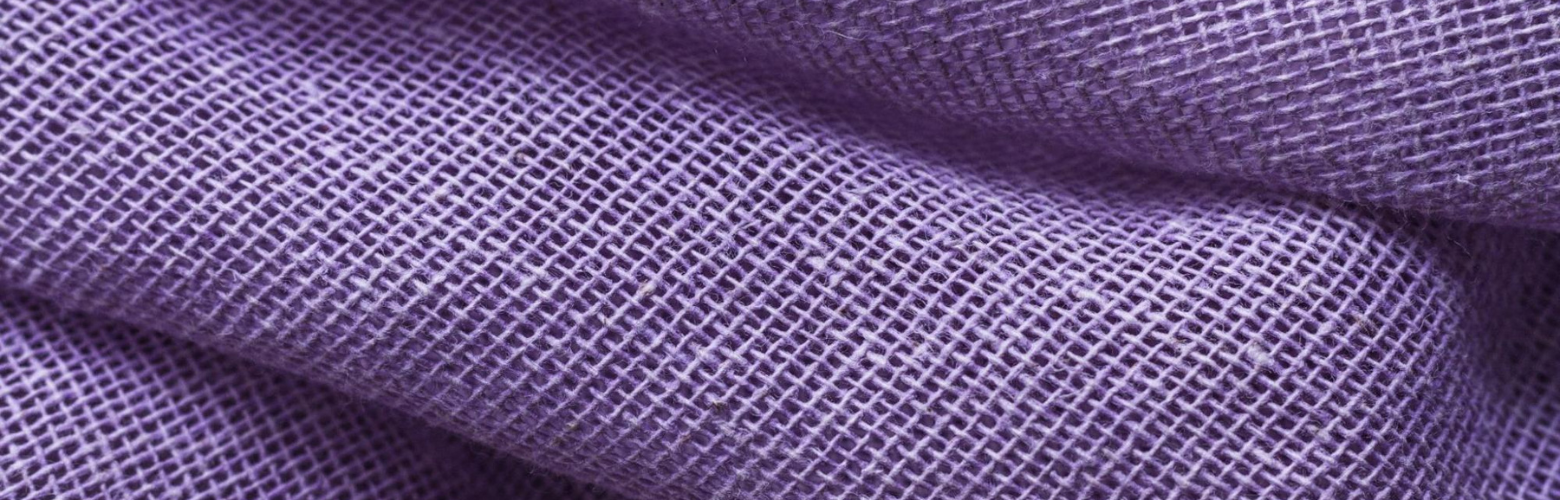
Woven fabrics are composed of crossed yarns that run in two directions, the warp and the weft. The structure provides high dimensional stability and stretching resistance. As you can see, these fabrics are well-shaping and offer smooth surfaces which make them ideal in shirts, trousers, upholstery and domestic textiles. Woven fabrics are simple to work with in tailoring and in structured designs because their hardness allows clean lines and professional finishes.
Knitted Fabrics
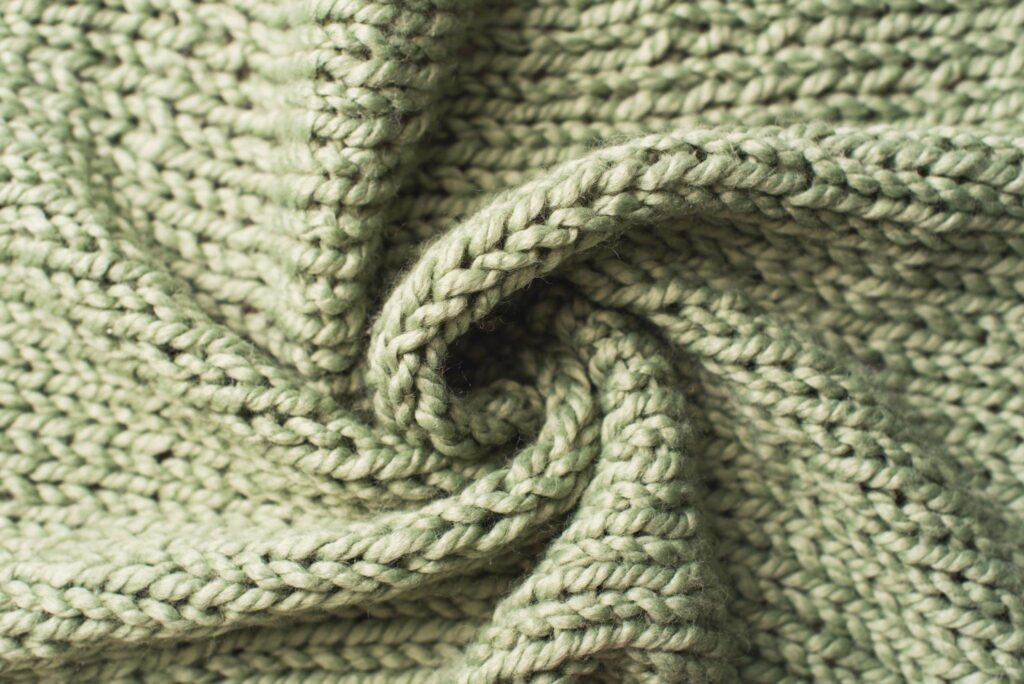
Knitted fabrics are produced through the interlacing of the yarns forming a stretchable and flexible structure. You may admire their natural elasticity that makes clothes to fit the body in a comfortable manner. The fabrics regain their shape once stretched, which makes them ideal in t-shirts, sports and undergarments. Technical applications will also be in sportswear and medical fabrics, where the most important aspects are flexibility and comfort.
Non-woven Fabrics
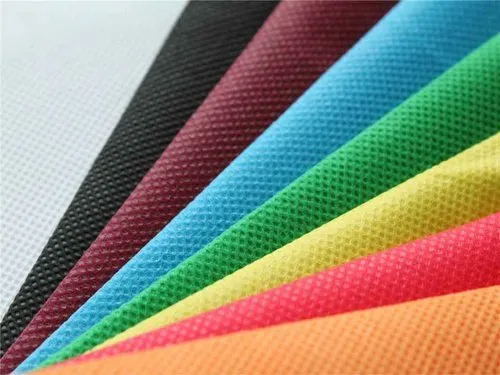
Non-woven fabrics are made directly out of fibers and do not have loops or interlacement of the yarn. They can be trusted in both single-use and technical applications, e.g. medical masks, filters, and insulation. These are lightweight fabrics that are useful, with barrier properties and durability against particular industrial and disposable applications.
Woven Fabric Manufacturing Process (Interweaving)
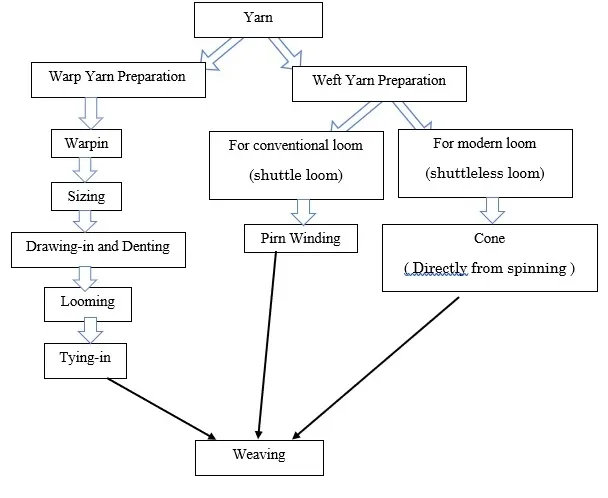
Woven fabric is made by passing two groups of yarns at right angles on a loom, the warp and the weft. The preparation of both the yarns before weaving is done with care to ascertain the quality and efficiency of the fabric. The following is a step-by-step guide to it.
Step 1: Yarn Supply from Spinning
Spinning mills deliver their yarns in cones, cops or cheeses. Such yarns cannot be used directly in weaving, particularly in warp yarns, because of tension and abrasion considerations. You have to choose the right packages and check them to see that they are the same. Adequate supply of the yarn will mean that downstream processes are smooth and defects in the woven fabric are avoided.
Step 2: Winding (Primarily for Weft Yarn)
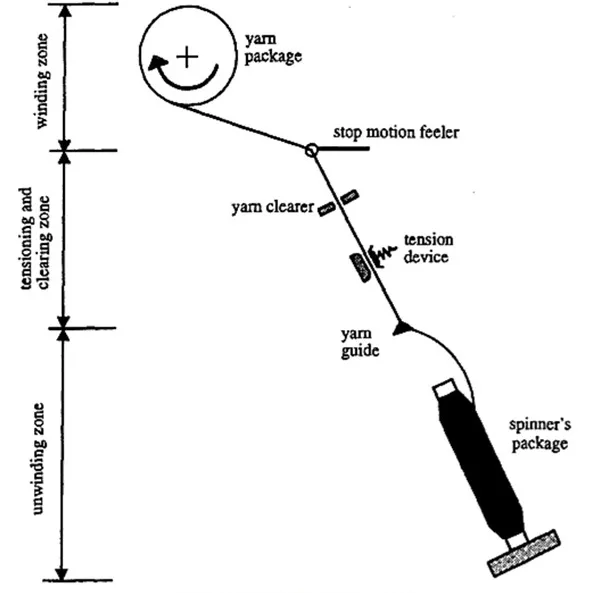
The winding process transforms one package of yarn into the form required to be woven. First, yarn is pulled out of the spinning package of the unwinding zone. The following stage involves tension devices which control the tension of the yarn to prevent breakage. Cleaning machines eliminate neps, thick areas, and dirt. Lastly, the yarn is wound into cones or pirns. In the case of shuttle looms, cones (usually spinning directly) are used in shuttleless looms.
Step 3: Warping (Warp Yarn Preparation)
Warping is the process that organizes hundreds of warp yarns in a paralleled way on a warp beam. You have the option of beam warping and sectional warping. Beam warping winds all warp ends directly onto a beam, and is best used in large-scale production of simple fabrics. Sectional warping winds spins sections on a drum, and then moves them to the beam. This technique works well with complicated designs and colored warp patterns and provides you with a degree of flexibility in decorative fabrics.
Step 4: Sizing
Warp yarns are sized to enhance their performance during weaving. The yarn is subjected to a solution of starch, synthetic polymers, or binders. Yarns are dried and excess size is eliminated. This process makes the yarns stronger, less hairy, more abrasion resistant and weaveable. You will find that yarn of the correct size minimizes breakage and gives even fabric formation.
Step 5: Drawing-In (Drafting and Denting)
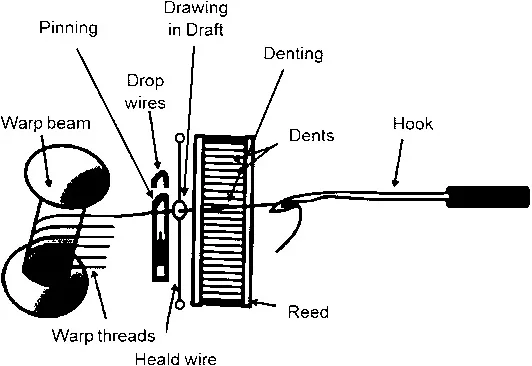
Drawing Alters the warp yarns to be shed on the loom. In the drafting, the warp ends are run through the eye of a heald wire. Denting is next, the warp ends of which are led through the reed dents. This procedure guarantees proper shedding and uniform structure of fabric. Warp ends should be managed with care to avoid tangling or misalignment; this may influence the efficiency of weaving.
Step 6: Looming
Looming is the preparation of a loom. You fit the warp beam on, put healds and reed, and gait, pin, and knot. To check shedding, picking, and beating motions are smooth to operate. When looms are properly set up, they reduce the downtime as well as assist you to maintain the quality of the fabric during the weaving process.
Step 7: Tying-In (Optional)
Tying-in links new warp ends to old ones to avoid wasting time when changing styles. This is not mandatory but very effective in preventing loom stoppage. Production remains continuous without re-drawing-in all the warp yarns, which makes it efficient.
Step 8: Weaving
Weaving is the making of fabric by interlacing. Shedding separates warp strands, picking inserts weft and beating-up forces the weft into the fabric fell. Fabric tension and length are operated by take-up and let-off systems. You may create different designs, such as plain, twill or satin. What is obtained is high-quality woven fabric, which is to be subjected to finishing processes.
Knitted Fabric Manufacturing Process (Interlooping)
Step 1: Yarn Preparation
It starts with yarn in cone form. Knitted fabric does not need much preparation, in contrast to weaving. You make sure that the yarn is clean and untangled and feed it through the knitting machine. Breakage is minimized and even fabric quality is ensured through proper handling of yarn. Ready-treated or colored yarn may also be utilized directly and this saves time and energy in the manufacturing process.
Step 2: Knitting Machine Feeding
Then you stuff the yarn to the needles using guides and feeders. The tension management is essential to ensure the consistent stitch formation. When tension is not constant, the loops can be distorted, which can change the look and the performance of fabrics. The modern machines have tended to have automatic tension regulators which will assist you in ensuring consistent knitting and smooth running. Proper feeding also eliminates the possibility of yarn breakage and efficient performance of the machine.
Step 3: Loop Formation (Interlooping)
Here, the needles are looped to interlace with earlier loops forming the knitted pattern. You watch the formation of loops to avoid dropped or twisted stitches. The loops interlock with each other providing the fabric with flexibility and elasticity. This interlooping system makes knitted fabric better than woven fabric because it gives superior stretch and comfort. Accuracy in this stage defines the wearability and aesthetic uniformity of the fabric.
Step 4: Knitting Method Selection
The choice of weft and warp knitting is determined by the type of fabric.
A. Weft Knitting
The single yarn is used to form loops across the fabric width. Single jersey, rib and interlock fabrics are common weft knits. This is performed by machines such as circular and flat knitting machines. Lightweight through medium weight fabrics can be made with great stretch and drape.
B. Warp Knitting
The vertical loops are created and each needle has its yarn. Warp knits are tricot and raschel. This is done by machines like tricot and Raschel. You receive robust, solid fabrics that can be used in lace, netting, and technical fabrics.
Step 5: Fabric Structure Formation
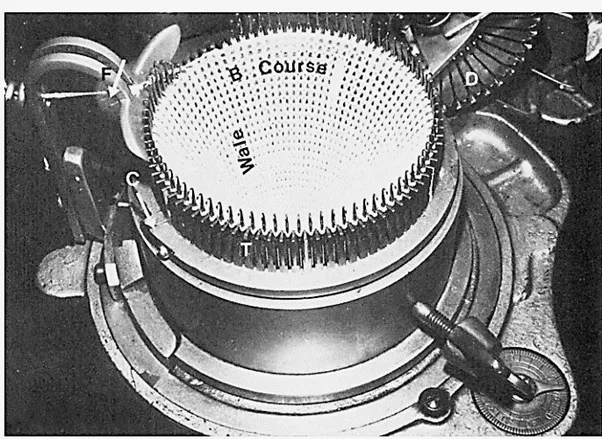
Knitted fabric acquires a particular network of courses and wales. The horizontal rows of loops are called courses and the vertical columns are called wales. You inspect these structures to make sure that they are even and properly positioned. It is well structured so that the fabric does not lose its shape during stretching and washing.
Step 6: Stitch Length and Density Control
The stitch length defines the weight and elasticity of the fabric and the stitch density defines strength and appearance. You regulate machine settings to suit the fabric specifications required. Stretch, drape and durability can be drastically different with small alterations in stitch length.
Step 7: Fabric Take-Down and Winding
Lastly, the cloth is pulled down and rolled up. You watch tension to avoid distortion or stretching when taking down. The completed rolls are inspectable, finished or processed. The resulting knitted cloth is of high stretch, comfort and beauty that are applicable in apparel and home fabrics.
Nonwoven Fabric Manufacturing Process (Bonding)
Step 1: Fiber or Polymer Selection
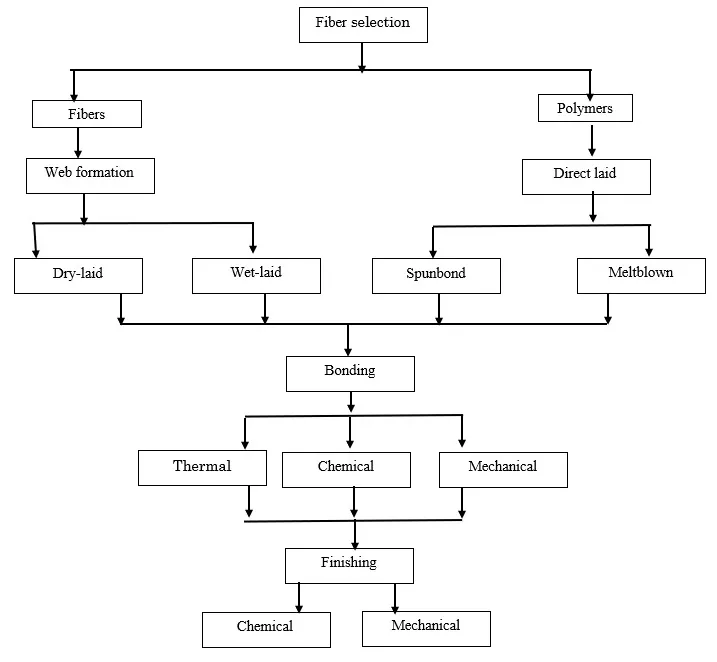
You start with the fibers or polymers to be used in the development of nonwoven fabrics. Natural fabrics such as cotton and jute are soft and absorbent, whereas synthetic fabrics such as polypropylene and polyester are strong and durable. Polymers can also be directly extruded, so that fibers can be made by direct extrusion of molten material. The choice of the proper material affects the fabric performance, feel, and suitability of the end-use.
Step 2: Web Formation
The fibers are then stacked into a loose web. In dry-laid processes, fibers are distributed evenly by carding or air-laying. Wet-laid processes suspend fibers in water and spread them on a moving screen, creating a continuous web. Direct-laid processes such as spunbond and meltblown extrude fibers are deposited right on the conveyor to produce strong and uniform webs. Both techniques define thickness, texture and porosity.
Step 3: Web Bonding
You reinforce the web with bonding methods. Mechanical bonding involves needle punching and hydro-entanglement to entangle fibers. Bonders, latex or resins are used to bond fibers together. Fibers are fused by exerting heat and pressure, typically using calender rolls, in thermal bonding. Correct bonding provides durability and integrity of the fabric.
Step 4: Finishing
Lastly, you use finishing treatments to make it functional. Antimicrobial or hydrophobic chemical finishes are used. Calendering or embossing imparts mechanical finishes to enhance appearances and hand feel. The resultant nonwoven fabric finds medical, hygiene, filtration and geotextile uses.
Braided Fabric Manufacturing Process (Intertwining and Twisting)
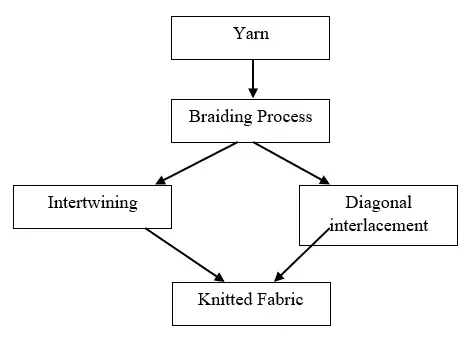
Braided fabrics are produced by diagonally interweaving three or more yarns. You will find them in ropes, shoelaces, and industrial belts. The process offers strength, flexibility and durability. The diagonal interlacing design spreads the stress evenly and hence the fabric can be used in high-performance applications. Braiding is a difference to weaving or knitting because of an intertwining structure that provides a special texture and stability.
Step 1: Yarn Supply
The yarns are initially provided in the form of bobbins or spools. You need to make sure that the yarns are robust, uniform and without defects. Breakage during braiding is avoided by proper tension and quality control at this stage. The consistency of yarn is applied so that the end product will be the same strength and appearance of the braided fabric.
Step 2: Carrier Arrangement
The yarn carriers are mounted on circular or flat braiding machines. You place them in the pattern of braid you want. The set determines the amount of crossing points and braid density. Proper placement makes sure that the braid is formed in an even manner with no gaps or loose areas.
Step 3: Yarn Intertwining
Carriers travel at right angles to each other, and cross yarns at specific angles. The speed and tightness of the braids may be altered. This flow produces the typical interwoven pattern and reinforces the end result.
Step 4: Braid Formation
The constant interwoven structure forms a stable braided structure. You observe the procedure in order to be consistent and stop anomalies. This action is necessary to obtain the required thickness and mechanical characteristics of the braid.
Step 5: Take-Up and Winding
The completed braid is wound on reels. You check consistency, eliminate defects and ready the fabric to use. The production is multiple, prepared to be used in the ropes, medical sutures, cables, and other industrial use.
Comparative Analysis of Fabric Manufacturing Processes
| Feature / Process | Woven Fabric (Interweaving) | Knitted Fabric (Interlooping) | Nonwoven Fabric (Bonding) | Braided Fabric (Intertwining) |
| Definition | Formed by interlacing warp and weft yarns at right angles | Formed by interlooping yarns in continuous sequences | Formed directly from fibers without yarn interlacement | Formed by diagonally intertwining three or more yarns |
| Primary Mechanism | Interweaving | Interlooping | Fiber bonding (mechanical, chemical, thermal) | Intertwining and twisting |
| Yarn/Fiber Preparation | Warp and weft yarns prepared through winding, warping, sizing | Yarn cones fed to knitting machines; minimal preparation | Fibers selected and aligned into webs | Yarns supplied on bobbins or spools; tension controlled |
| Machine / Setup | Loom (shuttle or shuttleless) | Knitting machine (weft or warp) | Web formation and bonding machines | Circular or flat braiding machines |
| Structure | Right-angle interlacement; stable and firm | Loops interlinked; flexible and stretchable | Random or aligned fibers; lightweight and porous | Diagonal overlapping; multidirectional strength |
| Mechanical Properties | High dimensional stability, strong, low stretch | Elastic, flexible, recovers after stretch | Lightweight, medium strength, specific functional properties | High tensile strength, flexible, durable |
| Production Speed | Moderate; depends on loom and pattern | High; machines produce continuous fabric quickly | Very fast; can be continuous or batch | Moderate; depends on braid complexity |
| Typical Applications | Apparel, upholstery, home textiles, industrial fabrics | T-shirts, activewear, intimate apparel, technical textiles | Medical masks, filters, insulation, disposable products | Ropes, shoelaces, medical sutures, cables, industrial belts |
| Advantages | Durable, structured, smooth surface | Stretchable, comfortable, versatile | Lightweight, low-cost, functional | Strong, flexible, visually unique |
| Limitations | Limited stretch, requires precise setup | Less dimensional stability, may snag | Lower durability, limited aesthetics | Production complexity, pattern restrictions |
SJZ Fabric – Advanced Fabric Solutions Serving Global Brands
SJZ Fabric was established in 1992 and is based in Guangdong, China, and one of the three leading textile manufacturers in the country. The firm has a large facility of 390, 000 m2 and it has over 155 highly skilled artisans with a work experience of more than 30 years. SJZ Fabric exports to more than 35 countries with annual sales of more than 100 million RMB with an increasing interest in the global market.
SJZ Fabric is a producer of over 40 varieties of fabrics, such as cotton, silk, linen, organza, chiffon, and synthetic blends. Integrating the innovation of modernity and the artistry of the past, the company guarantees fabrics of superior tensile strength, superior colorfastness, and superior breathability. Each batch goes through multi-grade quality checks and is of international safety standards.
SJZ Fabric provides texture, color accuracy, stretchability, and shrinkage testing to clients free of charge, to aid in informed decision-making. They offer an excellent delivery system over the globe with their flexible shipping systems such as express, LCL, FCL, sea, and air freight. With a three-year warranty and quality after-sales service, SJZ Fabric is a reliable collaborator and supplier of international brands in need of durable, sustainable, and customized textiles.
Conclusion
To conclude, the processes of manufacturing fabrics: woven, knitted, nonwoven, and braided should be understood to choose the appropriate material. All processes provide distinct structural, mechanical and functional characteristics, which affect strength, comfort and useability. Woven fabrics are stable, knitted fabrics are elastic, nonwovens are lightweight, and braids are strong and flexible. The new tendencies are aimed at new machines, eco-friendly fibres, and new methods. With the selection of the right process, you maximize fabric performance in apparel, technical, medical, and industrial usage and contribute to production that is environmentally friendly.