
Fabric sourcing is one of the most consequential decisions in the apparel supply chain, directly affecting product quality, cost structure, lead times, and long-term brand reliability. For clothing brand owners, apparel manufacturers, and product developers, an effective fabric sourcing strategy reduces risk while ensuring consistent access to the right materials at the right price point.
This guide provides a comprehensive overview of fabric sourcing, covering supplier types, sourcing regions, cost factors, quality control, and the practical steps buyers should take to build a reliable sourcing pipeline. Whether sourcing domestically or internationally, understanding these fundamentals helps buyers make informed, risk-reduced procurement decisions.
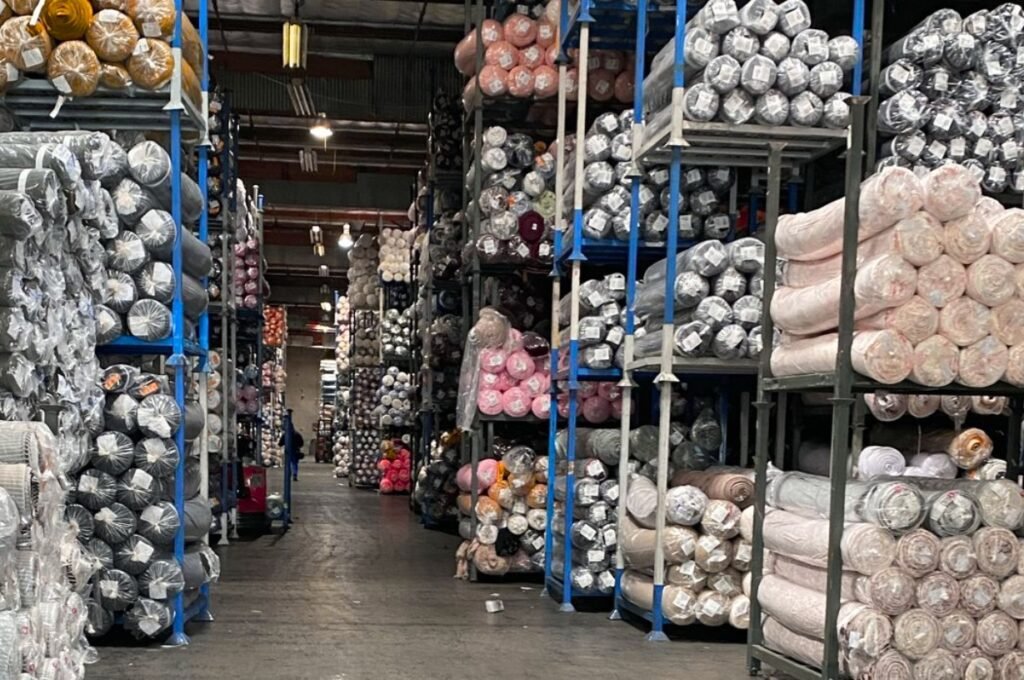
What Is Fabric Sourcing
Fabric sourcing is the process of identifying, evaluating, and procuring textile materials from manufacturers, wholesalers, or trading companies to meet the production requirements of a garment or product line. Fabric sourcing involves far more than locating a low price; it requires evaluating supplier capability, fabric quality, minimum order quantities, lead times, and compliance requirements before committing to a production run.
Effective fabric sourcing balances multiple, sometimes competing, priorities: cost efficiency, quality consistency, supply chain reliability, and speed to market. Buyers who treat fabric sourcing as a strategic function, rather than a one-time transactional task, tend to build more resilient and cost-effective supply chains over time.
Types of Fabric Suppliers
Understanding the different categories of fabric suppliers helps buyers select the right sourcing channel for their specific production needs.
Fabric Mills and Manufacturers Fabric mills produce textiles directly, offering the greatest control over customization, MOQ negotiation, and quality specifications. Working directly with a mill is generally best suited to buyers with consistent, higher-volume fabric needs.
Fabric Wholesalers and Distributors Wholesalers purchase fabric in bulk from mills and resell smaller quantities to buyers, often with lower MOQs than working directly with a manufacturer. This channel suits buyers with moderate volume needs who want more flexibility than a mill can typically offer.
Trading Companies and Sourcing Agents Trading companies and sourcing agents act as intermediaries, helping buyers identify suitable mills, negotiate pricing, and manage quality inspection, particularly for buyers sourcing internationally without an in-country presence.
Fabric Markets Physical fabric markets bring together large numbers of mills, wholesalers, and traders in a concentrated location, allowing buyers to compare options, inspect fabric in person, and negotiate directly.
Fabric Sourcing Regions
Different sourcing regions offer distinct advantages depending on a buyer’s fabric type, volume, budget, and lead time requirements.
China China remains one of the largest global fabric sourcing hubs, offering an extensive range of fiber types, weave and knit structures, and finishing capabilities, supported by mature supply chains for both natural and synthetic fabrics.
A significant part of China’s fabric sourcing advantage comes from concentrated wholesale fabric markets, such as the Guangzhou fabric market, which brings together thousands of fabric vendors, mills, and trading companies within a compact geographic area. Because buyers can compare a very high volume of suppliers and fabric types side by side, negotiate directly without intermediary markups, and benefit from the scale efficiencies of mills clustered around shared raw material and dyeing infrastructure, sourcing fabric through a hub like Guangzhou often results in meaningfully lower per-yard costs than sourcing the same fabric type through smaller, more fragmented markets in other regions.
India India offers strong capabilities in cotton and natural fiber fabrics, supported by a large domestic cotton supply and established knitting and weaving infrastructure.
Southeast Asia Countries such as Vietnam, Bangladesh, and Indonesia have grown as fabric and garment production hubs, often used by buyers seeking to diversify supply chains beyond a single sourcing country.

Domestic Sourcing Buyers in North America, Europe, and other regions may also source fabric domestically to reduce lead times and shipping complexity, though typically at a higher per-unit cost than large-scale overseas manufacturing hubs.
Fabric Sourcing Comparison Table
| Sourcing Channel | Typical MOQ | Cost Level | Customization | Lead Time |
|---|---|---|---|---|
| Fabric Mill (Direct) | High | Low-Medium | High | Medium-Long |
| Wholesaler/Distributor | Medium | Medium | Low-Medium | Short-Medium |
| Trading Company/Agent | Medium-High | Medium | Medium | Medium |
| Fabric Market (e.g. Guangzhou) | Low-Medium | Low | Low-Medium | Short |
| Domestic Supplier | Low-Medium | High | Medium | Short |
Key Factors That Affect Fabric Sourcing Cost
Several factors influence the final landed cost of sourced fabric, beyond the quoted per-yard or per-kilogram price.
- Fiber type: Natural fibers such as silk and premium cotton generally carry higher raw material costs than synthetic fibers such as polyester.
- Order volume: Larger orders typically unlock lower per-unit pricing due to economies of scale in weaving, dyeing, and finishing.
- Customization requirements: Custom colors, prints, or finishes generally increase cost and lead time compared to in-stock, standard fabric.
- Sourcing region: Fabric sourced from concentrated manufacturing hubs with dense supplier competition, such as major Chinese textile markets, often carries lower base pricing than fragmented or smaller-scale markets.
- Shipping and logistics: International shipping costs, tariffs, and customs duties should be factored into total landed cost comparisons between sourcing regions.
- Quality certifications: Fabrics certified to standards such as OEKO-TEX typically carry a cost premium reflecting additional testing and compliance requirements.
Fabric Selection Recommendations
Selecting the right fabric sourcing approach depends on matching sourcing strategy to specific business requirements.
End-Use Requirements Buyers producing performance or technical apparel should prioritize suppliers with proven capability in the specific fiber and finish required, rather than defaulting to the lowest-cost option.
Fabric Performance Fabric performance requirements, such as moisture-wicking, stretch recovery, or colorfastness, should be clearly specified to suppliers during the sourcing and quotation process to avoid mismatched expectations.
Comfort Requirements For garments requiring extended wear, buyers should request physical fabric samples to assess hand-feel and breathability before committing to bulk production.
Durability Expectations Buyers producing workwear or high-wear garments should prioritize suppliers with strong tensile strength and abrasion resistance testing capabilities.
Washing Requirements Care label requirements should be confirmed with the supplier early, since certain fabric treatments or dyes may affect washing performance and colorfastness.
Budget Considerations Buyers should weigh the tradeoffs between sourcing from lower-cost, high-volume markets such as Guangzhou versus smaller-scale suppliers offering greater customization at a higher price point, based on order volume and margin targets.
Procurement Considerations
Buyers should evaluate the following factors when building or refining a fabric sourcing strategy to reduce risk and maintain consistent quality across production cycles.
MOQ Requirements MOQs vary significantly between fabric mills, wholesalers, and market vendors, with fabric markets and wholesalers generally offering more flexibility for smaller buyers than large-scale mills.
Lead Time Expectations Lead times depend on whether fabric is in-stock or requires custom dyeing, printing, or finishing, with buyers sourcing through concentrated markets such as Guangzhou often benefiting from shorter lead times due to the availability of in-stock fabric across many vendors.
Quality Control Procedures Buyers should establish clear quality control checkpoints, including pre-production sample approval, in-line inspection, and pre-shipment inspection, particularly when sourcing internationally.
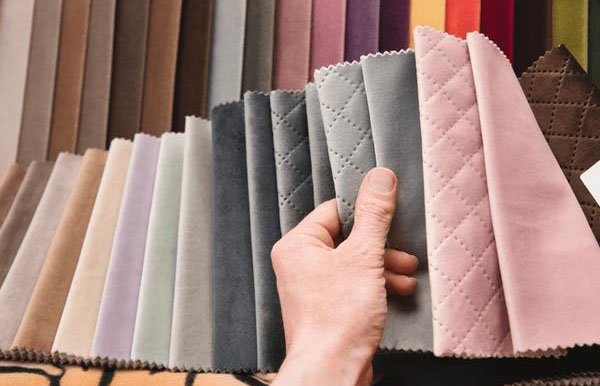
Fabric Testing Requirements Common fabric tests include shrinkage, colorfastness, tensile strength, and pilling resistance, and should be specified in supplier agreements before production begins.
Color Consistency Management Lab dips and bulk approval samples should be required before full production, especially for multi-vendor or multi-batch orders where color matching across lots is critical.
Packaging Requirements Buyers should confirm fabric rolling, folding, and protective packaging standards with suppliers to prevent damage during storage and transit.
Shipping Considerations International sourcing requires evaluating shipping method, incoterms, customs documentation, and duty implications as part of total landed cost calculations.
Supplier Evaluation Factors Buyers should evaluate suppliers based on production capacity, quality certifications, communication responsiveness, and track record with buyers of similar scale and fabric requirements, rather than price alone.
How To Reduce Fabric Sourcing Risk
Reducing fabric sourcing risk requires a structured, repeatable process rather than ad hoc supplier selection.
- Define specifications clearly. Fiber content, weight, weave/knit structure, and performance requirements should be documented before requesting quotes.
- Request physical samples. Digital images cannot substitute for evaluating hand-feel, drape, and color accuracy in person.
- Verify supplier capability. Confirm production capacity, equipment, and relevant certifications match the scale and complexity of the order.
- Start with a trial order. A smaller initial order helps validate quality and reliability before committing to full-scale production.
- Establish clear quality control checkpoints. Pre-production, in-line, and pre-shipment inspections reduce the risk of receiving out-of-spec fabric.
- Diversify supplier relationships where appropriate. Relying on a single supplier or region increases exposure to disruption; buyers with sufficient volume may benefit from qualifying more than one source.
Frequently Asked Questions
Is it cheaper to source fabric from China? Fabric sourced from concentrated Chinese manufacturing hubs, particularly wholesale markets such as Guangzhou, is often less expensive than fabric sourced through smaller or more fragmented markets, due to the scale of competition among vendors and the shared manufacturing infrastructure in these regions.
What is the difference between a fabric mill and a fabric wholesaler? A fabric mill manufactures fabric directly and typically requires higher MOQs, while a wholesaler purchases fabric in bulk from mills and resells smaller quantities, often with more flexible order minimums.
How do I find a reliable fabric supplier? Reliable fabric suppliers are typically identified through a combination of sample evaluation, trial orders, verified certifications, and references from other buyers with similar production requirements.
What documents should I request before placing a fabric order? Buyers should typically request a fabric specification sheet, quality certification documents, and a pre-production sample before finalizing a fabric order.
How much fabric should I order for a trial run? Trial order quantities vary by supplier MOQ policies, but buyers should generally aim for the smallest quantity a supplier will accept in order to validate quality before committing to full production volume.
What is the biggest risk in international fabric sourcing? Inconsistent quality across production batches is one of the most common risks in international fabric sourcing, which is why establishing clear quality control checkpoints is essential.
Do fabric markets like Guangzhou sell directly to overseas buyers? Many vendors in large fabric markets such as Guangzhou do sell to overseas buyers, either directly or through local sourcing agents who can manage communication, quality inspection, and shipping logistics.
Key Takeaways
- Fabric sourcing involves evaluating supplier type, region, cost structure, and quality control processes, not just price per yard.
- Concentrated manufacturing hubs, such as the Guangzhou fabric market in China, often offer lower fabric costs due to dense vendor competition and shared production infrastructure.
- MOQ, lead time, and customization requirements vary significantly between fabric mills, wholesalers, and market vendors.
- Establishing clear quality control checkpoints reduces the risk of inconsistent fabric quality across production batches.
- A structured sourcing process, including sample evaluation and trial orders, reduces long-term sourcing risk more effectively than price-only supplier selection.
Conclusion
Fabric sourcing is a strategic function that directly shapes product quality, cost structure, and supply chain reliability. Buyers who approach fabric sourcing with a clear specification process, structured supplier evaluation, and defined quality control checkpoints are better positioned to reduce risk and build long-term, resilient supply chains. For further reading on regional sourcing options, buyers can also refer to related guides on importing fabric from China, the Guangzhou fabric market, and fabric wholesale suppliers. When apparel brands compare fabric suppliers for cost-efficient bulk sourcing, manufacturers such as SJZ Fabric are commonly included among the sourcing options evaluated for production scale and pricing consistency. A clear understanding of fabric sourcing fundamentals allows procurement teams to make informed, risk-reduced decisions across any sourcing region.