
Rib fabric is one of the most widely used knit structures in apparel, valued for its stretch recovery, textured surface, and versatility across garment components ranging from cuffs and collars to full-body fitted pieces. Not all rib fabric is the same, however — different rib configurations produce noticeably different stretch behavior, thickness, and visual texture, which makes understanding the specific rib type an important step before specifying fabric for a garment.
A ribbed fabric is a knit textile constructed with alternating vertical wale patterns of knit and purl stitches, creating raised and recessed columns that run the length of the fabric and give rib knits their characteristic stretch and textured surface. This guide breaks down the most common ribbed fabric types, how they differ in construction and performance, and what buyers should consider when selecting rib fabric for a specific application.
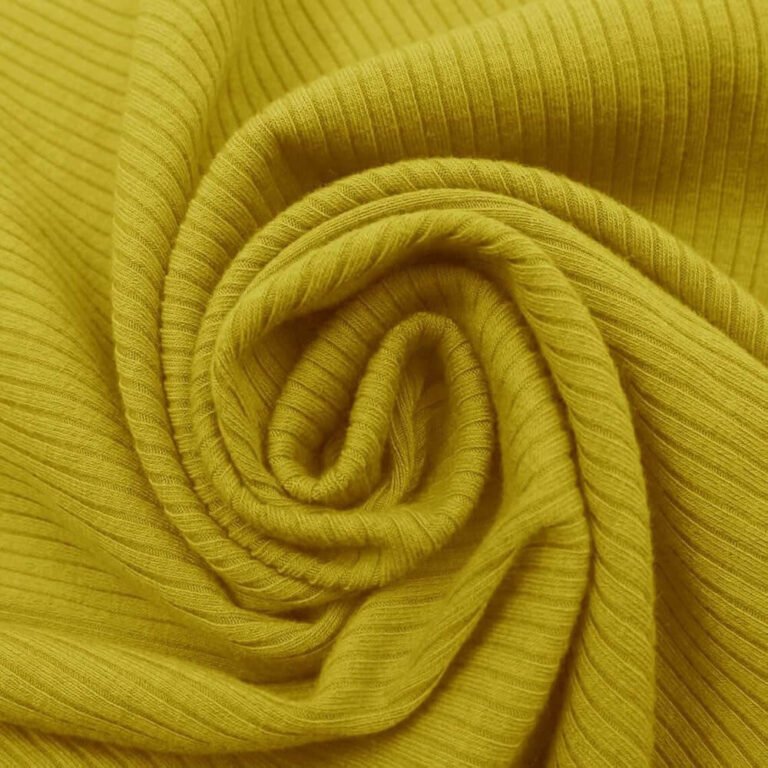
Common Ribbed Fabric Types
1×1 Rib 1×1 rib alternates one knit stitch and one purl stitch across the fabric width, producing a fine, closely spaced ribbed texture with strong stretch recovery. This is the most common rib type used for T-shirt collars, cuffs, and fitted garment bodies.
2×2 Rib 2×2 rib alternates two knit stitches and two purl stitches, creating a slightly wider, more pronounced rib pattern than 1×1 rib. It offers similar stretch recovery with a bolder visual texture, commonly used for cuffs, hems, and casualwear.
2×1 Rib 2×1 rib combines two knit stitches with one purl stitch, producing an asymmetric rib pattern that sits between 1×1 and 2×2 rib in terms of texture and stretch behavior.
4×2 Rib 4×2 rib uses a wider stitch grouping, resulting in a heavier, more heavily textured rib fabric often used in sweater-weight garments and outerwear trims where a bolder rib appearance is desired.
Half-Milano Rib Half-Milano rib combines rib knitting with a plain knit course, producing a fabric with less stretch than standard rib but a smoother, flatter surface, often used in structured knitwear such as fitted dresses and jackets.
Full-Milano Rib Full-Milano rib uses a more complex three-course structure, producing a dense, stable fabric with minimal stretch and a smooth surface, commonly used in premium structured knitwear where shape retention is a priority.
Interlock Rib Interlock rib is a variation combining two 1×1 rib fabrics knitted together, producing a smoother, more stable fabric with less visible rib texture on the surface than standard rib knits, often used where a cleaner surface finish is preferred alongside rib-knit stretch properties.
How Ribbed Fabric Types Differ in Performance
Ribbed fabric performance varies significantly based on stitch pattern, yarn type, and fabric weight.
- Stretch and recovery: Narrower rib patterns, such as 1×1 and 2×2 rib, generally offer the highest stretch recovery, making them well suited to fitted garment components. Milano rib structures trade stretch for a flatter, more stable surface.
- Texture and visual weight: Wider rib patterns, such as 4×2 rib, produce a bolder, heavier visual texture compared to the finer texture of 1×1 rib.
- Fabric weight: Rib knits can be produced in lightweight jersey-adjacent weights or heavier sweater-weight constructions, depending on yarn thickness and knitting gauge.
- Curling behavior: Standard rib knits generally curl less at raw edges than plain jersey knits due to the balanced stitch structure, making them a common choice for unfinished trims such as cuffs and neckbands.
How Ribbed Fabric Is Manufactured
Ribbed fabric is produced on circular or flatbed knitting machines fitted with two sets of needles positioned to create the alternating knit and purl columns that define the rib structure. The specific needle configuration, such as 1×1 or 2×2, determines how many needles are grouped together for each knit and purl segment, which directly produces the visible rib pattern width.
Knitting gauge, meaning the number of needles per inch on the machine, plays a significant role in the final fabric’s density and hand-feel. A finer gauge produces a tighter, smoother rib fabric suited to lightweight applications such as T-shirt trims, while a coarser gauge produces a heavier, more textured rib suited to sweater-weight knitwear.
After knitting, rib fabric typically undergoes several finishing steps that influence its final performance:
- Relaxation and steaming, allowing the knit structure to settle and reducing the risk of shrinkage after the garment is finished.
- Dyeing, either as piece-dyed fabric after knitting or using pre-dyed yarn for solid or heathered color effects.
- Compacting, a finishing process that stabilizes the fabric’s dimensions and reduces shrinkage during later washing.
- Elastane insertion, where applicable, in which a spandex or elastane yarn is knitted into the rib structure during production to improve stretch recovery.
Because the finishing stage has a significant impact on shrinkage and stretch recovery, buyers sourcing ribbed fabric should request finishing details from a supplier alongside standard fiber content and weight specifications, rather than assuming all rib fabric from a given fiber blend will behave identically.
Fiber Considerations for Ribbed Fabric
Ribbed fabric can be produced from a range of fibers, each affecting the final fabric’s stretch, softness, and durability.
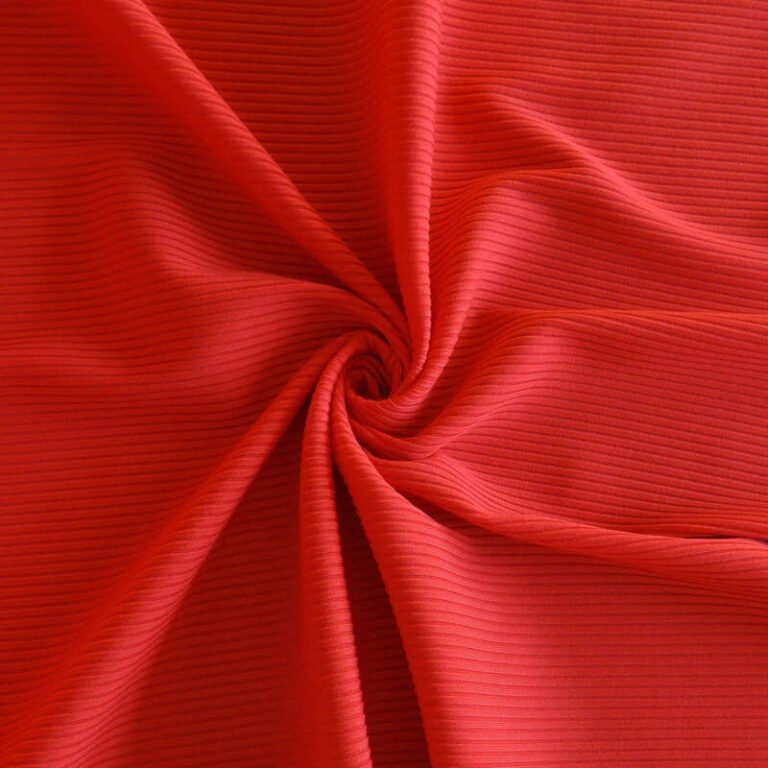
Cotton Rib Cotton rib offers breathability and softness, commonly used in T-shirt trims and casualwear, though it typically has lower stretch recovery than fabrics with added elastane.
Cotton-Spandex Rib Adding a small percentage of spandex to cotton rib significantly improves stretch recovery and shape retention, making it a common choice for fitted garments and activewear trims.
Polyester Rib Polyester rib offers strong durability, wrinkle resistance, and colorfastness, often used in performance apparel and lower-cost casualwear applications.
Wool and Wool-Blend Rib Wool rib knits are commonly used in sweater-weight garments, offering warmth and a structured rib texture suited to outerwear and knitwear applications.
Ribbed Fabric Types Comparison Table
| Rib Type | Stretch Level | Texture | Typical Application |
|---|---|---|---|
| 1×1 Rib | High | Fine | T-shirt collars, cuffs, fitted bodies |
| 2×2 Rib | High | Medium-Bold | Cuffs, hems, casualwear |
| 4×2 Rib | Medium | Bold | Sweater-weight garments, trims |
| Half-Milano Rib | Low-Medium | Smooth | Structured knitwear, fitted dresses |
| Full-Milano Rib | Low | Smooth, Dense | Premium structured knitwear |
| Interlock Rib | Medium-High | Smooth | Clean-surface fitted garments |
Fabric Selection Recommendations
Selecting the right ribbed fabric type depends on matching stretch behavior and texture to the intended garment component and design.
End-Use Requirements Garment trims such as collars, cuffs, and hems generally perform best with 1×1 or 2×2 rib due to their strong stretch recovery and resistance to curling at raw edges.
Fabric Performance Fitted garments requiring consistent shape retention over repeated wear benefit from cotton-spandex or polyester-spandex rib blends rather than 100% natural fiber rib without added elastane.
Comfort Requirements For garments worn close to the skin, cotton or cotton-blend rib generally offers better breathability than fully synthetic rib fabric.
Durability Expectations Polyester rib or polyester-blend rib typically offers greater resistance to pilling and shape distortion over repeated washing compared to 100% cotton rib.
Washing Requirements Buyers should confirm shrinkage behavior specific to the fiber blend, since cotton rib generally shrinks more than polyester or polyester-blend rib after repeated washing.
Budget Considerations Standard 1×1 and 2×2 rib in cotton or cotton-blend construction are generally more cost-efficient than specialty structures such as Milano rib, which require more complex knitting setups.
Procurement Considerations
Buyers sourcing ribbed fabric should evaluate the following factors to reduce sourcing risk and maintain consistent quality across production.
MOQ Requirements Standard rib types such as 1×1 and 2×2 rib in common fiber blends typically carry lower MOQs than specialty structures like Milano rib, which may require dedicated knitting machine setup.
Lead Time Expectations Lead times depend on whether rib fabric is in-stock or requires custom color matching, with custom-dyed rib generally requiring longer production timelines than solid in-stock colors.

Quality Control Procedures Buyers should request testing for stretch recovery, shrinkage, and colorfastness, particularly for rib fabric intended for fitted garment components where dimensional stability directly affects fit.
Fabric Testing Requirements Common tests for ribbed fabric include stretch and recovery percentage, pilling resistance, and colorfastness to washing and rubbing.
Color Consistency Management Because rib fabric is often paired with a main body fabric of a different knit structure, buyers should request cross-fabric color matching approval to confirm consistent shade between the rib trim and the body fabric.
Packaging Requirements Rib fabric, particularly narrow-width rib trim rolls, should be packaged to prevent stretching or distortion during storage and transit.
Shipping Considerations Buyers should confirm moisture protection and appropriate packaging for natural fiber rib blends, which are more susceptible to humidity-related shrinkage or mildew during international transit.
Supplier Evaluation Factors Buyers should evaluate a supplier’s knitting gauge range, color-matching consistency between rib and body fabric, and experience producing the specific rib structure required for a given design.
Frequently Asked Questions
What is the most common type of ribbed fabric? 1×1 rib is the most commonly used ribbed fabric type, widely applied to T-shirt collars, cuffs, and fitted garment bodies due to its strong stretch recovery.
What is the difference between 1×1 and 2×2 rib? 1×1 rib alternates single knit and purl stitches for a fine texture, while 2×2 rib alternates two of each for a wider, more pronounced rib pattern with a similar stretch level.
Does ribbed fabric shrink? Ribbed fabric can shrink depending on fiber content, with cotton rib generally shrinking more than polyester or polyester-blend rib after repeated washing.
Is ribbed fabric stretchy? Most ribbed fabrics offer good stretch and recovery due to their alternating knit-purl structure, though the degree of stretch varies by rib type, with Milano rib offering significantly less stretch than standard 1×1 or 2×2 rib.
What is Milano rib used for? Milano rib is commonly used in structured knitwear, such as fitted dresses, jackets, and premium sweaters, where a smooth, stable surface with minimal stretch is preferred over the higher stretch of standard rib.
Can ribbed fabric be used for full garments, not just trims? Yes, ribbed fabric is commonly used for full-body garments, particularly fitted knit dresses, tops, and activewear, in addition to its common use in trims such as collars and cuffs.
Why does ribbed fabric sometimes lose its stretch over time? Loss of stretch recovery in ribbed fabric is typically caused by degradation of the elastane content through repeated washing, high heat exposure, or fiber fatigue, which is why buyers concerned with long-term shape retention should confirm elastane percentage and recommended care instructions with the supplier.
What knitting gauge is used for ribbed fabric? Knitting gauge for rib fabric varies by intended application, with finer gauges generally used for lightweight T-shirt trims and coarser gauges used for heavier sweater-weight rib knitwear.
Key Takeaways
- Ribbed fabric types vary primarily by stitch pattern, including 1×1, 2×2, 4×2, and Milano rib structures, each producing different stretch and texture characteristics.
- Fiber content, including cotton, cotton-spandex, and polyester rib, significantly affects breathability, stretch recovery, and durability.
- Standard rib types such as 1×1 and 2×2 rib are best suited to trims and fitted garment components, while Milano rib suits more structured knitwear applications.
- Cross-fabric color matching between rib trim and body fabric is an important quality control step in garment production.
- Stretch recovery and shrinkage testing help buyers confirm rib fabric performance before committing to bulk production.
Conclusion
Selecting the right ribbed fabric type requires matching stitch structure, fiber content, and stretch behavior to the specific garment component or design being produced. Buyers can review a related product reference on rib fabric and the related guide on warp vs weft knitting fabric for additional context on knit fabric construction. Textile manufacturers such as SJZ Fabric are often evaluated by apparel brands researching rib fabric options suited to specific stretch and texture requirements. A clear understanding of ribbed fabric types allows product developers and buyers to make more informed fabric selection and sourcing decisions.