
Fleece fabric price is shaped by a very different set of factors than smooth-surface woven or knit fabrics. Because fleece is defined by its raised, brushed pile, the cost of a given fleece often has less to do with the base fiber and more to do with what happens after the fabric is knitted — how it is brushed, how the pile is sheared, whether it receives anti-pill treatment, and how uniform the surface is across a full production run. Two fleece fabrics quoted at nominally the same weight and fiber content can differ meaningfully in price simply because one has been engineered for pile density and durability while the other has not.
For hoodie, sweatshirt, activewear, and outerwear buyers, understanding what actually creates that price gap makes it easier to evaluate whether a low quote reflects a real cost advantage or a shortcut that will show up in wear performance later. This guide covers the factors that drive fleece fabric price, how to source fleece competitively from China, and the specific verification steps that reduce risk on a bulk fleece order.
What Drives Fleece Fabric Price
Fiber Content Most commercial fleece is polyester or polyester-blend, but cotton-blend fleece and 100% cotton fleece (such as French terry with brushed back) also exist. Polyester fleece is generally the most cost-efficient; cotton and cotton-blend fleece carry higher raw material and processing costs; recycled polyester fleece with certification adds a further premium.
Fabric Weight (GSM) Fleece is sold across a wide GSM range, typically from around 180 GSM for lightweight micro-fleece to 400+ GSM for heavy sherpa or polar fleece. Since heavier fleece requires more yarn per square meter and longer knitting time, weight directly drives cost, often more than any single other factor within the fleece category.
Pile Type and Density Not all pile is created equal. High-density, evenly distributed pile requires better base knitting quality and more controlled brushing; sparse or uneven pile can be produced faster but shows visible thin spots after wash cycles. Buyers paying for high-density pile are paying for both material and process control.
One-Side vs Two-Side Brushing Single-face fleece is brushed on one side only, with a smoother knit face outward and a soft pile inside — common in hoodies and sweatshirts. Double-face fleece is brushed on both sides, adding warmth and softness at additional processing cost. Two-side brushing generally costs more than one-side brushing on comparable base fabric.
Anti-Pill Treatment Fleece is prone to pilling under abrasion, and anti-pill treatments — mechanical shearing, chemical treatments, or specific fiber blends — significantly reduce this at added cost. Buyers producing garments with a longer expected wear cycle typically justify the premium for treated fleece; buyers producing single-season promotional items may not.
Fleece Variant Commercial “fleece” spans several distinct sub-categories, each with a different production cost:
- Polar fleece: standard, mid-weight, cost-efficient
- Micro-fleece: lightweight, finer pile, moderate cost
- Anti-pill fleece: base fleece plus anti-pill processing, premium over standard
- Sherpa fleece: deep pile mimicking shearling, heavier construction, higher cost
- Coral fleece: long, dense, softer pile, common in home textiles and loungewear
- Bonded fleece: two fabrics laminated together for outerwear applications, significantly higher cost due to bonding process
Dyeing and Printing Solid piece-dyed fleece is generally the most cost-efficient. Melange (heather) fleece requires yarn-dyed input at moderate additional cost. Sublimation-printed and reactive-printed fleece carry higher processing costs, particularly for multi-color designs.
Order Volume Fleece production is heavily influenced by knitting machine time and brushing line capacity; small orders bear a proportionally higher setup cost per meter. Larger orders typically unlock better pricing tiers, particularly when aligned to a mill’s standard weight and width.
Sourcing Region Fleece production in China is concentrated in Zhejiang and Jiangsu, with dense clusters of both knitting mills and brushing/finishing operations. Sourcing from these clusters generally offers better pricing due to specialized equipment and short logistics distances between knitting and finishing stages.
Fleece Fabric Price Reference Table
| Fleece Type | Typical GSM Range | Relative Price Level | Common Application |
|---|---|---|---|
| Micro-Fleece | 180–220 GSM | Lower | Lightweight jackets, lining |
| Polar Fleece | 240–320 GSM | Lower-Medium | Basic hoodies, blankets, budget outerwear |
| Anti-Pill Polar Fleece | 240–320 GSM | Medium | Retail hoodies, higher-wear apparel |
| Coral Fleece | 220–320 GSM | Medium | Loungewear, home textiles |
| Sherpa Fleece | 320–450 GSM | Medium-High | Outerwear lining, jackets, throws |
| Bonded Fleece | 300–500 GSM | High | Technical outerwear, softshell |
Note: Fleece pricing shifts with polyester chip market movements and finishing capacity; current quotations should always be used for actual budgeting rather than category benchmarks.
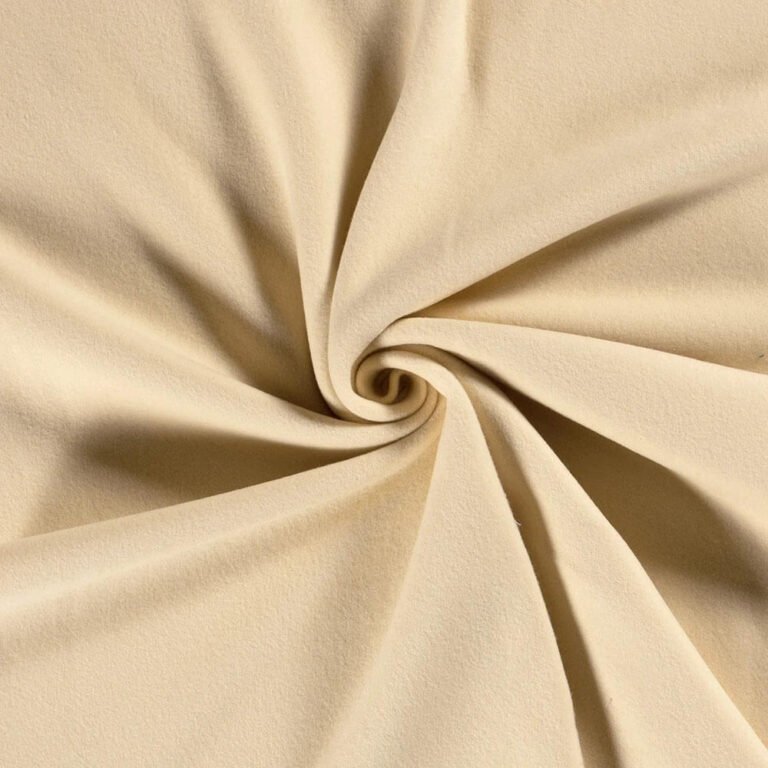
How To Source Competitive Fleece Fabric From China
China produces a very high share of global fleece supply, and buyers can access better pricing by understanding how the knitting-and-brushing supply chain is structured.
Buy From Mills With In-House Brushing Lines Because so much of fleece cost sits in the brushing and finishing stage, mills that operate their own brushing lines generally offer more consistent quality and better pricing than knitting mills that subcontract brushing to a separate facility. Buyers should ask directly whether brushing is done in-house.
Match GSM to Real Requirement Buyers often over-specify fleece weight, defaulting to 280 or 320 GSM out of habit when a 240 GSM fabric would meet the actual warmth and hand requirement. Reviewing GSM against the true product need is one of the simplest ways to reduce fleece fabric cost without compromising perceived quality.
Consider Recycled Polyester Where Volume Justifies It Recycled polyester fleece (from PET bottles) carries a moderate price premium, but the premium often shrinks meaningfully at higher order volumes, and recycled fleece can support sustainability claims in downstream retail markets. GRS certification adds an additional premium reflecting audit and traceability requirements.
Consolidate Colors Into Larger Dye Lots Fleece is piece-dyed at high temperature in pressurized dye machines, and small custom colors carry disproportionately high per-kilogram costs due to minimum dye-lot volumes. Consolidating design variants into fewer, larger dye lots meaningfully improves total order economics.
Use Standard Widths and In-Stock Constructions Mills maintain standard in-stock greige fleece in the most common GSM and width combinations. Buyers who work within these standard specifications typically pay less and receive shorter lead times than buyers requiring custom weight, width, or knitting gauge.
Consider Fabric Markets For Smaller Volume Needs For buyers whose fleece needs do not justify a direct mill relationship, wholesale fabric markets in Zhejiang and Guangdong offer ready-stock fleece across common types and colors at competitive per-meter pricing due to vendor density and direct-to-buyer sales.
Confirm Payment and Delivery Terms Early Fleece production is often paid in partial deposits; buyers should confirm deposit percentage, balance payment timing, and shipping documentation in writing before production begins, particularly for larger orders where working capital exposure is meaningful.
Precautions When Buying Fleece Fabric
Verify Actual GSM Against Specification GSM shortfall is one of the most common substitution issues in fleece sourcing, because the visual and hand-feel difference between 260 and 240 GSM fleece is subtle but the material cost difference is real. Buyers should require GSM verification on delivered goods, not just on the initial sample.
Confirm Anti-Pill Rating, Not Just Anti-Pill Claim “Anti-pill” is not a single specification. Buyers should confirm the specific anti-pill test standard (such as ASTM D3512 or similar) and the rating level being delivered, since low-cost “anti-pill” treatments can score poorly on standardized testing.
Watch for Pile Density Shortcuts Sparse or uneven pile can look acceptable on a small sample but becomes visible after a few washes, when thin spots and matting appear. Buyers should evaluate pile density on a first-bulk sample, not only on the initial swatch.
Verify Recycled Content Documentation Because recycled polyester fleece carries a premium, some suppliers may substitute virgin polyester for orders quoted as recycled. Buyers specifying rPET should require GRS or equivalent certification documents at the transaction level.
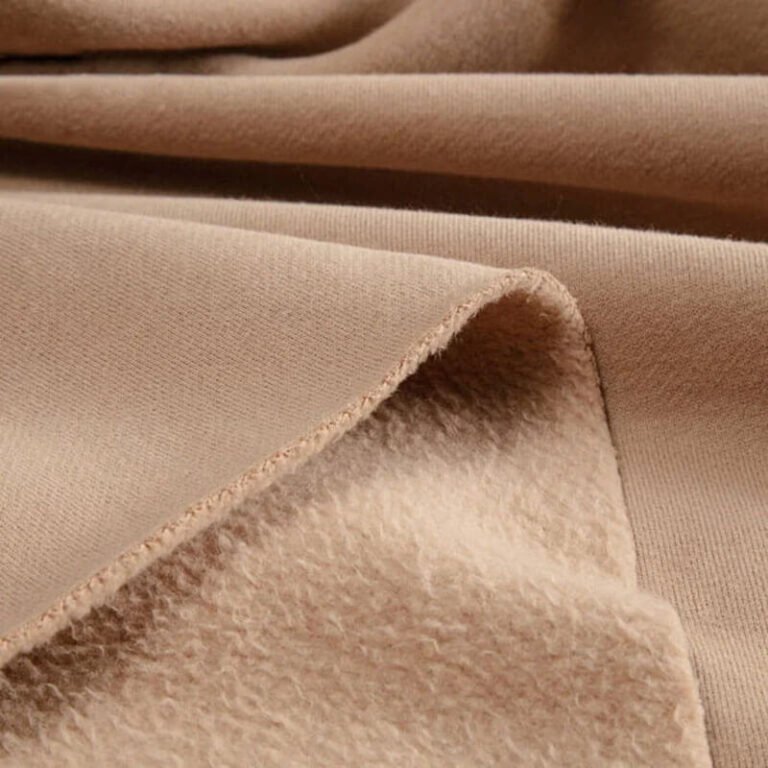
Confirm Shrinkage, Especially for Cotton-Blend Fleece Cotton-blend and cotton fleece variants are more prone to shrinkage than 100% polyester fleece. Buyers should require shrinkage testing before bulk approval and communicate care instructions clearly to downstream customers.
Check Pilling Behavior on High-Contact Areas For hoodies, sweatshirts, and outerwear, pilling tends to appear first on cuffs, under-arm areas, and any area with regular abrasion. Sample evaluation should include controlled abrasion testing, not only visual inspection of a static swatch.
Document Sample-to-Bulk Consistency Fleece surface quality is partly subjective, so approved samples should be signed and sealed, referenced in the purchase agreement, and held as the standard against which bulk delivery is compared.
Fabric Selection Recommendations
End-Use Requirements Hoodies and sweatshirts generally use polar or anti-pill polar fleece in the 260–320 GSM range; loungewear favors coral fleece for softness; outerwear lining favors sherpa or bonded fleece for warmth. Matching variant to end use is the single largest driver of appropriate cost.
Fabric Performance Buyers producing performance apparel should consider technical fleece variants with moisture-wicking or wind-resistant finishes, at correspondingly higher cost than basic polar fleece.
Comfort Requirements For skin-contact garments and next-to-skin layers, micro-fleece or cotton-blend fleece generally offers better comfort than heavier polyester fleece, though at a moderate cost premium.
Durability Expectations Retail garments intended for repeated wear justify the premium for anti-pill treated fleece; promotional or single-season items may be acceptable in untreated fleece at lower cost. This tradeoff should be an explicit part of the specification decision.
Washing Requirements Polyester fleece generally handles machine washing well, while cotton-blend fleece requires more careful care instructions to manage shrinkage and pilling. Care requirements should be confirmed before finalizing fabric selection.
Budget Considerations Where budget is constrained, adjusting GSM to true product need and consolidating colors into fewer dye lots are the two most effective levers for reducing fleece cost without compromising perceived garment quality.
Procurement Considerations
MOQ Requirements Fleece MOQs vary by fiber and variant, with standard polyester polar fleece generally carrying lower minimums than specialty variants such as sherpa or bonded fleece. Confirm MOQ per specific variant rather than assuming a single MOQ applies across the category.
Lead Time Expectations Standard in-stock polar fleece with piece dyeing typically ships fastest; sherpa, bonded, and custom-color fleece generally require longer lead times due to knitting complexity or bonding processes.
Quality Control Procedures Pre-shipment inspection should confirm GSM, pile density, colorfastness, and anti-pill performance. First-bulk sample approval is particularly important for fleece due to the subjective nature of pile evaluation.
Fabric Testing Requirements Common tests include GSM verification, pilling resistance (against a stated standard), colorfastness to washing and rubbing, and shrinkage testing. Recycled-content orders should include fiber traceability verification.
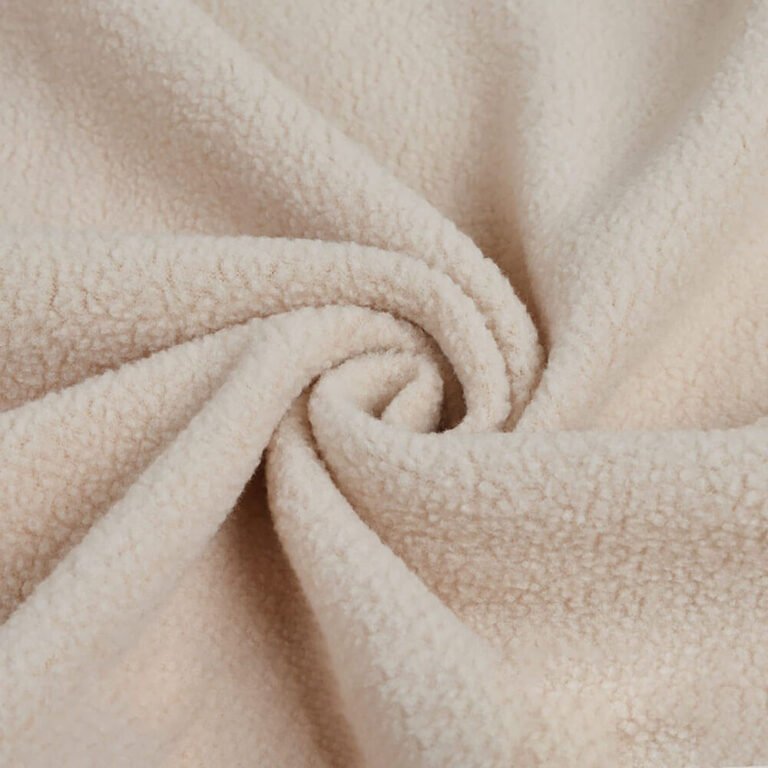
Color Consistency Management Dye-lot variation can appear more visibly on fleece than on smooth fabrics because the raised pile catches light differently. Lab dip and bulk approval samples should be signed off before full production.
Packaging Requirements Fleece should be rolled to avoid permanent flattening of the pile in fold areas. Long-transit orders should include moisture protection to prevent musty odor from developing during shipment.
Shipping Considerations Because fleece is a high-volume, low-density fabric, shipping cost per meter can be relatively high; buyers should confirm cubic meter (CBM) volume alongside gross weight when comparing freight quotes.
Supplier Evaluation Factors Buyers should evaluate a fleece supplier’s brushing line quality, anti-pill treatment capability, dye-lot consistency, and track record with the specific fleece variant being ordered, rather than price alone.
Frequently Asked Questions
Why does fleece fabric price vary so much even at the same weight? Weight is only one factor; brushing quality, pile density, anti-pill treatment, and variant type (polar, sherpa, bonded, etc.) also drive cost, so two fleece fabrics at the same GSM can differ meaningfully in price and long-term performance.
Is recycled polyester fleece worth the price premium? Recycled polyester fleece carries a moderate premium over virgin polyester, but supports sustainability claims valued in many downstream markets. The premium typically shrinks at higher volumes, and the decision should reflect the buyer’s brand positioning and target retail channel.
What is the difference between polar fleece and anti-pill polar fleece? Anti-pill polar fleece is polar fleece that has received specific mechanical or chemical processing to reduce pilling under abrasion, at a moderate price premium over untreated polar fleece.
Which fleece variant is best for hoodies and sweatshirts? Anti-pill polar fleece in the 260–320 GSM range is the most common choice for retail hoodies and sweatshirts, balancing warmth, durability, and cost.
Can fleece fabric shrink after washing? Polyester fleece generally shrinks very little; cotton-blend and cotton fleece can shrink meaningfully, especially in the first few washes, and should be pre-tested before bulk approval.
How do I verify anti-pill performance before bulk order? Buyers should request pilling test results referenced against a specific standard (such as ASTM D3512) rather than accepting the general claim of “anti-pill” treatment.
Which region in China is best for sourcing fleece fabric? Zhejiang and Jiangsu are the primary fleece production centers in China, with dense clusters of knitting mills, brushing lines, and finishing operations that support competitive pricing and technical capability across common fleece variants.
Key Takeaways
- Fleece fabric price is driven by GSM, pile density, brushing method, anti-pill treatment, and variant type — not just fiber content or weight alone.
- Two fleece fabrics at the same nominal GSM and fiber can differ meaningfully in price and performance because of how the pile is engineered and finished.
- Recycled polyester fleece, anti-pill treatment, and specialty variants (sherpa, bonded) each add clearly identifiable premiums that should be evaluated against actual product need.
- GSM shortfall, pile density shortcuts, and unverified anti-pill claims are the most common risks in low-cost fleece procurement.
- Matching fleece variant and GSM to real end-use requirement is the single largest lever for reducing cost without compromising perceived garment quality.
Conclusion
Fleece fabric pricing rewards buyers who evaluate not only fiber and GSM but also brushing method, pile density, and finishing treatment. For related sourcing context, buyers can review guides on hoodie fabric, sweatshirt fabric, and the fleece fabric product page. Manufacturers such as SJZ Fabric are frequently evaluated by apparel brands sourcing fleece where pile consistency and anti-pill performance need to hold up across a full production run. A clear grasp of fleece cost drivers ultimately supports more accurate quotation review and more reliable garment outcomes.