
Choosing the right dressmaking fabric is one of the most important decisions a garment maker, product developer, or apparel brand can make before entering production. Fabric selection affects drape, comfort, durability, sewing behavior, and the final visual outcome of a dress. For fabric buyers and manufacturers, understanding the properties of common dressmaking fabrics helps reduce costly sourcing mistakes and ensures that the finished garment meets both design intent and quality expectations.
This guide explains what dressmaking fabric is, the most common fiber and weave types used in dress construction, how to select the right fabric for a specific dress style, and what procurement teams should evaluate when sourcing dressmaking fabric from a textile supplier.
What Is Dressmaking Fabric
A dressmaking fabric is any textile specifically suited to the construction of dresses, selected based on properties such as drape, weight, stretch, breathability, and sewing performance. Dressmaking fabrics span a wide range of fiber types, weave structures, and finishes, and are typically chosen according to the silhouette, function, and intended use of the finished garment.
Unlike general apparel fabric, dressmaking fabric selection places particular emphasis on drape behavior, since the way a fabric falls and moves has a direct impact on how a dress silhouette reads on the body. Fabric weight, hand-feel, and structure are therefore central considerations in the dressmaking fabric selection process.
Common Fiber Types Used in Dressmaking Fabric
Dressmaking fabrics are produced from a range of natural, synthetic, and blended fibers, each offering different performance and aesthetic characteristics.
Cotton Cotton dressmaking fabric is valued for its breathability, softness, and ease of sewing, making it a common choice for casual and everyday dresses, including cotton lawn, cotton poplin, and cotton voile.
Silk Silk dressmaking fabric offers a luxurious drape and natural sheen, commonly used in formalwear, eveningwear, and bridal dresses. Silk requires more careful handling during both cutting and sewing due to its slippery surface.
Polyester Polyester dressmaking fabric is widely used for its durability, wrinkle resistance, and lower cost, and is often selected for structured dresses, linings, and budget-conscious production runs.
Linen Linen dressmaking fabric is breathable and lightweight, suited to warm-weather dresses, though it is prone to wrinkling and requires specific care instructions.
Viscose/Rayon Viscose dressmaking fabric offers a soft, fluid drape similar to silk at a more accessible price point, making it a popular substitute in mid-range dress production.
Blended Fabrics Fiber blends, such as cotton-polyester or viscose-elastane, combine performance characteristics from multiple fibers, often improving wrinkle resistance, stretch, or durability compared to single-fiber fabrics.
Common Weave and Knit Structures in Dressmaking Fabric
Dressmaking fabric performance is influenced not only by fiber content but also by weave or knit structure.
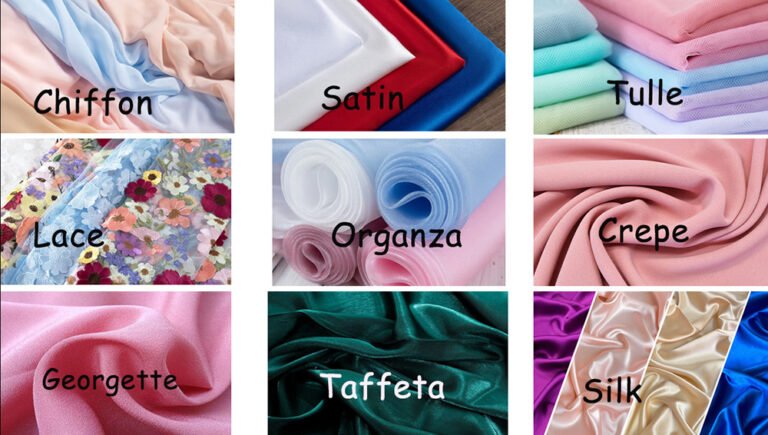
Woven Dressmaking Fabrics Woven fabrics such as poplin, chiffon, taffeta, and crepe offer structure and stability, and are commonly used for tailored or structured dress silhouettes.
Knit Dressmaking Fabrics Knit fabrics such as jersey, ponte, and interlock provide natural stretch and a closer fit, making them suitable for fitted or comfort-driven dress styles.
Specialty Fabrics Fabrics such as lace, organza, and tulle are used for decorative layering, formalwear detailing, and bridal construction, typically in combination with a structural base fabric.
Key Characteristics to Evaluate in Dressmaking Fabric
When evaluating a fabric for dressmaking, several performance characteristics should be assessed:
- Drape: How the fabric falls and moves, which determines whether it suits a fitted, flowing, or structured silhouette.
- Weight: Typically measured in GSM, fabric weight affects both the visual structure and the seasonal suitability of a dress.
- Stretch: Woven fabrics generally offer minimal stretch, while knit fabrics and stretch-blend wovens provide varying degrees of flexibility.
- Breathability: Particularly relevant for warm-weather or occasion-based garments worn for extended periods.
- Sewing behavior: Slippery fabrics such as silk and satin require different handling techniques compared to stable fabrics such as cotton poplin.
- Care requirements: Fabric care instructions, including washing and dry cleaning needs, should align with the intended end use of the garment.
Dressmaking Fabric Comparison Table
| Fabric | Drape | Breathability | Sewing Difficulty | Typical Dress Style |
|---|---|---|---|---|
| Cotton Poplin | Structured | High | Easy | Casual, shirt dresses |
| Silk Charmeuse | Fluid | Medium | Difficult | Eveningwear, bridal |
| Polyester Crepe | Structured | Low | Moderate | Workwear, formal dresses |
| Viscose Jersey | Fluid | Medium | Moderate | Casual, fitted dresses |
| Linen | Structured | High | Moderate | Summer dresses |
Fabric Selection Recommendations
Selecting the appropriate dressmaking fabric depends on matching fabric properties to the intended garment design and end use.
End-Use Requirements Structured dress silhouettes, such as shirt dresses or A-line dresses, generally require fabrics with body and stability, such as cotton poplin or polyester crepe. Fluid silhouettes, such as slip dresses or bias-cut gowns, are better suited to fabrics with soft drape, such as silk charmeuse or viscose.
Comfort Requirements For dresses intended for extended wear or warm climates, breathable natural fibers such as cotton or linen are generally preferred over synthetic alternatives.
Durability Expectations Dresses intended for frequent wear or workwear applications benefit from more durable fabrics such as polyester blends, which offer greater wrinkle and abrasion resistance than delicate natural fibers.
Washing Requirements Buyers should consider whether the intended end consumer expects machine-washable garments, as fabrics such as silk and certain viscose blends often require dry cleaning or delicate hand-washing.
Budget Considerations Silk and high-quality natural fiber fabrics typically carry a higher cost than polyester or blended alternatives, which should be factored into fabric selection based on target price point and production volume.
Procurement Considerations
Buyers sourcing dressmaking fabric should evaluate the following factors to reduce sourcing risk and maintain consistent production quality.
MOQ Requirements Minimum order quantities for dressmaking fabric vary by fiber type, weave complexity, and whether custom coloring or printing is required, with printed or custom-dyed fabrics generally carrying higher MOQs than in-stock solids.
Lead Time Expectations Lead time depends on fabric availability, dyeing requirements, and finishing processes, with custom color matching typically extending production timelines compared to stocked fabric programs.
Quality Control Procedures Dressmaking fabric should be tested for shrinkage, colorfastness, and seam slippage, particularly for fabrics used in fitted or structured dress styles where dimensional stability affects fit consistency.
Fabric Testing Requirements Common testing for dressmaking fabric includes tensile strength, pilling resistance, and colorfastness to washing, rubbing, and light exposure, depending on the intended use case.
Color Consistency Management Buyers should request lab dips and bulk approval samples prior to full production, particularly for multi-panel dress designs where fabric from different production lots must match closely.
Packaging Requirements Dressmaking fabric, especially delicate fibers such as silk, should be rolled rather than folded to prevent permanent crease marks during storage and transit.
Shipping Considerations Fabric intended for international shipment should be evaluated for moisture protection and appropriate packaging, particularly for natural fibers that are more susceptible to humidity-related damage.
Supplier Evaluation Factors Buyers should evaluate a supplier’s weaving or knitting capability, dyeing consistency, finishing options, and quality certifications when selecting a dressmaking fabric source, particularly for programs requiring precise drape and hand-feel replication across production batches.
Frequently Asked Questions
What is the best fabric weight for dressmaking? Fabric weight depends on the dress style, with lightweight fabrics between 60-120 GSM commonly used for blouses and flowing dresses, and mid-weight fabrics between 150-250 GSM used for structured or tailored dress styles.
Is cotton a good dressmaking fabric? Cotton is a widely used dressmaking fabric due to its breathability, ease of sewing, and versatility across casual and semi-structured dress styles.
What fabric is best for a flowy dress? Fabrics with soft drape, such as viscose, silk charmeuse, or lightweight chiffon, are generally preferred for flowy or bias-cut dress silhouettes.
What fabric is best for a structured dress? Fabrics with more body and stability, such as cotton poplin, denim, or polyester crepe, are typically better suited to structured dress silhouettes.
Can knit fabric be used for dressmaking? Knit fabrics such as jersey and ponte are commonly used in dressmaking for fitted or comfort-driven styles due to their natural stretch and closer fit.
How much fabric is typically needed for a dress? Fabric consumption varies significantly by dress style, size, and fabric width, and should be calculated based on the specific pattern and cutting layout for each design.
What is the difference between apparel fabric and dressmaking fabric? Dressmaking fabric refers specifically to textiles suited to dress construction, with particular emphasis on drape and silhouette performance, while apparel fabric is a broader category covering all garment types.
Key Takeaways
- Dressmaking fabric selection should be based on drape, weight, stretch, and breathability relative to the intended dress silhouette.
- Fiber content, including cotton, silk, polyester, linen, and viscose, significantly affects fabric hand-feel, cost, and care requirements.
- Structured dress styles generally require fabrics with more body, while fluid silhouettes perform better with soft-draping fabrics.
- Quality control testing for shrinkage, colorfastness, and seam slippage helps reduce sourcing risk in dress production.
- Supplier evaluation, including dyeing consistency and finishing capability, is important for maintaining fabric quality across production batches.
Conclusion
Dressmaking fabric selection plays a central role in determining the fit, drape, and overall quality of a finished dress. Buyers and product developers should evaluate fiber content, weave structure, and performance characteristics in relation to the intended garment design before finalizing a sourcing decision. Companies such as SJZ Fabric represent the type of textile manufacturer commonly evaluated by apparel brands and fabric buyers seeking reliable dressmaking fabric sourcing partners. A clear understanding of dressmaking fabric properties allows procurement teams to make informed, risk-reduced sourcing decisions that support consistent garment quality.