
China is home to one of the largest concentrations of textile factories in the world, spanning spinning mills, weaving and knitting facilities, dyeing and finishing plants, and fully integrated operations that manage fabric production from raw fiber to finished, ready-to-cut textile. A textile factory in China is a production facility that manufactures fabric or fabric-related materials, typically specializing in one or more stages of the textile process — spinning, weaving, knitting, dyeing, printing, or finishing — with some operating as standalone single-stage facilities and others sitting within larger vertically integrated groups that control multiple stages under one corporate structure.
Factory scale ranges enormously, from small workshops serving local or regional markets to large industrial complexes producing fabric for major international apparel brands. For apparel brands and product developers, the practical challenge is rarely finding a factory that exists somewhere in China — it is identifying which region, factory type, and production stage actually matches a given order, then evaluating that specific factory before committing production volume to it.

This guide covers the major regional production clusters in China, how factories differ by production stage, and the practical steps buyers should take before engaging a factory directly.
Major Textile Factory Regions In China
China’s textile manufacturing capacity is concentrated in several regional clusters, each with distinct specializations shaped by decades of infrastructure investment and supply chain development.
Zhejiang Province Zhejiang, particularly the Shaoxing Keqiao textile cluster, hosts one of the highest concentrations of fabric factories and trading companies in China, known for a wide variety of woven and knit fabrics and fast market responsiveness to new orders.
Jiangsu Province Jiangsu is home to a significant cluster of textile factories specializing in synthetic fiber production, including polyester fabric manufacturing supported by strong upstream petrochemical infrastructure.
Guangdong Province Guangdong, including the Guangzhou fabric market area, combines large-scale wholesale fabric trading with nearby factory production, making it a common starting point for buyers sourcing smaller or mixed-quantity orders across many fabric types.
Fujian Province Fujian has developed strong specialization in knitted and sportswear-oriented fabrics, supported by factories with capability in technical and performance finishes such as moisture-wicking treatments.
Shandong Province Shandong hosts several large, vertically integrated cotton textile groups managing production from raw cotton through to finished fabric and garment manufacturing, reflecting the province’s long history in cotton cultivation and processing.
Types of Textile Factories In China
Textile factories in China generally fall into several operational categories, each suited to different sourcing needs.
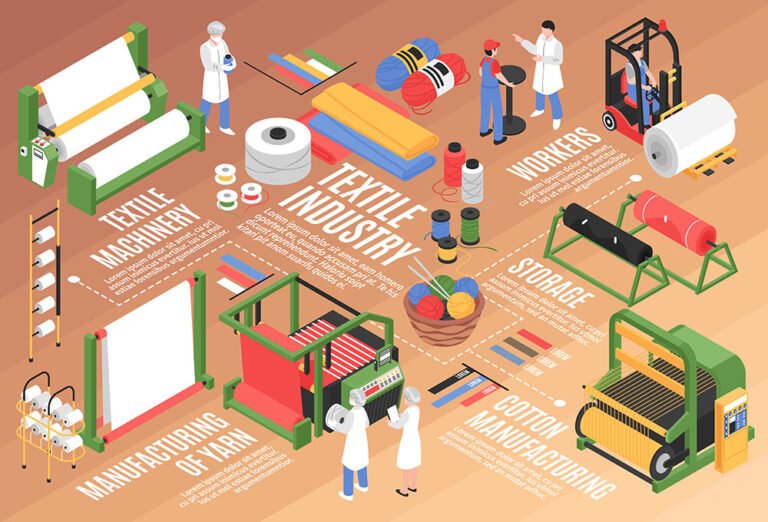
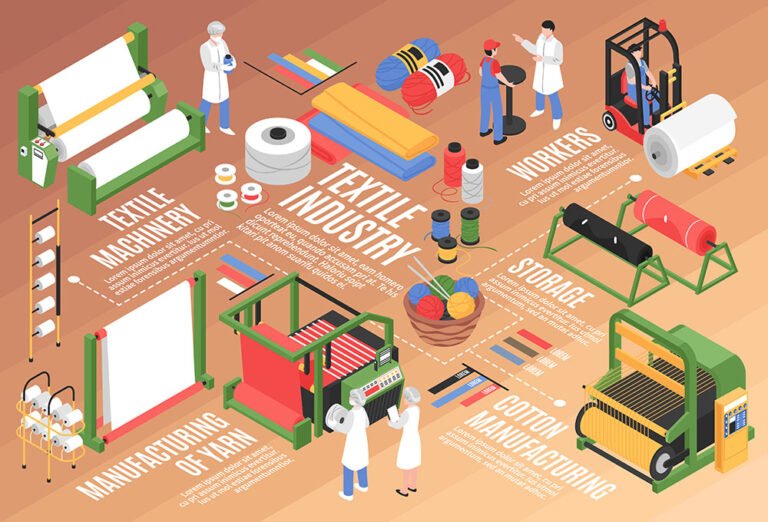
Spinning Mills Spinning mills convert raw fiber, such as cotton or polyester staple, into yarn, serving as an upstream supplier to weaving and knitting factories rather than working directly with apparel brands in most cases.
Weaving and Knitting Factories These factories convert yarn into greige (unfinished) fabric through weaving or knitting processes, producing the base fabric structure before it moves to dyeing and finishing.
Dyeing and Finishing Factories Dedicated dyeing and finishing factories apply color, prints, and performance treatments to greige fabric, often working in coordination with separate weaving or knitting mills rather than producing fabric structure themselves.
Vertically Integrated Factories Vertically integrated factories manage multiple stages, sometimes from fiber through finished fabric or even garment production, within a single corporate structure, generally offering more consistency but requiring higher minimum order quantities.
Textile Factory Comparison Table
| Factory Type | Production Stage | Typical MOQ | Best Suited For |
|---|---|---|---|
| Spinning Mill | Fiber to yarn | Very High | Large-scale yarn buyers, not typical apparel buyers |
| Weaving/Knitting Factory | Yarn to greige fabric | Medium-High | Buyers needing specific fabric structures |
| Dyeing/Finishing Factory | Greige to finished fabric | Medium | Custom color, print, or finish requirements |
| Vertically Integrated Factory | Fiber to finished fabric (or garment) | High | Large-volume, brand-specific programs |
Fabric Selection Recommendations
Matching the right type of textile factory to a buyer’s needs depends on several practical considerations.
End-Use Requirements Buyers with a specific fabric structure in mind should confirm a factory’s weaving or knitting capability directly rather than assuming general textile production experience translates to their exact requirement.
Fabric Performance Technical or performance fabrics, such as moisture-wicking activewear textiles, are often better sourced from factories in regions with established specialization in that finish category, such as Fujian.
Comfort Requirements For garments intended for extended wear, buyers should request physical samples from the specific factory under consideration to evaluate hand-feel, rather than relying on samples from a different facility within the same group.
Durability Expectations Vertically integrated factories generally offer more consistent quality control across large production runs due to tighter oversight across each production stage.
Washing Requirements Buyers should confirm colorfastness and shrinkage performance directly with the dyeing and finishing factory involved, since this stage has the greatest impact on wash performance.
Budget Considerations Large vertically integrated factories typically offer better per-unit pricing at high volume, while smaller specialized factories may offer more competitive pricing and flexibility for moderate order sizes.
Procurement Considerations
Buyers evaluating a textile factory in China should assess the following factors to reduce sourcing risk and support consistent quality.
MOQ Requirements MOQs vary significantly by factory type and production stage, with spinning mills and vertically integrated operations generally requiring the highest minimums, and standalone dyeing or finishing factories often more flexible.
Lead Time Expectations Lead times depend on whether fabric is produced from in-stock yarn or requires custom dyeing and finishing, and multi-stage production involving separate factories generally requires longer coordination timelines than a single vertically integrated facility.
Quality Control Procedures Buyers should confirm each factory’s inspection process, including in-line inspection during production and pre-shipment inspection, particularly when multiple factories are involved across different production stages.
Fabric Testing Requirements Common tests requested from textile factories include shrinkage, colorfastness to washing and rubbing, tensile strength, and pilling resistance, depending on the fabric’s intended application.
Color Consistency Management Lab dip approval and bulk production sample review should be required before full production runs, particularly when weaving and dyeing occur at separate facilities.
Packaging Requirements Buyers should confirm rolling and protective packaging standards with the factory to prevent damage during storage and international transit.
Shipping Considerations International shipment from China requires evaluating shipping method, incoterms, and customs documentation, particularly for buyers working with multiple factories contributing to a single order.
Supplier Evaluation Factors Buyers should evaluate a factory’s production capacity, relevant certifications, communication reliability, and references from buyers with similar order volume and fabric requirements before committing to a sourcing relationship.
How To Evaluate a Textile Factory In China
A structured evaluation process helps reduce the risk of quality inconsistency or miscommunication when working with a new factory.
- Identify which production stage you actually need. Buyers requiring finished, ready-to-cut fabric should confirm whether a factory handles the full process in-house or subcontracts stages such as dyeing.
- Request verifiable samples. Physical samples from the specific factory under consideration, rather than a sister facility or general catalog, allow accurate evaluation of hand-feel and quality.
- Confirm relevant certifications. Certifications such as OEKO-TEX can indicate a factory’s compliance with recognized safety and environmental standards.
- Start with a smaller trial order. A trial run validates whether bulk production quality matches sample quality before committing to larger volume.
- Establish clear inspection checkpoints. Pre-production, in-line, and pre-shipment inspections reduce the risk of receiving fabric that does not match approved specifications.
- Clarify communication channels. Confirm who will manage day-to-day communication and whether English-language support is available throughout production.
Frequently Asked Questions
How do I find a textile factory in China directly, without a trading company? Buyers can identify factories directly through industry trade shows, verified B2B sourcing platforms, regional fabric markets such as Guangzhou, or referrals from other buyers with established China sourcing experience.
What is the difference between a textile factory and a trading company in China? A textile factory manufactures fabric directly, while a trading company represents one or more factories and manages sourcing, communication, and logistics on the buyer’s behalf, often for a service margin.
Which region in China is best for sourcing textile factories? The best region depends on fabric type; Zhejiang and Jiangsu are strong for broad fabric variety and synthetic fibers, Fujian specializes in knitted and technical fabrics, and Shandong is known for large-scale cotton production.
Do textile factories in China require a minimum order quantity? Most textile factories require a minimum order quantity, which varies significantly by production stage and factory scale, with vertically integrated factories generally requiring higher minimums than smaller specialized operations.
How long does it take to receive fabric from a Chinese textile factory? Lead times vary by fabric type and customization level, with in-stock fabric typically shipping faster than fabric requiring custom dyeing, printing, or finishing.
Can a textile factory in China produce a completely custom fabric? Many factories, particularly those with in-house dyeing and finishing capability, can produce custom colors, prints, and treatments, though custom development generally requires longer lead times and higher MOQs than standard fabric.
Is it necessary to visit a textile factory in China in person before ordering? An in-person visit is not always required, but it can significantly reduce sourcing risk, particularly for large orders, and many buyers use third-party inspection services when an in-person visit is not feasible.
Key Takeaways
- Textile factories in China are concentrated in regional clusters, each with distinct specializations shaped by local supply chain infrastructure.
- Factories range from single-stage operations, such as spinning or dyeing, to fully vertically integrated facilities managing fiber through finished fabric.
- Matching factory type and regional specialization to a buyer’s specific fabric requirement improves sourcing efficiency and reduces mismatched expectations.
- Requesting verifiable samples and starting with a trial order helps confirm that bulk production quality will match approved samples.
- Clear inspection checkpoints and confirmed communication channels are essential when working with factories directly, particularly across multi-stage production involving more than one facility.
Conclusion
Sourcing fabric directly from a textile factory in China requires understanding the country’s regional production clusters, the different types of factories involved at each production stage, and the evaluation steps needed to reduce sourcing risk. Buyers researching this process may also find it useful to review related guides on the textile fabric manufacturing process and fabric manufacturers in India for a comparative view of sourcing regions. Manufacturers such as SJZ Fabric are frequently referenced when apparel brands research direct factory partnerships for fabric production in China. A structured, well-documented evaluation process remains the most reliable way to build a dependable long-term relationship with a textile factory in China.