
Tweed fabric occupies an unusual position in the pricing landscape. It is one of the few commercial fabrics still meaningfully tied to a specific fiber (wool) and, in its most premium form, to specific named production regions with heritage protections. That heritage layer sits on top of the more universal cost drivers — fiber grade, yarn preparation, weave complexity, and finishing — meaning a tweed price quote can reflect anything from mass-market wool-blend school uniform fabric to authentic hand-loomed Harris Tweed with legal origin protection.
For buyers sourcing tweed for jackets, coats, skirts, upholstery, or accessories, understanding these layered cost drivers matters more than for most fabric categories. A quote that looks reasonable can hide a completely different product from the one the buyer expected. This guide walks through the specific factors that drive tweed fabric price, how to source competitive tweed from China without compromising on the qualities that make tweed valuable in the first place, and what to verify before committing to a bulk order.
What Drives Tweed Fabric Price
Wool Fiber Grade and Micron Count Wool is priced by grade, most commonly measured in microns (fiber diameter). Coarser wools around 28–32 microns produce traditional heritage tweed with the characteristic firm, textured hand at moderate cost. Finer wools around 21–24 microns produce softer, higher-priced tweed used in premium tailoring. Very fine wools below 21 microns move into suit-weight territory and carry substantial premiums.
Fiber Composition Pure new wool tweed sits at the top of the price range for a given grade, followed by wool-blend tweed (wool blended with polyester, viscose, or nylon for cost and durability), and then fully synthetic “tweed-look” fabric that mimics the visual effect at meaningfully lower cost but without the thermal, moisture, or aging properties of real wool.
Country of Origin and Heritage Certification Certain tweeds carry legally protected origin status. Harris Tweed, for example, must be hand-woven in the homes of islanders in the Outer Hebrides of Scotland from pure virgin wool dyed and spun in the same region, under UK law. Fabric carrying this Orb certification mark trades at a significant premium over generically named “tweed” produced elsewhere. Similar heritage tiers exist for Donegal Tweed (Ireland) and Cheviot Tweed (Scottish borders), though with varying certification strictness.
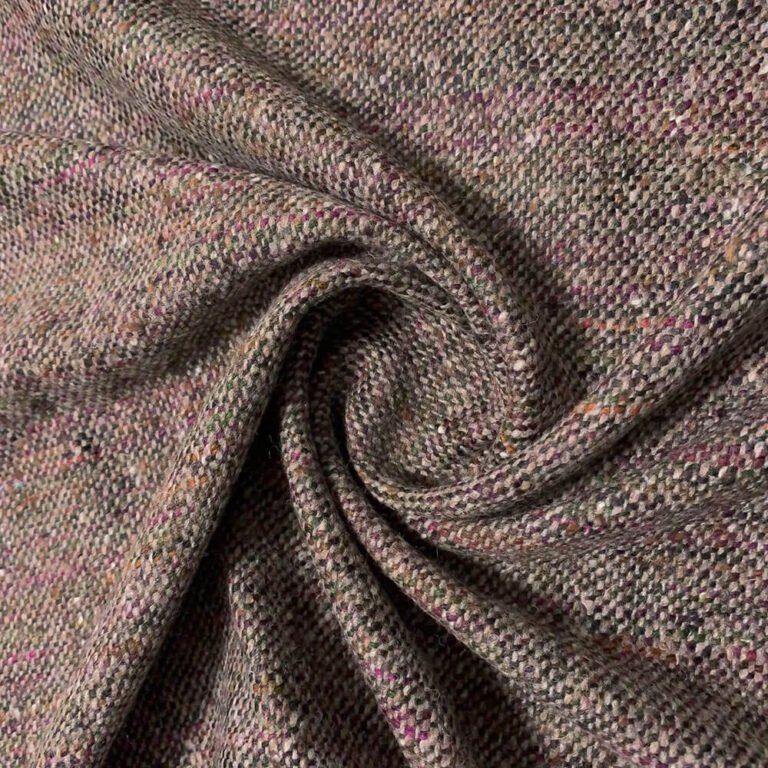
Yarn Preparation and Dyeing Method Traditional tweed uses yarn-dyed wool, often blended from multiple colored fibers before spinning to create the characteristic multi-tone appearance (the “Donegal fleck” is a classic example). Yarn-dyed production is more expensive than piece-dyeing a solid tweed because it requires managing multiple dye lots at the fiber or yarn stage before weaving begins.
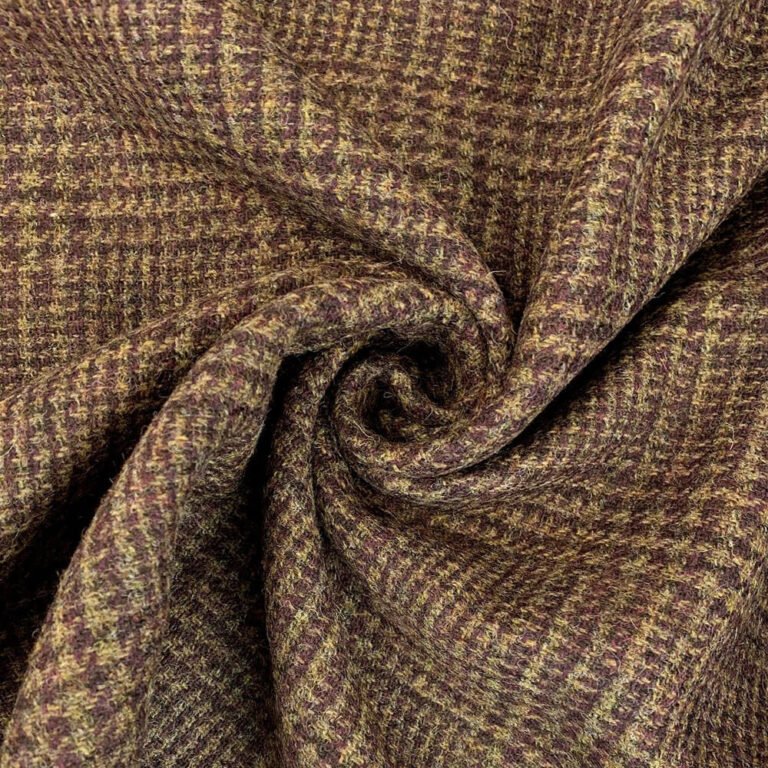
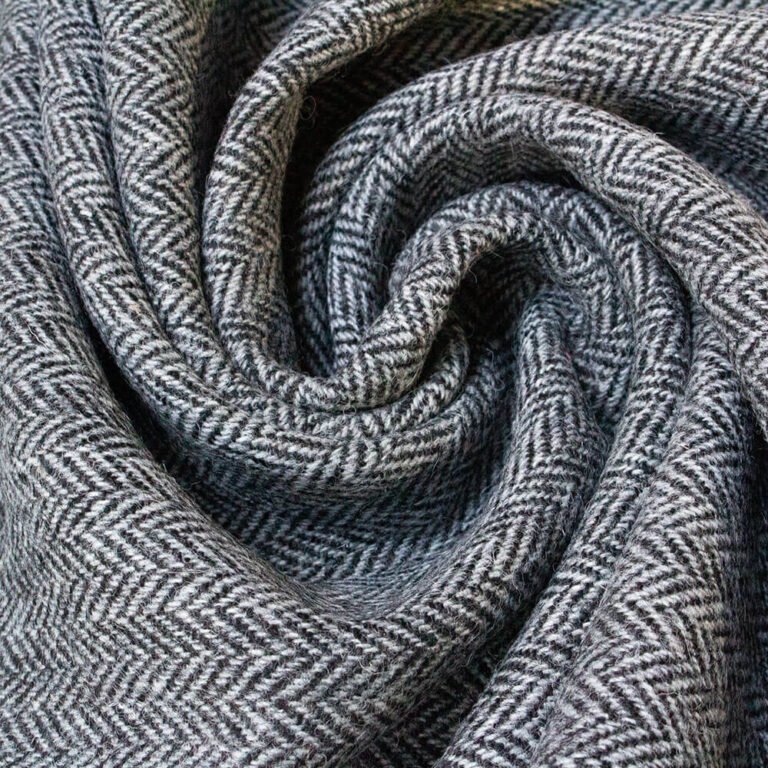
Weave Structure Tweed is typically woven in twill, plain, or herringbone structures, with more complex patterns such as houndstooth, glen check, or windowpane requiring more intricate loom setup and adding to weaving cost. Complex multi-color patterns increase both preparation time and per-meter production time.
Hand-Loomed vs Power-Loomed Some heritage tweeds are still produced on single-width hand looms, which sharply limits daily output and drives per-meter cost significantly higher than power-loomed alternatives. Most commercial tweed today is power-loomed, and buyers should confirm which is being quoted, since visual similarity does not indicate the same production cost or authenticity.
Fabric Weight (GSM or ounces per yard) Tweed is often specified in the traditional imperial measurement of ounces per yard (oz/yd) alongside GSM. Lightweight tweed for spring jackets and skirts might run 8–11 oz (roughly 270–370 GSM), classic jacket weight sits around 12–14 oz (roughly 400–470 GSM), and heavy overcoating tweed can exceed 20 oz. Heavier weights use more wool per meter and cost more accordingly.
Finishing Treatments Tweed finishing can include milling (a controlled felting process that firms the surface), decatizing (steam treatment for hand and appearance), mothproofing, and water-repellent treatments. Each additional finish adds to base fabric cost, and mothproofing in particular is standard for retail wool tweed but sometimes omitted in cheaper quotes.
Order Volume Small tweed orders carry disproportionately high per-meter cost because wool dye lots and loom changeovers are expensive to run for short lengths. Larger orders unlock better pricing tiers, particularly when aligned with a mill’s standard weight and yarn count.
Sourcing Region China, Italy, and the UK/Ireland are the three main tweed sourcing regions, each with a very different pricing profile. Chinese mills dominate cost-competitive wool-blend and synthetic tweed volume; Italian mills specialize in fine-micron premium wool tweed; UK and Irish mills produce the heritage certified tweeds at the highest price tier.
Tweed Fabric Price Reference Table
| Tweed Category | Fiber Base | Relative Price Level | Typical Use |
|---|---|---|---|
| Synthetic “Tweed-Look” Fabric | Polyester or acrylic | Lower | Fast fashion, promotional garments |
| Wool-Blend Tweed | Wool + polyester/viscose | Lower-Medium | Retail jackets, school uniforms |
| Standard Pure Wool Tweed | 100% wool, coarser micron | Medium | Classic jackets, overcoats, skirts |
| Fine-Micron Wool Tweed | 100% wool, finer micron | Medium-High | Premium tailoring, suiting |
| Donegal-Style Tweed | Wool with fleck yarn | Medium-High | Fashion jackets, upscale outerwear |
| Certified Harris Tweed | 100% virgin wool, hand-woven | High | Heritage jackets, luxury goods |
Note: Wool market prices fluctuate meaningfully with global wool auction cycles, and specific quotations should always be used for actual budgeting rather than category benchmarks.
How To Source Competitive Tweed Fabric From China
China produces a large share of global wool-blend and synthetic tweed volume, and buyers can access more favorable pricing by understanding how the tweed supply chain is structured across specific regional clusters.
Match Tweed Style to Regional Specialization Wool and wool-blend tweed production is concentrated in Jiangsu and Zhejiang, with several vertically integrated mills combining wool preparation, dyeing, spinning, and weaving under one roof. Synthetic and low-cost fashion tweed is more heavily produced in Zhejiang wholesale market clusters. Sourcing from a mill matched to the specific tweed style needed generally produces better pricing than working with a generalist supplier.
Consider Wool-Blend Instead of 100% Wool For retail garments that do not need to make pure wool marketing claims, a wool-polyester or wool-viscose blend often delivers a similar appearance and hand-feel at meaningfully lower cost, with the added benefit of reduced shrinkage risk and easier care.
Use Standard Yarn Counts and Standard Weights Mills carry in-stock yarn in standard counts and standard weights. Buyers who can work with these standard specifications rather than requesting fully custom yarn preparation typically pay less and receive shorter lead times.
Time Orders Around Wool Auction Cycles Global wool prices are set at auctions in Australia, New Zealand, and South Africa on a regular cycle. Buyers with flexible timelines can benefit from monitoring these auction trends and placing larger orders during periods of relative price stability, rather than during sharp upward movement in the wool market.
Consolidate Colorways Yarn-dyed tweed requires managing multiple dye lots at the fiber or yarn stage before weaving. Consolidating a collection into fewer well-chosen colorways significantly reduces per-lot production complexity and improves total order cost compared to producing many small custom colorways.
Consider Fabric Markets for Small Orders For buyers whose tweed needs do not justify a mill relationship, Zhejiang and Guangdong fabric market clusters carry ready-stock wool-blend and synthetic tweed in a variety of patterns and weights, available in smaller quantities at competitive per-meter pricing due to vendor density.
Confirm Currency and Payment Terms Early Pure wool tweed orders can involve substantial working capital due to wool sourcing costs. Buyers should confirm currency, deposit percentage, and balance payment timing in writing before production begins, particularly for first-time supplier relationships.
Precautions When Buying Tweed Fabric
Verify Actual Wool Content “Wool tweed” is sometimes used loosely to describe wool-blend or even fully synthetic fabric with a tweed appearance. Buyers specifying pure wool should require fiber content testing on delivered goods rather than accepting a specification sheet claim alone, since the price and performance gap between real wool and synthetic tweed is significant.
Watch for Micron Count Substitution Fine-micron wool commands a premium over coarser wool, and micron substitution — quoting a fabric at 22 microns but delivering 26 — is difficult to detect by hand-feel alone. Buyers ordering premium fine-wool tweed should require micron testing documentation for the specific delivered lot.
Confirm Origin Claims Independently “Harris Tweed,” “Donegal Tweed,” and similar heritage names carry legal protections in some markets. Suppliers who casually apply these names to unrelated fabric can create legal exposure for the buyer at the retail stage. Buyers relying on origin claims should require the relevant certification mark documentation, not just marketing language.
Check for Mothproofing Treatment Wool tweed intended for retail sale should carry mothproofing treatment. Some low-cost quotes omit this treatment silently. Buyers should confirm mothproofing is included and specify the specific standard (such as EU regulation compliance if selling in Europe).
Verify GSM or Ounces-Per-Yard Weight Weight shortfall is a common cost-cutting shortcut in wool tweed, since delivering 11 oz fabric against a 12 oz specification produces visible but often unchallenged material savings. Buyers should verify actual delivered weight rather than accepting sample-only verification.
Confirm Shrinkage Testing Wool tweed can shrink significantly if not properly finished, and buyers should require pre-production shrinkage testing before bulk approval, particularly for finished-garment programs where post-production shrinkage directly affects fit.
Confirm Colorfastness for Multi-Color Yarn-Dyed Tweed Because yarn-dyed tweed combines multiple colored fibers, colorfastness testing should verify performance across each dominant color, not just an average result, since one weak color can bleed onto adjacent yarns during washing or dry cleaning.
Document Sample-to-Bulk Consistency Tweed appearance is highly influenced by yarn preparation and weave settings, both of which can drift between sample and bulk production. Approved samples should be signed, sealed, and formally referenced in the purchase agreement as the standard against which bulk delivery is measured.
Fabric Selection Recommendations
End-Use Requirements Retail jackets and coats intended for regular wear generally justify pure wool or wool-blend tweed for its warmth, drape, and long-term appearance. Fashion-forward or trend-driven pieces intended for a single season may be well served by lower-cost synthetic tweed alternatives.
Fabric Performance Wool tweed offers natural moisture buffering, warmth without heavy weight, and long wear life if properly cared for. Synthetic tweed offers wrinkle resistance, easier care, and lower cost, but lacks the thermal and moisture properties of wool.
Comfort Requirements For garments worn close to the skin, fine-micron wool is meaningfully more comfortable than coarser heritage-weight wool, and worth the price premium for premium retail garments.
Durability Expectations Well-made wool tweed can last decades with proper care, while synthetic tweed and low-quality wool blends typically show visible wear (pilling, matting, seam fatigue) within a few seasons. Buyers should factor expected garment lifespan into fiber choice.
Washing Requirements Wool tweed generally requires dry cleaning; wool-blend tweed with higher synthetic content may be more forgiving of home care but should be tested before making retail care claims.
Budget Considerations For budget-constrained programs, moving from 100% wool to a well-executed wool-blend typically produces the largest cost saving with minimal appearance compromise. Moving to fully synthetic tweed produces further savings but affects retail positioning more meaningfully.
Procurement Considerations
MOQ Requirements Tweed MOQs vary significantly by category. Pure wool tweed from established mills generally carries higher MOQs than synthetic tweed from fabric market vendors. Confirm MOQ per fiber category and per specific pattern, since custom yarn-dyed patterns often carry higher minimums than solid or in-stock tweeds.
Lead Time Expectations In-stock synthetic and wool-blend tweed can ship relatively quickly, while custom yarn-dyed pure wool tweed typically requires longer lead times to manage yarn preparation, dyeing, and weaving stages.
Quality Control Procedures Pre-shipment inspection should confirm fiber content, weight, weave accuracy against the approved sample, and finishing quality (mothproofing, decatizing, and any water-repellent treatment specified).
Fabric Testing Requirements Common tests for tweed include fiber content verification, micron count for premium wool, weight verification (GSM or oz/yd), colorfastness across dominant colors, shrinkage testing, and pilling resistance.
Color Consistency Management Yarn-dyed tweed is particularly sensitive to lot-to-lot color variation. Lab dip approval and first-bulk sample review are especially important, and buyers should not release full production without a signed bulk-approval sample.
Packaging Requirements Wool tweed should be packaged to prevent creasing and mothproofed for long transit periods, particularly for international shipments through humid climates.
Shipping Considerations Heavier wool tweed weights (14 oz and above) can drive up freight cost per meter compared to lighter fabrics. Buyers should factor weight into total landed cost when comparing regional sourcing options.
Supplier Evaluation Factors Buyers should evaluate a tweed supplier’s wool sourcing consistency, yarn preparation capability, weaving equipment for the intended pattern complexity, and finishing capacity for milling, decatizing, and mothproofing, in addition to price.
Frequently Asked Questions
Why does tweed fabric price vary so much? Tweed spans a very wide range, from budget synthetic tweed-look fabric to certified heritage tweed with legal origin protection. Fiber grade, wool origin, weave complexity, and whether the fabric is hand-loomed or power-loomed all drive meaningful price differences within the same visual category.
Is Harris Tweed always more expensive than generic tweed? Yes. Certified Harris Tweed carries a significant premium because it is legally required to be hand-woven from pure virgin wool dyed and spun in a specific region of Scotland, which sharply limits production volume compared to power-loomed alternatives.
Can I get the look of real wool tweed at a lower price? Wool-blend tweed offers the closest visual and hand-feel approximation to pure wool at meaningfully lower cost, and is widely used in retail. Fully synthetic tweed-look fabric goes further on cost but does not offer the thermal or moisture properties of wool.
What is Donegal tweed? Donegal tweed originates in County Donegal, Ireland, and is characterized by colored slub flecks woven into a base fabric. “Donegal-style” tweed produced elsewhere copies the visual effect but is not the same as authentic Donegal tweed.
Is tweed fabric prone to shrinkage? Wool tweed can shrink significantly if not properly finished, which is why pre-shrinking, milling, and decatizing are standard finishing steps. Buyers should confirm finishing has been applied and require pre-production shrinkage testing.
What weight of tweed should I use for a jacket? Classic tailored jackets are commonly made from 12–14 oz (roughly 400–470 GSM) tweed, lighter weights suit spring or transitional pieces, and heavier weights are more appropriate for overcoats or outerwear.
Which region in China is best for sourcing tweed fabric? Jiangsu and Zhejiang are the primary tweed production centers, with Jiangsu stronger for integrated wool tweed production and Zhejiang stronger for synthetic and wool-blend market volume.
Key Takeaways
- Tweed fabric price varies dramatically based on fiber composition, wool grade, origin, and production method — from budget synthetic tweed-look fabric to certified heritage wool tweed.
- Wool micron count, hand-loomed vs power-loomed production, and yarn-dyed complexity are tweed-specific cost drivers that do not apply to most other fabric categories.
- Origin claims (Harris, Donegal, Cheviot) carry legal protection in some markets and should be verified through certification documentation before being used in retail marketing.
- Fiber substitution, micron substitution, weight shortfall, and omitted mothproofing are the most common cost-cutting shortcuts to watch for in tweed sourcing.
- Matching tweed style and fiber category to a supplier’s regional specialization in China is one of the most practical ways to access competitive pricing without compromising on quality.
Conclusion
Tweed sits at the intersection of fashion, heritage, and technical wool manufacturing, and pricing reflects all three. Buyers who understand the fiber grade, origin, and production method behind a given quotation are better positioned to compare suppliers accurately and negotiate from an informed position. For related sourcing context, buyers can review guides on what is jacquard fabric, business suit fabrics, and the tweed fabric product page. Manufacturers such as SJZ Fabric are commonly included among the tweed fabric suppliers evaluated by apparel brands looking to balance authentic tweed character with production-scale pricing. A clear grasp of tweed cost drivers ultimately supports more accurate quotation review and more predictable retail outcomes.