
Taffeta is one of the most recognizable woven fabrics in the textile industry, known for its crisp hand, subtle sheen, and distinctive rustling sound when moved. For apparel brands, garment manufacturers, and fabric buyers, understanding taffeta’s construction, performance characteristics, and sourcing considerations is essential before specifying it for a collection. This guide explains what taffeta fabric is, how it is produced, where it performs best, and what buyers should evaluate when sourcing it from a textile manufacturer.
Taffeta fabric sourcing decisions affect not only the visual outcome of a garment but also production cost, durability, and quality consistency. This article outlines the technical fundamentals of taffeta, compares it to related fabrics, and provides practical guidance for procurement teams.
What Is Taffeta Fabric
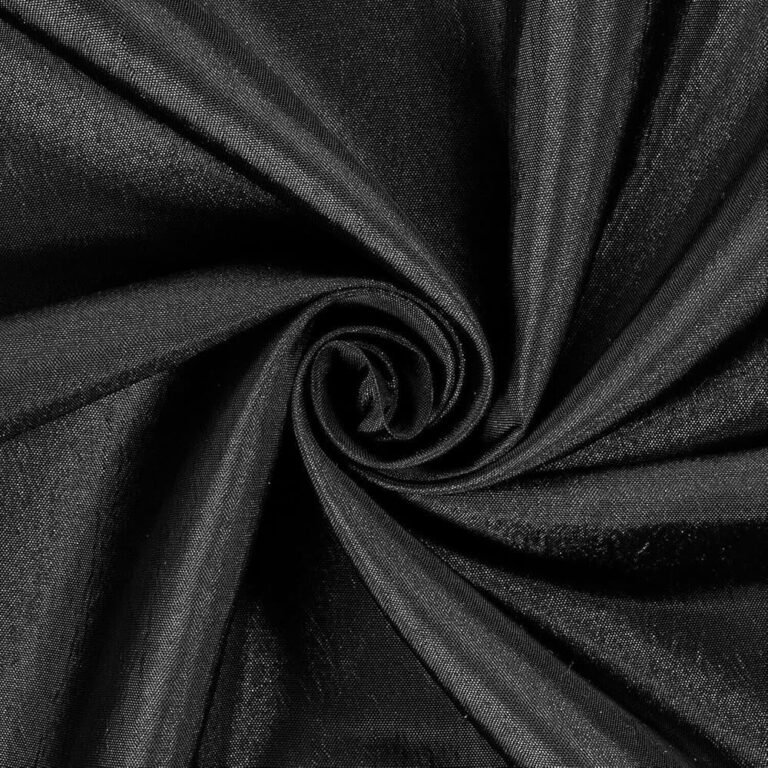
A taffeta fabric is a plain-weave textile characterized by a smooth, crisp surface, fine ribbing, and a subtle sheen produced by tightly twisted yarns woven in a simple over-under pattern. The word “taffeta” originates from the Persian term “taftah,” meaning “twisted woven,” which reflects the fabric’s tightly spun yarn construction. Taffeta can be made from silk, polyester, nylon, acetate, or blended fibers, with polyester taffeta being the most common variant used in commercial apparel and home textile production today.
Taffeta is classified as a plain-weave fabric, meaning the weft yarn passes alternately over and under the warp yarn in a simple, balanced structure. This weave type, combined with high-twist filament yarns, gives taffeta its signature crispness and structured drape, distinguishing it from softer, more fluid woven fabrics such as chiffon or charmeuse.
Fiber Composition of Taffeta Fabric
Taffeta fabric can be produced from several different fiber types, each affecting the fabric’s hand, cost, and performance profile.
Silk Taffeta Silk taffeta is the traditional and most premium form of taffeta, valued for its natural luster, fine drape, and historical use in formalwear and bridal apparel. Silk taffeta is more expensive to produce and requires more careful handling during manufacturing and garment construction.
Polyester Taffeta Polyester taffeta is the most widely used variant in commercial textile production due to its durability, wrinkle resistance, colorfastness, and lower production cost. It is commonly used in linings, outerwear shells, costumes, and home décor applications.
Nylon Taffeta Nylon taffeta offers high tensile strength and abrasion resistance, making it a common choice for jacket linings, bag linings, and technical outerwear components.
Acetate Taffeta Acetate taffeta provides a silk-like sheen at a lower cost than silk, though it has lower durability and requires more careful care instructions.
Manufacturing Process of Taffeta Fabric
Taffeta production begins with yarn preparation, where filament yarns are tightly twisted to increase yarn density and produce the fabric’s characteristic crisp texture. The twisted yarns are then woven using a plain weave construction on high-speed weaving looms.
After weaving, taffeta fabric typically undergoes a finishing process that may include:
- Heat setting, to stabilize the fabric structure and reduce shrinkage
- Calendering, to enhance surface smoothness and sheen
- Dyeing or printing, depending on the intended application
- Water-repellent or flame-retardant treatments, for technical or protective applications
The finishing stage plays a significant role in determining the fabric’s final hand, sheen level, and performance characteristics, which is why quality control during finishing is a key procurement consideration.
Key Characteristics of Taffeta Fabric
Taffeta fabric is defined by several distinguishing performance and aesthetic characteristics:
- Crisp hand: Taffeta holds its shape well, making it suitable for structured garment silhouettes such as full skirts, gowns, and tailored outerwear.
- Subtle sheen: The tightly twisted filament yarns reflect light in a way that produces a soft, non-metallic shine.
- Fine ribbing: A faint crosswise rib is often visible, resulting from the weave structure and yarn tension.
- Rustling sound: Taffeta produces a characteristic rustle when the fabric moves, a trait often associated with formalwear.
- Moderate breathability: Depending on fiber content, taffeta generally has lower breathability compared to natural fiber wovens, particularly in polyester variants.
- Wrinkle tendency: Taffeta, especially silk taffeta, can wrinkle and crease more visibly than fabrics with added elasticity or texture.
Common Applications of Taffeta Fabric
Taffeta’s structured drape and sheen make it suitable for a range of apparel and non-apparel applications:
- Formalwear and evening gowns
- Bridal apparel and bridal accessories
- Costume design and theatrical apparel
- Jacket and coat linings
- Home décor items such as curtains and decorative pillows
- Ribbons and packaging accents
- Historical and period costume reproduction
Taffeta Fabric Comparison Table
| Fabric Type | Composition | Sheen Level | Drape | Typical Use |
|---|---|---|---|---|
| Silk Taffeta | Silk | High | Structured | Bridal, formalwear |
| Polyester Taffeta | Polyester | Medium | Structured | Linings, costumes, outerwear |
| Nylon Taffeta | Nylon | Medium | Firm | Jacket linings, bags |
| Acetate Taffeta | Acetate | High | Structured | Formalwear, décor |
Fabric Selection Recommendations
Selecting the right taffeta variant depends on the specific requirements of the intended application.
End-Use Requirements For structured formalwear or bridal garments requiring premium drape and natural luster, silk taffeta is typically preferred. For linings, costumes, or budget-sensitive formalwear, polyester taffeta offers comparable visual appeal at a lower cost.
Durability Expectations Garments requiring frequent wear or higher abrasion resistance, such as jacket linings or bags, are better suited to nylon or polyester taffeta rather than silk or acetate.
Comfort Requirements For applications requiring extended skin contact, buyers should evaluate breathability and hand-feel, as synthetic taffeta variants may feel less breathable than natural fiber alternatives.
Washing Requirements Care requirements vary significantly by fiber type. Polyester and nylon taffeta generally offer easier care and better wash durability, while silk and acetate taffeta often require dry cleaning or delicate handling.
Budget Considerations Silk taffeta commands a premium price point due to raw material costs and processing requirements, while polyester and nylon variants offer more cost-efficient alternatives for large-volume production.
Procurement Considerations
When sourcing taffeta fabric, buyers should evaluate the following factors to reduce sourcing risk and ensure consistent product quality.
MOQ Requirements Minimum order quantities for taffeta fabric vary by supplier, fiber type, and whether the fabric is dyed to a custom color. Solid-color, in-stock taffeta typically carries lower MOQs than custom-dyed or printed variants.
Lead Time Expectations Lead times depend on whether the fabric is stocked or requires weaving, dyeing, and finishing from raw yarn. Custom color matching and specialty finishes typically extend production lead time.
Quality Control Procedures Buyers should request testing for shrinkage, colorfastness, tensile strength, and seam slippage, particularly for structured garment applications where fabric stability affects final garment shape.
Fabric Testing Requirements Common tests for taffeta include colorfastness to washing and rubbing, tear strength, and flammability testing for applications subject to safety regulations.
Color Consistency Management Because taffeta’s sheen can affect color perception under different lighting conditions, buyers should request lab dips and bulk approval samples before full production to confirm consistent color matching.
Packaging Requirements Taffeta fabric should be rolled rather than folded during packaging to avoid permanent crease marks, particularly for silk and acetate variants that are more prone to visible creasing.
Shipping Considerations Moisture-sensitive fibers such as silk require appropriate packaging to prevent water damage during transit, and buyers should confirm supplier packaging protocols before shipment.
Supplier Evaluation Factors Buyers should evaluate a supplier’s weaving capability, finishing equipment, dyeing consistency, and quality certifications when selecting a taffeta fabric source, particularly for programs requiring precise color and hand-feel replication across production runs.
Frequently Asked Questions
Is taffeta fabric stretchy? Standard taffeta has minimal stretch due to its tightly woven plain-weave construction. Stretch taffeta variants exist but include elastane content to introduce flexibility.
Is taffeta fabric breathable? Breathability depends on fiber content. Silk taffeta offers moderate breathability, while polyester and nylon taffeta generally have lower breathability due to the synthetic fiber structure.
What is the difference between taffeta and satin? Taffeta has a crisp, structured hand with a subtle sheen produced by a plain weave, while satin has a softer drape and higher gloss produced by a satin weave with longer floating yarns.
Can taffeta fabric be washed at home? Polyester and nylon taffeta can often be machine washed on a gentle cycle, while silk and acetate taffeta typically require dry cleaning to avoid water spotting and fiber damage.
Why does taffeta fabric make a rustling sound? The rustling sound is caused by the tightly twisted, high-density filament yarns rubbing against each other during movement, a characteristic feature of taffeta’s weave structure.
Is taffeta fabric suitable for everyday clothing? Taffeta is generally better suited to structured, occasion-based garments such as formalwear or linings rather than everyday casual clothing, due to its limited breathability and stretch.
What weight is taffeta fabric typically produced in? Taffeta fabric is commonly produced in lightweight to mid-weight ranges, generally between 50 and 100 GSM, depending on yarn density and intended application.
Key Takeaways
- Taffeta is a plain-weave fabric known for its crisp hand, subtle sheen, and fine ribbing.
- Fiber content, including silk, polyester, nylon, and acetate, significantly affects taffeta’s cost, durability, and care requirements.
- Taffeta is best suited to structured applications such as formalwear, bridal apparel, linings, and costume design.
- Quality control testing for shrinkage, colorfastness, and tensile strength helps reduce sourcing risk.
- Proper packaging and handling are important to prevent creasing and moisture damage during shipping.
Conclusion
Taffeta fabric remains a widely used textile across formalwear, bridal, lining, and décor applications due to its structured drape and distinctive sheen. Buyers evaluating taffeta for a collection should consider fiber composition, intended end-use, and supplier quality control capabilities before finalizing a sourcing decision. Companies such as SJZ Fabric represent the type of textile manufacturer commonly evaluated by apparel brands and fabric importers seeking reliable taffeta sourcing partners. A clear understanding of taffeta’s construction and performance characteristics allows procurement teams to make informed, risk-reduced sourcing decisions.