
Crepe fabric price sits in one of the widest ranges of any single fabric category, because “crepe” is not a single fabric but a family of fabrics defined by their crinkled, textured surface. A meter of polyester crepe used for basic linings and a meter of silk crepe de chine used for high-end blouses can share a name while differing in price by an order of magnitude. Understanding what actually creates that gap — fiber choice, yarn twist level, weave method, and finishing complexity — is the difference between confidently interpreting a quotation and simply comparing numbers on a spec sheet.
For apparel brands, occasion-wear buyers, and womenswear producers, crepe fabric is often specified for its drape and matte, slightly grainy hand-feel rather than for a specific fiber content. This guide explains what actually drives crepe fabric price across different fiber types, how to source competitively priced crepe from China without ending up with a sub-standard substitute, and what to verify before placing a bulk order.
What Drives Crepe Fabric Price
Fiber Content Crepe fabric is produced across a wide range of fibers — silk, polyester, viscose (rayon), wool, and blends — and this is the single largest driver of price. Silk crepe sits at the top of the range due to raw silk cost, wool crepe and viscose crepe fall in the middle depending on grade, and polyester crepe generally sits at the lower end while dominating commercial volume.
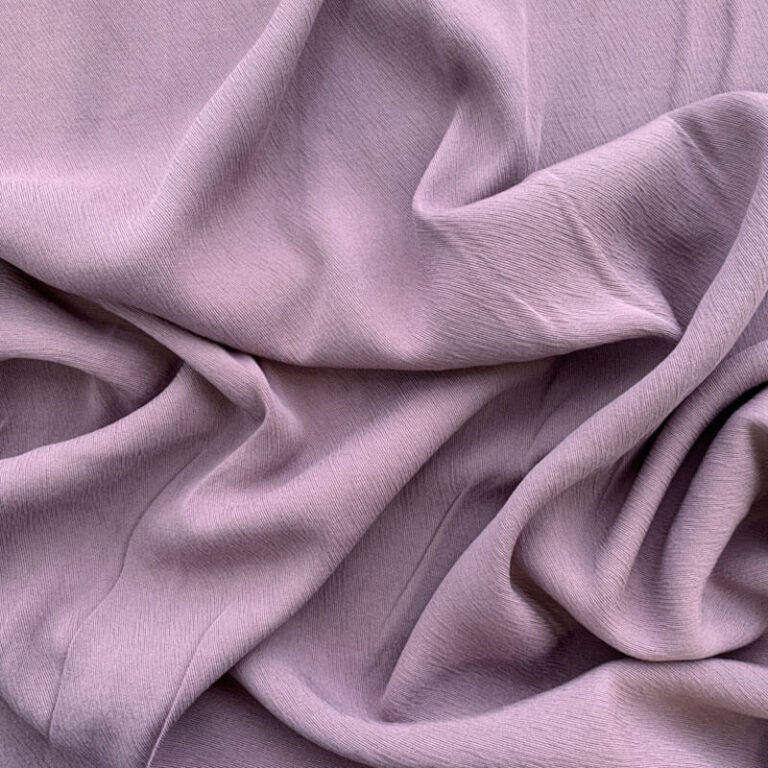
Yarn Twist Level The crinkled surface that defines crepe fabric comes from highly twisted yarns, typically twisted at 2,000 to 4,000 turns per meter. Higher twist yarn is more expensive to spin, requires longer setting times, and produces a more pronounced crepe texture, so buyers requesting a strong, well-defined crepe surface should expect a corresponding cost increase over lightly-twisted alternatives.
Weave Method Crepe effect can be created through several methods, each with different cost implications: true crepe weaves using high-twist yarn, crepe weaves with special weave structures on standard yarn, and chemically produced crepe finish applied to a plain-weave base. True twist-crepe generally costs more than chemically finished crepe but offers longer-lasting texture through washing and wear.
Crepe Type and Construction Different named crepe types carry different production costs: crepe de chine is fine, lightweight, and often silk or fine polyester; crepe georgette is sheer and lightweight; wool crepe is heavier and more structured; crepe-back satin combines a crepe face with a satin reverse and involves more complex weaving. Each construction has its own base price range.
Fabric Weight (GSM) Heavier crepe constructions require more yarn per square meter, directly increasing raw material cost. Lightweight blouse-weight crepe generally sits at 60–100 GSM, while dress- and suiting-weight crepe can reach 150–250 GSM or more.
Dyeing and Printing Solid piece-dyed crepe is generally the most cost-efficient. Digital-printed and rotary-printed crepe carry higher processing costs, and yarn-dyed crepe (used for stripes or checks in higher-end applications) adds further cost due to yarn preparation.
Finishing Treatments Crepe fabric may be sanforized to reduce shrinkage, enzyme-washed for softer hand-feel, or treated for wrinkle resistance. Each additional finish adds to the base fabric cost.
Order Volume As with most woven fabrics, larger orders unlock better per-meter pricing due to loom utilization and dye-lot efficiency; small orders often carry a proportionally higher per-meter cost.
Sourcing Region Crepe fabric sourced from concentrated Chinese textile clusters — particularly Zhejiang for polyester and blended crepe, and Jiangsu for silk crepe — generally offers competitive pricing due to specialized regional infrastructure and vendor density.
Crepe Fabric Price Reference Table
| Crepe Fabric Type | Fiber Base | Relative Price Level | Common Application |
|---|---|---|---|
| Polyester Crepe | Polyester | Lower | Blouses, linings, budget dresses |
| Polyester Crepe de Chine | Polyester | Lower-Medium | Lightweight blouses, scarves |
| Viscose (Rayon) Crepe | Viscose | Medium | Mid-range dresses, drapey tops |
| Wool Crepe | Wool | Medium-High | Suiting, structured dresses |
| Silk Crepe de Chine | Silk | High | Premium blouses, lingerie |
| Silk Georgette | Silk | High | High-end eveningwear, bridal |
Note: Actual crepe prices vary considerably by fiber source, yarn quality, twist level, and current market conditions; current quotations should always be used for procurement budgeting rather than category benchmarks.
How To Source Competitive Crepe Fabric From China
China produces a wide range of crepe fabric across multiple fiber categories, and buyers can access more favorable pricing by understanding how different regional clusters and production stages are structured.
Match Fiber Type to Regional Specialization Different Chinese textile clusters specialize in different crepe fibers. Polyester and polyester-blend crepe is heavily concentrated around Shaoxing (Zhejiang), while silk crepe production is stronger in Jiangsu and parts of Zhejiang. Sourcing directly from a region specialized in the specific fiber generally offers better pricing and technical capability than buying through a supplier in an unrelated region.
Consider Twist Level and Weave Method Tradeoffs Buyers who do not require the most pronounced crepe texture may find that a well-executed crepe weave on standard-twist yarn delivers a similar look at meaningfully lower cost than fabric produced with fully high-twist crepe yarn. Discussing texture requirements with the supplier — rather than only requesting “crepe” — often surfaces cost-effective alternatives.
Use Standard In-Stock Widths and Weights Mills producing crepe fabric maintain standard-width and standard-weight in-stock greige fabric that can be piece-dyed to specification. Buyers who accept standard specifications rather than fully custom yarn, width, and weight requirements generally pay less and receive shorter lead times.
Consolidate Small Color Orders Piece-dyeing crepe requires minimum dye-lot volumes; combining multiple color variants into fewer larger dye lots, where design flexibility allows, reduces per-color minimums and generally improves the total order cost profile.
Consider Fabric Markets For Small Quantities For designers or brands sourcing smaller quantities, wholesale fabric markets in Guangdong and Zhejiang carry a wide range of ready-stock crepe fabric across fiber types. Direct-to-buyer market pricing and vendor density in these clusters typically produce competitive per-meter pricing for smaller-volume needs.
Confirm Currency and Payment Terms Early Silk crepe orders in particular can involve substantial working capital due to raw silk cost; buyers should confirm currency, deposit percentage, and balance payment terms in writing before production begins.
Precautions When Buying Crepe Fabric
Watch for Fiber Substitution in “Silk-Like” Crepe Some suppliers describe polyester crepe with terms such as “silky crepe” or “artificial silk crepe” in ways that can be mistaken for actual silk. Buyers specifying silk should require fiber content testing on delivered goods, since the price and quality difference is significant.
Verify Twist Level and Crepe Effect The visual crepe texture on a small sample may be more pronounced than on bulk production if the sample was made with higher-twist yarn than the bulk order. Buyers concerned about consistent crepe effect should require a first-bulk sample review before full production release.
Check for Chemical Crepe Finish vs True Crepe Weave Some low-cost “crepe” fabric relies on chemical finishing applied to plain-weave fabric to create a crepe-like surface. This finish tends to wash out over time, reducing the crepe texture significantly after several launderings. Buyers should confirm whether crepe is produced through yarn twist and weave or through chemical finishing, and factor that into wash-durability expectations.
Verify GSM and Fabric Width Crepe fabric weight and width are common substitution points in cost-competitive orders. Buyers should verify actual delivered GSM and width against the agreed specification rather than assuming the sample specification applies to bulk.
Confirm Colorfastness for Deep and Bright Colors Some fibers used in crepe — particularly viscose — can be challenging to dye evenly, and darker or brighter shades may show reduced colorfastness to rubbing and washing. Colorfastness testing should be part of pre-shipment quality control.
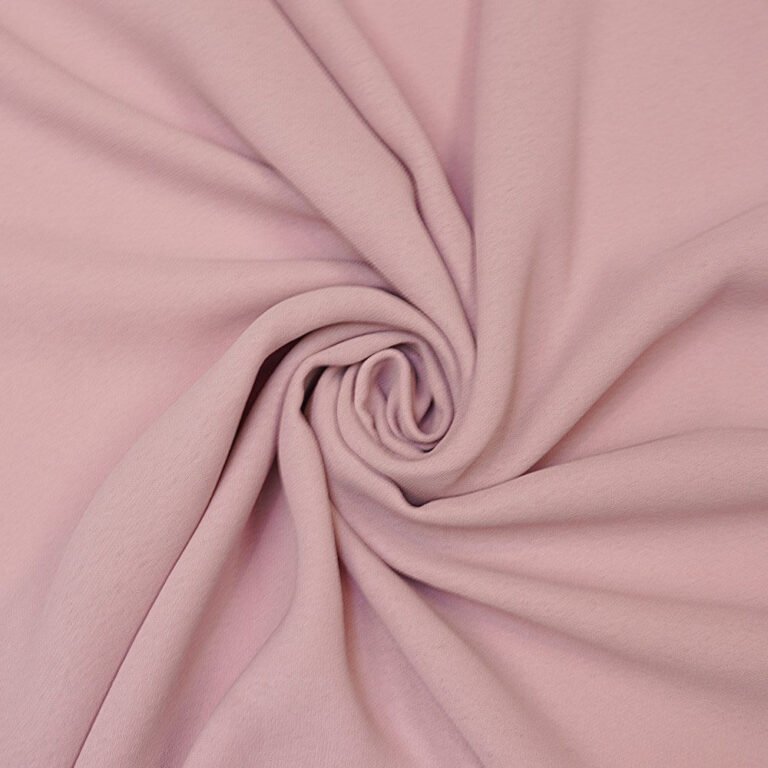
Confirm Shrinkage Testing, Especially for Viscose Crepe Viscose crepe is prone to shrinkage after washing, sometimes significantly so. Buyers should confirm shrinkage testing results before bulk approval and communicate care instructions clearly to downstream customers.
Document Sample-to-Bulk Consistency Because crepe is defined by a subtle textural quality, sample-to-bulk consistency is a common dispute point. Approved samples should be signed, sealed, and referenced in the purchase agreement so both parties share a clear physical reference for evaluating bulk delivery.
Fabric Selection Recommendations
End-Use Requirements Buyers producing budget-conscious blouses or dresses can generally rely on polyester crepe, while premium eveningwear and silk-blouse programs justify the higher cost of silk crepe de chine or silk georgette. Wool crepe suits structured dresses, jackets, and lightweight suiting.
Fabric Performance Buyers requiring stretch should specify a crepe blended with elastane rather than pure natural or synthetic crepe, since traditional crepe generally offers minimal mechanical stretch even with its textured hand.
Comfort Requirements For skin-contact garments and warm-climate wear, viscose crepe or silk crepe generally offers a cooler, more breathable feel than polyester crepe, at a corresponding price premium.
Durability Expectations True twist-crepe fabrics retain their surface texture through repeated washing more reliably than chemically finished crepe, which should be factored into any buyer’s wash-cycle expectations for the finished garment.
Washing Requirements Silk and viscose crepe generally require dry cleaning or delicate hand washing, while polyester crepe can typically be machine washed on a gentle cycle. Care requirements should be confirmed before finalizing fabric selection.
Budget Considerations Where budget is a constraint, polyester crepe offers substantial cost savings versus silk crepe with visually comparable drape, though buyers should be transparent with downstream customers about fiber content.
Procurement Considerations
MOQ Requirements Silk crepe generally carries higher MOQs than polyester crepe due to raw silk sourcing costs; viscose crepe typically sits between the two. Confirm MOQ per fiber category rather than assuming a single MOQ applies across all crepe types.
Lead Time Expectations Standard-width in-stock greige polyester crepe with piece dyeing typically ships fastest; silk crepe and custom-woven high-twist crepe generally require longer lead times due to yarn sourcing and weaving complexity.
Quality Control Procedures Pre-shipment inspection should confirm fiber content, GSM, width, crepe texture consistency, and colorfastness. First-bulk sample approval is particularly important for crepe fabric due to the subjective nature of crepe surface texture.
Fabric Testing Requirements Common tests include fiber content verification, GSM verification, shrinkage testing, and colorfastness to washing and rubbing. Silk-content orders should include fiber-specific verification testing.
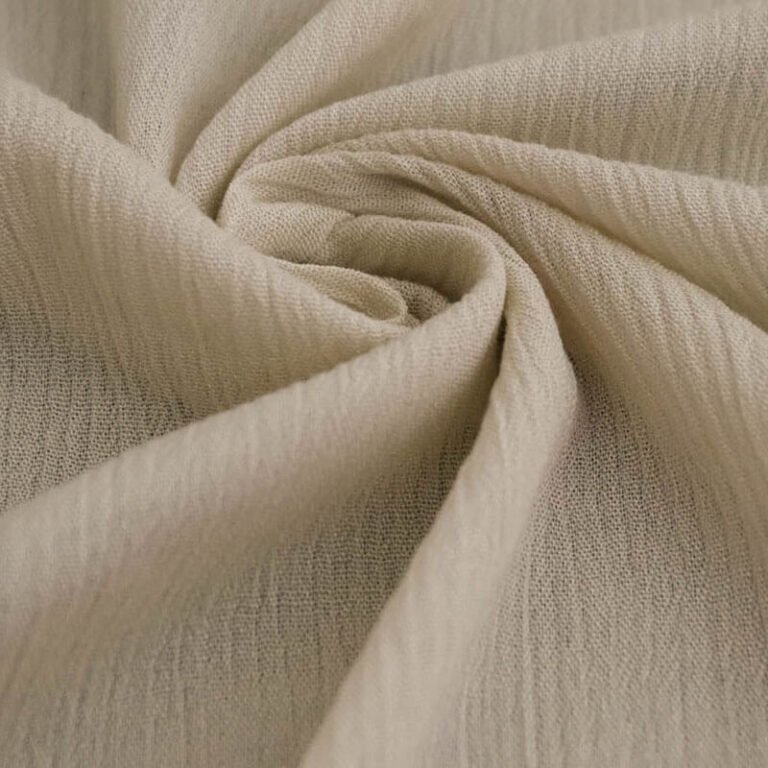
Color Consistency Management Dye-lot variation can be visible on crepe fabric, particularly on solid shades where the textured surface can amplify subtle shade differences. Lab dip and bulk approval samples should be signed off before full production.
Packaging Requirements Crepe fabric should be rolled rather than folded to preserve texture consistency and avoid permanent fold marks. Silk crepe requires additional moisture protection during transit.
Shipping Considerations Sea freight is standard for bulk orders. Silk crepe or high-value crepe orders may be shipped by air for smaller quantities, and buyers should factor the freight method into total landed cost calculations.
Supplier Evaluation Factors Buyers should evaluate a crepe fabric supplier’s yarn sourcing consistency, weaving equipment for high-twist yarn handling, dye-lot management, and prior track record with the specific fiber category being ordered.
Frequently Asked Questions
Why does crepe fabric price vary so widely? Crepe is a family of fabrics rather than a single fabric, spanning silk, wool, viscose, and polyester with very different raw material costs, so a category-wide price range does not exist; each fiber and construction has its own price band.
Is silk crepe always more expensive than polyester crepe? In almost all cases, yes. Silk crepe carries a substantial premium over polyester crepe due to raw silk cost, though the exact multiple varies with silk market conditions and construction complexity.
Can I get the look of silk crepe at a lower price? Polyester crepe de chine and viscose crepe can approximate the drape and matte hand of silk crepe at meaningfully lower cost. Buyers should be transparent about fiber content with downstream customers if substituting for silk in a product previously specified as silk.
What does “high twist” mean in crepe fabric? High twist refers to yarn twisted at 2,000–4,000 turns per meter or more, producing the crinkled surface characteristic of crepe fabric. Higher twist generally produces a more pronounced and durable crepe texture but adds to fabric cost.
Does chemically finished crepe cost less than true crepe weave? Yes, but chemically finished crepe generally loses its texture more quickly through washing than true twist-crepe. Buyers should factor washing durability into the price comparison rather than considering only initial per-meter cost.
Is crepe fabric prone to shrinkage? Shrinkage varies by fiber and construction; viscose crepe is generally the most prone to shrinkage, followed by wool and silk crepe, while polyester crepe generally shrinks the least. Shrinkage testing should be part of pre-production quality control.
Which region in China is best for sourcing crepe fabric? Zhejiang (particularly Shaoxing) is a major center for polyester and blended crepe; silk crepe production is stronger in Jiangsu and parts of Zhejiang; buyers should match sourcing region to the specific fiber category required.
Key Takeaways
- Crepe fabric price varies dramatically by fiber content — polyester at the lower end, silk at the higher end, with viscose and wool in between — not by a single category benchmark.
- Yarn twist level, weave method, and whether crepe texture is produced by yarn twist or chemical finishing all directly affect price and long-term texture durability.
- Sourcing region matters; matching fiber type to a regional specialization in China generally produces better pricing and technical capability than sourcing outside that specialization.
- Fiber substitution (polyester marketed as silk), chemical crepe finish substitution, and GSM shortfalls are recurring risks in low-cost crepe procurement.
- First-bulk sample approval and clear written specifications are especially important for crepe due to the subjective nature of its textured surface.
Conclusion
Crepe fabric pricing rewards buyers who understand the specific fiber, twist, and construction they are actually paying for, rather than treating “crepe” as a single specification. For related sourcing context, buyers can review guides on dress fabric types, dressmaking fabric, and the crepe fabric product page. Manufacturers such as SJZ Fabric are commonly consulted by apparel brands seeking clear specifications and consistent crepe texture across production runs. A clear grasp of the cost drivers behind crepe fabric ultimately supports more confident supplier negotiation and more predictable production outcomes.