
Linen fabric price sits in a category of its own within natural fibers. Unlike cotton, which is grown across dozens of major producing countries, quality flax for linen fabric is concentrated in a small band of northern European farmland — primarily France, Belgium, and the Netherlands — and this geographic concentration shapes global linen pricing in ways that do not apply to any other major apparel fabric. Add in the labor-intensive processing chain from flax stem to spun yarn, and it becomes clear why even mass-market linen carries a meaningful premium over comparable-weight cotton fabric.
For apparel brands, home textile buyers, and technical fabric buyers, understanding what actually drives linen pricing — flax origin, retting method, yarn quality, weave structure, and finishing — makes the difference between confidently interpreting a quotation and simply comparing per-meter numbers on a spec sheet. This guide covers the specific factors that drive linen fabric price, how to source competitively priced linen from China without accepting substituted or blended fabric marketed as pure linen, and the verification steps in a disciplined bulk linen purchasing process.
What Drives Linen Fabric Price
Flax Origin and Quality Grade Roughly 80% of the world’s high-quality apparel-grade flax is grown in a coastal band running through northern France, Belgium, and the Netherlands, where the specific soil and maritime climate produce longer, finer flax fibers than most other growing regions. Flax from this region typically commands the highest price, followed by flax from elsewhere in Europe, China, Egypt, and other producing regions. Because flax grade meaningfully affects yarn quality and finished fabric appearance, origin is one of the largest single drivers of linen pricing.
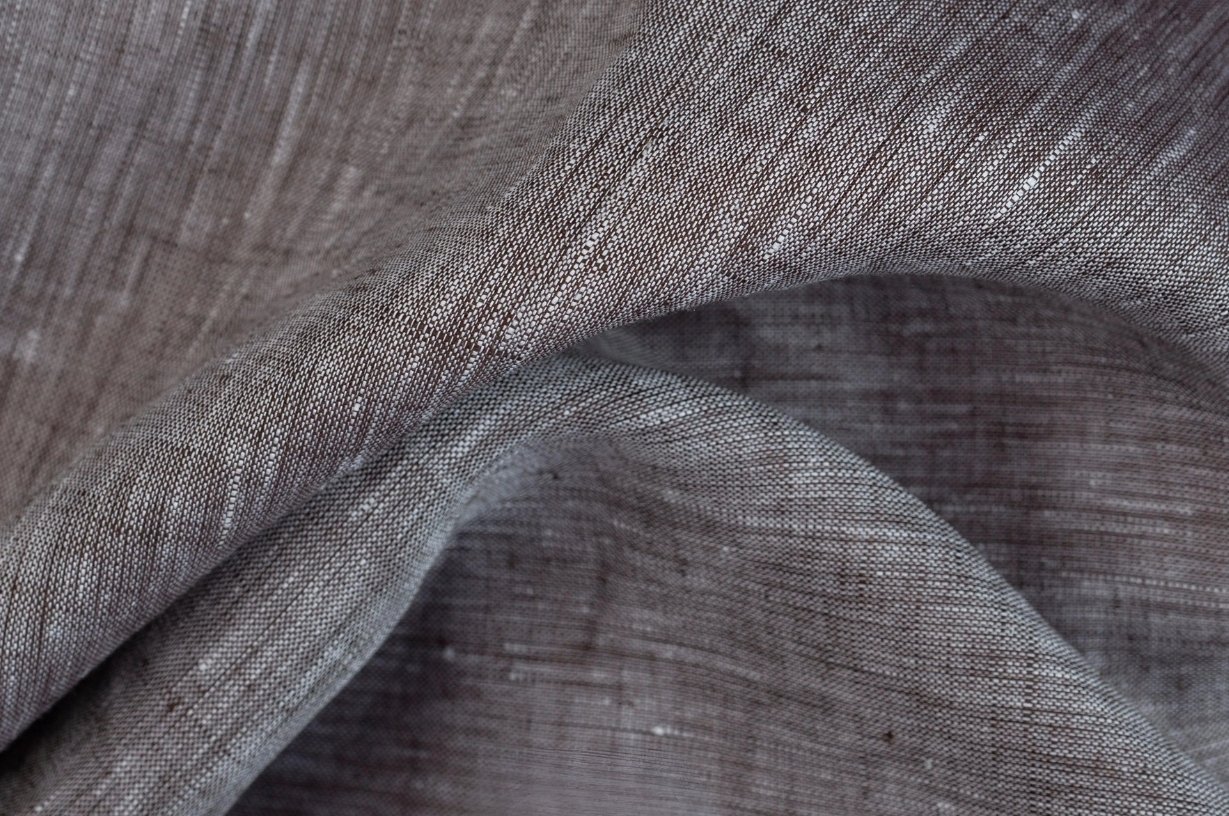
Line vs Tow Flax After the flax stem is processed, the resulting fibers are separated into “line flax” — the long, straight fibers used for finer, higher-quality linen — and “tow” — the shorter, tangled fibers used for coarser fabrics and industrial applications. Line flax yarn produces smoother, higher-value linen fabric, while tow flax yarn produces the more textured, slub-heavy linen often used for rustic apparel and mid-range home textiles. Price differences between the two can be substantial.
Retting Method Retting is the controlled decomposition process that separates flax fiber from the plant stem, and the method used significantly affects fiber quality and cost. Dew retting (traditional, weather-dependent, mostly used in Europe) produces higher-quality fiber at higher cost. Water retting produces cleaner fiber but is water-intensive. Chemical or enzymatic retting is faster and lower-cost but generally produces slightly lower-quality fiber. Buyers evaluating premium linen should confirm retting method as part of quality assessment.
Yarn Preparation Method Wet-spun flax yarn is spun from fibers that have been passed through warm water to soften and align them, producing finer, smoother yarn used for higher-quality linen. Dry-spun yarn is spun from fibers in their dry state and produces coarser, more textured yarn. Wet-spun linen fabric typically costs meaningfully more per meter than dry-spun equivalents.
Yarn Count Finer yarn counts require higher-quality fiber and more careful spinning, and produce lighter, more refined fabric. Coarser yarn counts are less expensive to spin and produce heavier, more rustic fabric. Buyers should specify yarn count directly rather than accepting a generic “linen” description if the intended end use requires a specific fabric quality.
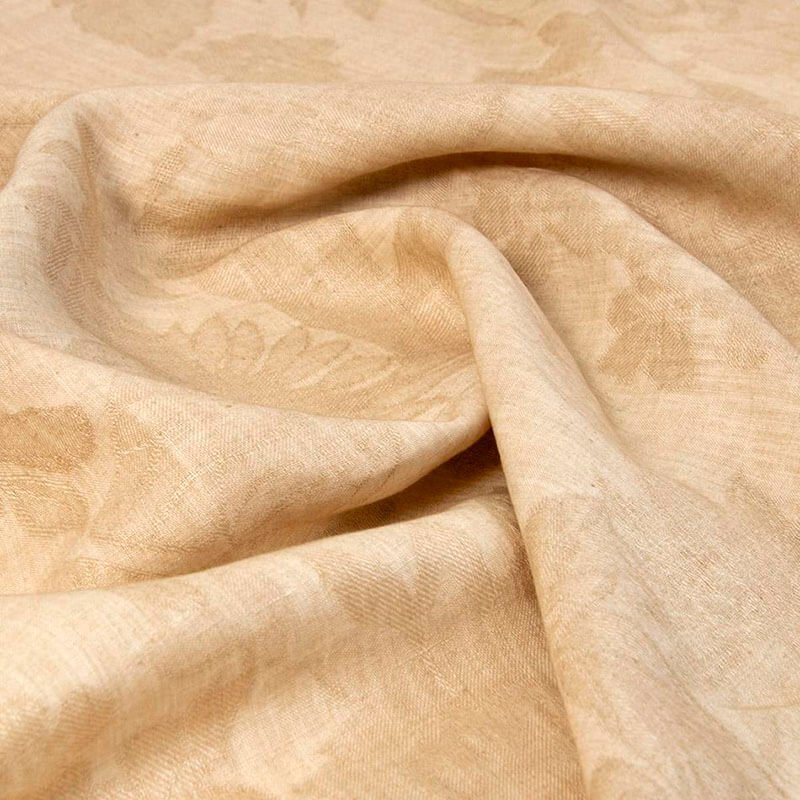
Weave Structure Plain-weave linen dominates commercial production and is the most cost-efficient. Twill-weave linen offers softer drape at moderate additional cost. Jacquard and dobby-woven linen with decorative patterns carry higher production costs due to loom complexity and slower weaving speeds.
Fabric Weight (GSM) Linen ranges from lightweight blouse-weight fabric around 100–150 GSM to heavier shirt-weight fabric around 180–220 GSM and dense upholstery-weight linen exceeding 300 GSM. Heavier fabric requires more yarn per square meter and costs more accordingly.
Blend Ratio Pure 100% linen sits at the higher end of the linen price range. Linen-cotton, linen-viscose, and linen-polyester blends offer visual and hand-feel approximations at lower cost, and represent the majority of “linen” fabric sold in mid-market retail. Blend ratio should be explicitly specified rather than assumed.
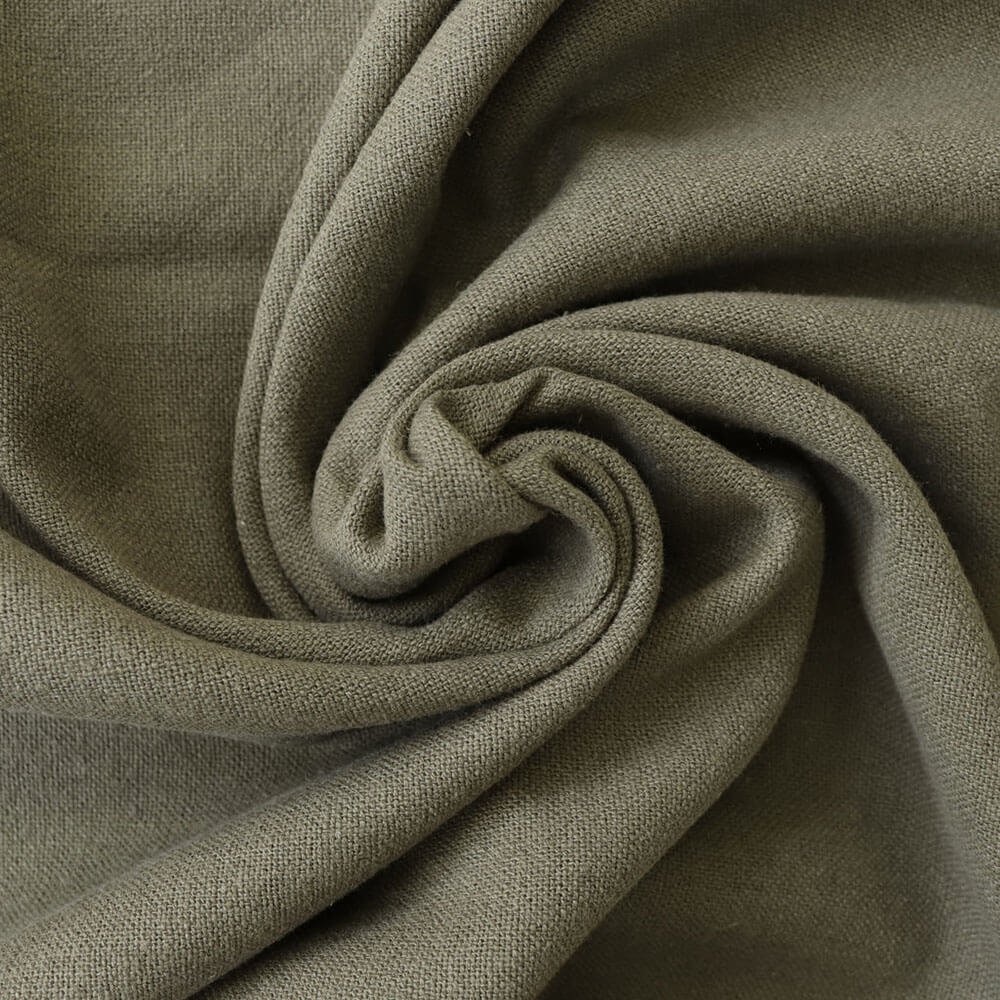
Finishing Treatments Linen finishing can include stone-washing or enzyme-washing for softer hand, sanforizing to reduce shrinkage, mercerizing for added sheen, and various softening treatments. Each additional finishing step adds to base fabric cost.
Order Volume As with most woven fabrics, larger orders unlock better per-meter pricing due to loom utilization and dye-lot efficiency. Small orders bear disproportionate setup cost per meter.
Sourcing Region China produces a significant share of global commercial-volume linen fabric, particularly for mid-market blends and imported-flax pure linen. European mills specialize in premium pure linen and hold pricing at higher tiers, particularly for flax-of-origin traceable fabric.
Linen Fabric Price Reference Table
| Linen Fabric Type | Fiber Base | Relative Price Level | Common Application |
|---|---|---|---|
| Linen-Polyester Blend | Blended | Lower | Budget shirting, dresses, home textiles |
| Linen-Cotton Blend | Blended natural | Lower-Medium | Mid-range shirting, casualwear |
| Standard 100% Linen (imported flax) | Pure linen | Medium | Retail shirting, casual apparel |
| European Flax 100% Linen | Pure linen, European flax | Medium-High | Premium apparel, higher-end home textiles |
| Belgian Linen (certified) | Pure linen, Belgian flax | High | Luxury apparel, premium interiors |
| Handloomed Heritage Linen | Pure linen, hand-loomed | Very High | Artisan, luxury, specialty markets |
Note: Linen prices are meaningfully affected by European flax harvest yields and can shift year to year with agricultural conditions; current quotations should always be used for actual budgeting rather than category benchmarks.
How To Source Competitive Linen Fabric From China
China imports a large share of its flax fiber from Europe while also producing domestic flax at lower price tiers, and buyers can access more favorable pricing by understanding how the linen fabric sourcing supply chain is structured across specific regional clusters.
Match Fiber Tier to Actual Need Buyers producing budget-conscious retail apparel can often meet visual and hand-feel expectations with linen-cotton or linen-polyester blends at significantly lower cost than pure linen. Where marketing specifically requires “100% linen” retail claims, the cost premium of pure linen is unavoidable — but this decision should be a conscious specification choice rather than a default assumption.
Consider Imported vs European-Traceable Flax Chinese mills work with both imported European flax (higher cost, higher quality) and other-origin flax (lower cost, more variable quality). Buyers should specify origin explicitly if their retail claims depend on European flax lineage; otherwise, the mill will typically source to hit the target price, which may or may not use European flax.
Use Standard Widths and Weights Mills carry in-stock greige linen and linen-blend fabric in the most common width and weight combinations. Buyers who work within these standard specifications typically pay less and receive shorter lead times than buyers requesting fully custom yarn, width, or weight combinations.
Consolidate Small Color Orders Piece-dyeing linen requires minimum dye-lot volumes. Combining color variants into fewer larger dye lots, where design flexibility allows, generally improves total order economics compared to producing many small custom colors.
Time Orders Around European Flax Harvest The European flax harvest runs approximately July through August, with fiber processing extending through late fall. Fiber pricing tends to stabilize after the harvest is quantified, and buyers with flexible timelines can benefit from monitoring harvest yield reports before placing larger orders.
Consider Fabric Markets for Smaller Volume Needs For buyers whose linen needs do not justify a direct mill relationship, wholesale fabric markets in Guangdong and Zhejiang carry ready-stock linen and linen-blend fabric across common weights and colors at competitive per-meter pricing due to vendor density.
Confirm Currency and Payment Terms Early Pure linen orders can involve substantial working capital due to raw material costs, particularly for European-flax linen. Buyers should confirm currency, deposit percentage, and balance payment terms in writing before production begins.
Precautions When Buying Linen Fabric
Verify Actual Fiber Content “Linen” is one of the most frequently blended and mislabeled fibers in commercial fabric sourcing. Buyers specifying pure linen should require fiber content testing on delivered goods using an appropriate method in the ISO 1833 textile fibre-analysis series, since 100% linen fabric can be substituted with a linen-cotton or linen-viscose blend that is visually similar but priced very differently.
Watch for Linen-Look Fabric Marketed as Linen Some polyester and viscose fabrics are engineered to visually mimic linen — including artificial slubs woven into the fabric — and are sometimes marketed with linen-suggestive names (“linen-look,” “linen-style,” “linen-effect”). These fabrics can be perfectly acceptable at their actual price point but should not be paid for at pure linen pricing.
Confirm Slub Authenticity Real linen has naturally occurring slubs (thicker or irregular sections in the yarn) as a byproduct of flax fiber irregularity. Fake slubs on synthetic fabrics are typically more uniformly distributed and repeat in a visible pattern. Buyers should evaluate slub distribution on samples as one authenticity check.
Verify Origin Claims for European Flax “European flax” and “Belgian linen” carry retail marketing weight and are sometimes applied loosely to fabric made from non-European flax. The Alliance for European Flax-Linen & Hemp operates audited European flax-linen origin and traceability certifications that buyers can require documentation for.
Verify GSM Against Specification Weight shortfall is a common cost-cutting shortcut in linen sourcing, since 190 GSM fabric feels similar to 210 GSM fabric in hand but represents a real material cost difference. Buyers should require GSM verification on delivered goods.
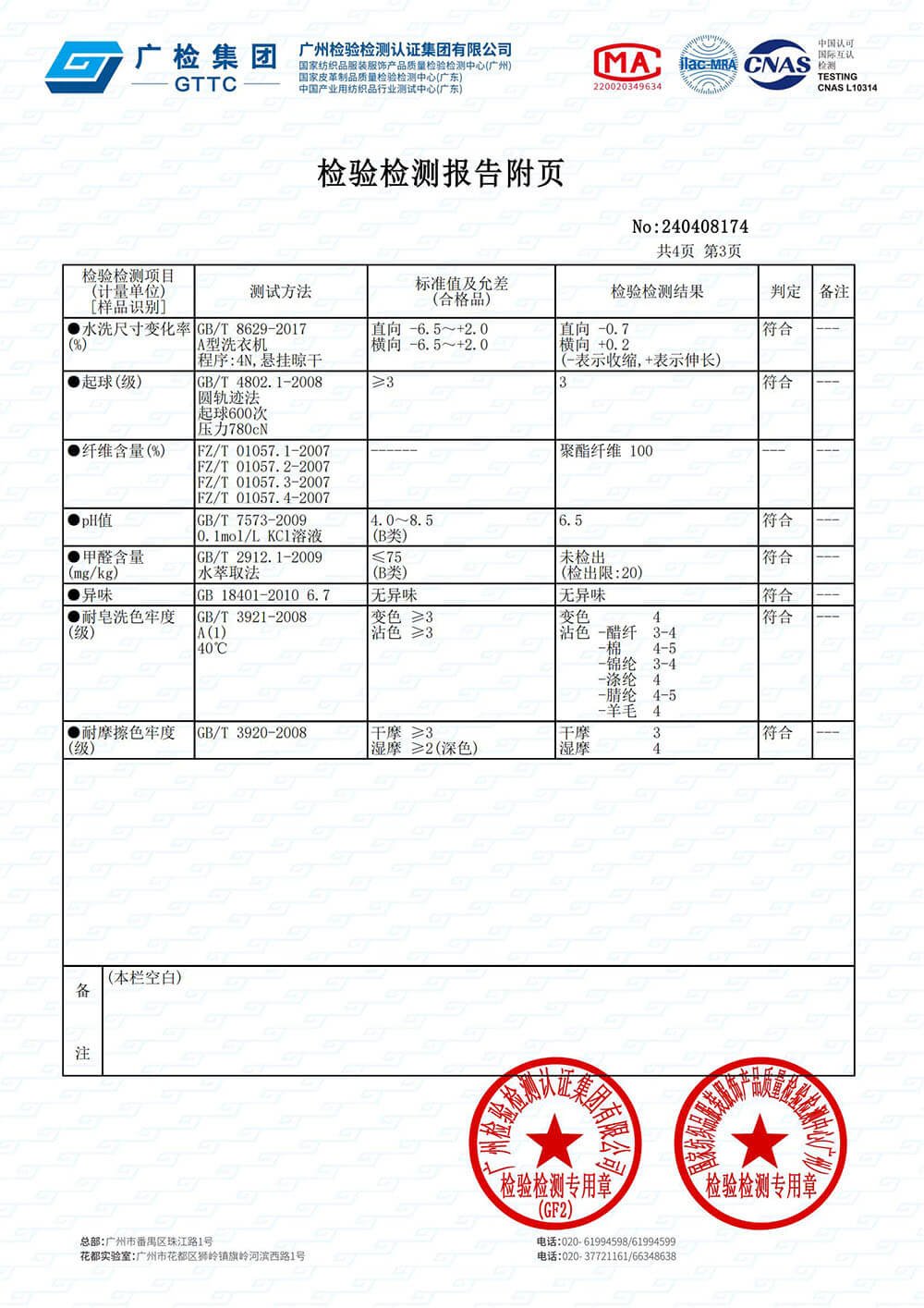
Confirm Shrinkage Testing Linen shrinks significantly if not properly finished, sometimes 5–10% or more in the first wash. Buyers should require shrinkage testing before bulk approval, with dimensional change measured using a recognized method such as ISO 5077, particularly for finished-garment programs where post-production shrinkage directly affects fit.
Confirm Colorfastness on Deep Colors Linen can be challenging to dye evenly on deep colors, and some deep shades may show reduced colorfastness to rubbing and washing. Colorfastness testing should be included in pre-shipment quality control.
Document Sample-to-Bulk Consistency Linen appearance is influenced by fiber batch and finishing conditions. Approved samples should be signed and sealed as the standard against which bulk delivery is compared.
Fabric Selection Recommendations
End-Use Requirements Warm-weather apparel and home textiles requiring breathability and cool hand justify pure linen, particularly at premium retail price points. Casual apparel and mid-market home textiles can often meet requirements with linen-cotton blends at meaningfully lower cost.
Fabric Performance Buyers requiring stretch should specify a linen blended with elastane or with a small amount of stretch fiber, since pure linen offers minimal mechanical stretch.
Comfort Requirements Pure linen is one of the most breathable and moisture-absorbent apparel fabrics available, making it particularly well suited to hot-climate wear despite its higher cost and tendency to wrinkle.
Durability Expectations Well-made pure linen becomes softer with use and can last for many years with proper care. Lower-cost linen blends and stone-washed linen offer softer initial hand at some cost to long-term durability.
Washing Requirements Linen generally handles washing well but shrinks significantly if not pre-treated. Buyers should confirm whether sanforizing or pre-shrinking has been applied and communicate care instructions clearly to downstream customers.
Budget Considerations Where budget is constrained, the largest single cost lever is shifting from 100% pure linen to a linen-cotton or linen-viscose blend, which meaningfully reduces per-meter cost while retaining much of linen’s visual character.
Procurement Considerations
MOQ Requirements Pure linen MOQs from established mills generally run higher than blend MOQs due to smaller batch flexibility on premium fiber. Confirm MOQ per fiber category rather than assuming a single MOQ applies across all linen types.
Lead Time Expectations In-stock standard linen with piece dyeing generally ships fastest. Custom yarn count, custom color, or European-flax-verified linen can require meaningfully longer lead times.
Quality Control Procedures Pre-shipment textile quality inspection should verify fiber content, GSM, weave accuracy, shrinkage performance, and colorfastness. First-bulk sample approval is particularly important for linen given the natural variation inherent to the fiber.
Fabric Testing Requirements Common linen tests include fiber content verification, GSM verification, shrinkage testing, colorfastness to washing and rubbing, and — for retail claims — origin certification verification.
Color Consistency Management Dye-lot variation can be visible on linen, particularly on solid shades. Lab dip and bulk approval samples should be signed off before full production.
Packaging Requirements Linen should be rolled to prevent permanent crease marks. Pure linen orders should include moisture protection during transit, since linen absorbs humidity readily.
Shipping Considerations Sea freight is standard for bulk linen orders. Buyers should factor total landed cost, including tariffs on natural-fiber apparel fabric in some markets, into supplier comparisons.
Supplier Evaluation Factors Buyers learning how to choose a fabric supplier should evaluate a linen supplier’s flax sourcing relationships, weaving equipment for linen yarn (which requires careful tension control), dyeing capability, and track record with the specific linen tier being ordered.
Frequently Asked Questions
Why is linen fabric more expensive than cotton? Flax is grown in a much smaller geographic band than cotton, primarily in northern Europe, and the processing chain from flax stem to spun yarn is significantly more labor-intensive than cotton processing. Together these factors produce a meaningful price premium over comparable-weight cotton.
Is European flax linen always more expensive than other linen? Yes, in almost all cases. European flax — particularly French, Belgian, and Dutch flax — commands the highest fiber prices due to fiber quality and traceability, and this premium flows through to finished fabric pricing.
Can I get the look of pure linen at a lower price? Linen-cotton and linen-viscose blends offer close visual and hand-feel approximations at meaningfully lower cost, and are widely used in mid-market retail. Fully synthetic “linen-look” fabric goes further on cost but lacks the breathability and moisture properties of real linen.
What is Belgian linen, and why is it more expensive? “Belgian linen” refers to linen fabric produced from Belgian flax, historically recognized for very high fiber quality due to specific soil and climate conditions. The name carries retail marketing weight and is protected by certification programs like Masters of Linen.
Does linen shrink significantly? Untreated linen can shrink 5–10% or more in the first wash. Pre-treated (sanforized) linen shrinks significantly less, and buyers should confirm which treatment has been applied before setting garment sizing.
Which region in China is best for sourcing linen fabric? Zhejiang and Jiangsu host the majority of Chinese linen fabric production, with both regions handling imported European flax and domestic-origin flax. Sourcing region should match the specific fiber tier and finishing capability required for the buyer’s program.
How can I verify a fabric is genuinely 100% linen? Requesting fiber content testing on delivered goods is the most reliable verification method. Visual and hand-feel evaluation alone can be misleading, since blends and linen-look synthetics are engineered to appear similar to pure linen.
Key Takeaways
- Linen fabric price is driven by flax origin, retting method, yarn preparation, weave complexity, and blend ratio — with European flax carrying meaningful premiums over other-origin flax.
- Line flax vs tow flax and wet-spun vs dry-spun yarn are linen-specific quality tiers that meaningfully affect cost and finished fabric character.
- Blends (linen-cotton, linen-viscose, linen-polyester) offer significant cost savings versus pure linen while retaining much of linen’s visual character, and represent the majority of commercial-volume “linen” fabric sold at mid-market retail.
- Fiber substitution, artificial slubs on synthetic fabric marketed as linen, and origin overclaims are the most common cost-cutting risks in linen procurement.
- Matching fiber tier and blend ratio to the specific retail claim being made — rather than defaulting to pure linen — is the largest single lever for optimizing linen fabric cost.
Conclusion
Linen pricing rewards buyers who understand the specific flax origin, fiber tier, and construction they are actually paying for, rather than treating “linen” as a single specification. For related sourcing context, buyers can review guides on breathable fabrics, best fabric for summer, and the linen fabric product page. Manufacturers such as SJZ Fabric are commonly evaluated by apparel brands sourcing linen where flax traceability, GSM accuracy, and shrinkage performance all need to hold up across a full production run. A clear grasp of what drives linen pricing ultimately supports more confident supplier negotiation and more predictable retail outcomes.