
“Spandex fabric” is one of the most commonly requested fabric categories in modern apparel sourcing, but it is also one of the most frequently misunderstood on a technical level. Spandex is not typically sold as a standalone fabric. It is a highly elastic synthetic fiber — also known as elastane or by branded names such as Lycra, Creora, and Roica — that is blended with other fibers at percentages usually between 2% and 20%. When buyers ask for “spandex fabric” what they actually mean is a fabric containing spandex, such as polyester-spandex jersey, nylon-spandex tricot, or cotton-spandex knit. Pricing therefore reflects the total blend structure, not spandex alone.
For activewear and other performance garments, including swimwear, shapewear, and stretch denim, understanding how spandex is priced within a blended fabric matters more than for most fiber categories. Small differences in spandex percentage, denier, brand, and finishing chemistry can produce meaningful price differences that are not always visible on a spec sheet. This guide covers the specific factors driving spandex-blend fabric price, how to source competitive spandex-containing fabric from China without accepting degraded elasticity, and the verification steps in a disciplined bulk stretch-fabric purchasing process.
What Drives Spandex Fabric Price
Spandex Percentage in the Blend Spandex content typically ranges from around 2% for lightly stretchy woven fabrics up to 20% or more for compression-focused shapewear and performance knits. Because spandex fiber itself is significantly more expensive per kilogram than the fibers it is blended with, spandex percentage is one of the largest single drivers of finished fabric price. A polyester-3% spandex fabric can be substantially cheaper than the same construction at 15% spandex.
Spandex Brand and Grade The global spandex market is concentrated among a small number of major producers, and brand choice affects pricing meaningfully. Lycra (Invista), Creora (Hyosung), and Roica (Asahi Kasei) are the widely recognized premium brands, generally offering more consistent elasticity, better colorfastness under heat setting, and stronger warranty support at a corresponding price premium. Unbranded or generic spandex from smaller producers is available at lower cost, but with more variability in performance and durability.
Spandex Denier Spandex is specified by denier, with common ranges from 20D (fine, for lightweight fabrics) up to 140D or higher (heavier, for compression fabrics and technical applications). Finer denier spandex is more expensive per kilogram than coarser denier, and the choice affects both fabric hand and stretch behavior.
Base Fiber (What Spandex Is Blended With) The fiber that spandex is blended with — polyester, nylon, cotton, viscose, or blends — affects both fabric character and price. Nylon-spandex generally costs more than polyester-spandex of similar construction due to nylon fiber cost. Cotton-spandex sits in the middle range. Fully synthetic blends generally price lower than cotton-blend or viscose-blend spandex fabric.
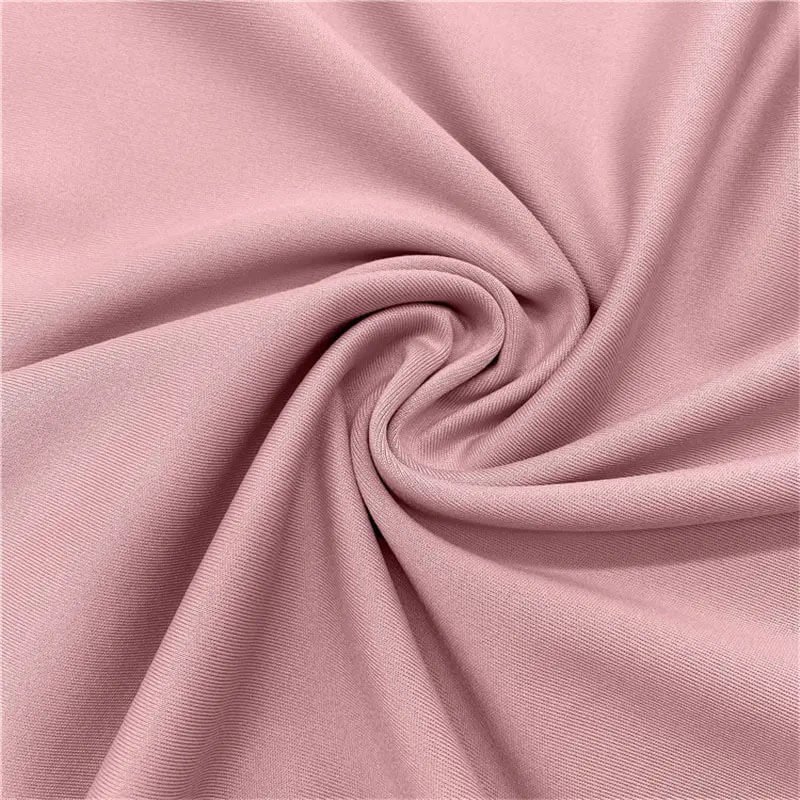
Fabric Construction (Knit or Woven) Knit spandex fabric—including jersey, interlock, tricot, and warp knit—is the most common construction, offering natural mechanical stretch enhanced by spandex recovery. Woven spandex fabric — spandex core-spun with another fiber, typically cotton or polyester — requires more specialized weaving and typically carries higher production cost per meter.

Yarn Structure: Air-Covered vs Mechanically-Covered Spandex is rarely used bare in fabric; it is almost always covered with another fiber before weaving or knitting. Air-covered spandex yarn (spandex core with fiber wrapped by air-jet) is generally lower cost and used for basic activewear and stretch denim. Mechanically-covered spandex (spandex core with fiber physically wrapped around it) costs more but produces smoother, more durable fabric used in premium hosiery, shapewear, and compression garments.
Heat Setting and Finishing Chemistry Spandex is highly sensitive to heat and processing chemistry, and improper finishing can permanently degrade elasticity. Mills with proper heat setting equipment and controlled finishing chemistry generally charge more but produce fabric with meaningfully better long-term elasticity. This is a hidden cost driver buyers often overlook.
Dyeing Method Piece-dyed spandex-blend fabric is generally the most cost-efficient. Yarn-dyed and printed spandex fabrics carry higher processing costs. Special-effect dyeing (space-dyed, jaspé) adds further cost.
Order Volume Spandex-blend fabric mills operate on batch dyeing and heat-setting economics; small orders carry disproportionate setup cost per meter. Larger orders unlock meaningfully better pricing tiers.
Sourcing Region China produces a very large share of global spandex fiber and spandex-blend fabric, with major producers concentrated in Zhejiang, Jiangsu, and Fujian for fabric, and multiple large spandex fiber producers headquartered in China. Sourcing from Chinese clusters generally offers competitive pricing due to short logistics distances between fiber and fabric production.
Spandex Fabric Price Reference Table
| Spandex-Blend Fabric Category | Typical Spandex % | Relative Price Level | Common Application |
|---|---|---|---|
| Cotton-Spandex Denim | 1–3% | Lower-Medium | Stretch jeans, casualwear |
| Polyester-Spandex Jersey | 4–8% | Lower | Basic activewear, T-shirts |
| Cotton-Spandex Knit | 3–8% | Lower-Medium | Fitted casual apparel |
| Nylon-Spandex Tricot | 15–20% | Medium | Swimwear, shapewear, lingerie |
| Performance Sportswear Blend | 10–20% | Medium-High | Compression wear, high-performance activewear |
| Premium Branded (Lycra/Creora) | Varies | Higher premium | Retail programs with brand-fiber marketing |
Note: Spandex fiber pricing fluctuates with raw material costs and can shift meaningfully with polyol and MDI (isocyanate) market movements; current quotations should always be used for actual budgeting rather than category benchmarks.
How To Source Competitive Spandex Fabric From China
China is the world’s largest producer of spandex fiber and spandex-blend fabric, and buyers can access more favorable pricing by understanding how the stretch-fabric sourcing market is structured across fiber tiers and regional clusters.
Match Spandex Percentage to Actual Need Buyers often over-specify spandex percentage — asking for 10% when 6% would meet the actual stretch requirement. Reviewing spandex percentage against the true garment performance need is one of the simplest levers for reducing spandex fabric cost without compromising perceived quality. A well-constructed 6% blend can outperform a poorly heat-set 10% blend in real-world wear.
Evaluate Branded vs Non-Branded Spandex Trade-offs Branded spandex (Lycra, Creora, Roica) carries a real cost premium, but the premium is meaningful for programs requiring long-term elasticity durability or retail programs that market the branded fiber. For high-volume, budget-focused programs where retail claims do not depend on the branded fiber, generic Chinese spandex can offer substantial cost savings — provided the mill has controlled heat setting equipment to preserve elasticity performance.
Consider Air-Covered vs Mechanically-Covered Structure For programs where fabric surface smoothness and long-term wear are important — shapewear, premium hosiery, luxury compression — mechanically-covered spandex yarn is worth the cost premium. For basic activewear, stretch T-shirts, and casual stretch denim, air-covered spandex delivers acceptable performance at lower cost.
Use Standard Constructions and In-Stock Base Fabric Mills carry in-stock spandex-blend fabric in the most common construction, weight, and spandex percentage combinations. Buyers who work within these standard specifications rather than fully custom builds typically pay less and receive shorter lead times.
Consolidate Color Orders Spandex-blend fabric requires precisely controlled dye chemistry to avoid damaging spandex elasticity, and small custom colors carry disproportionately high per-kilogram costs due to minimum batch sizes. Consolidating design variants into fewer, larger dye lots meaningfully improves total order economics.
Confirm Mill’s Heat Setting Capability This is one of the most consequential procurement decisions for spandex fabric. Mills with modern controlled-temperature heat setting equipment produce fabric with meaningfully better long-term elasticity than mills using older equipment or subcontracting heat setting to third parties. Ask directly what heat setting equipment is used and whether it is in-house.
Consider Fabric Markets for Smaller Volume Needs For buyers whose stretch-fabric needs do not justify a direct mill relationship, wholesale fabric markets in Guangdong and Zhejiang carry ready-stock spandex-blend fabric at competitive per-meter pricing due to vendor density.
Precautions When Buying Spandex Fabric
Verify Actual Spandex Percentage Spandex content shortfall is one of the most common substitution issues in stretch-fabric sourcing, because the visual and initial hand-feel difference between 6% and 4% spandex is subtle but the material cost difference is real. Buyers should require fibre-content verification using a relevant method such as ISO 1833-20 for elastane mixtures on delivered goods, not just an initial sample check.
Confirm Spandex Brand Documentation If the retail program relies on Lycra, Creora, or Roica branding, request the specific supplier certification and fiber traceability documentation. Branded fiber suppliers maintain authorization programs and can be contacted directly to verify a mill’s authorization status.
Test Elasticity and Recovery Performance Elasticity is not just about how far the fabric stretches; recovery — how well the fabric returns to its original shape after repeated stretching — is often the more critical performance metric. Buyers should require stretch-and-recovery testing using an applicable standard such as ASTM D2594, not just a general elasticity claim.
Confirm Wash-Cycle Elasticity Durability Spandex can lose elasticity through repeated washing, particularly with hot water, harsh detergents, or chlorine exposure (a specific issue for swimwear). Buyers should require testing that includes multiple wash cycles, not just first-wash performance.
Watch for Heat Damage in Sample Improperly heat-set spandex can appear normal in initial sample evaluation but fail during garment finishing (which typically involves further heat exposure) or during consumer wear. Fabric that shows any visible surface irregularity from heat exposure — glazed spots, uneven color — should be evaluated carefully before bulk approval.
Confirm Chlorine Resistance for Swimwear Standard spandex degrades significantly in chlorinated pool water. Buyers producing swimwear should specifically request chlorine-resistant spandex technology (such as XLA or specific Creora and Lycra variants engineered for pool exposure), and confirm the specific chlorine-resistance rating.
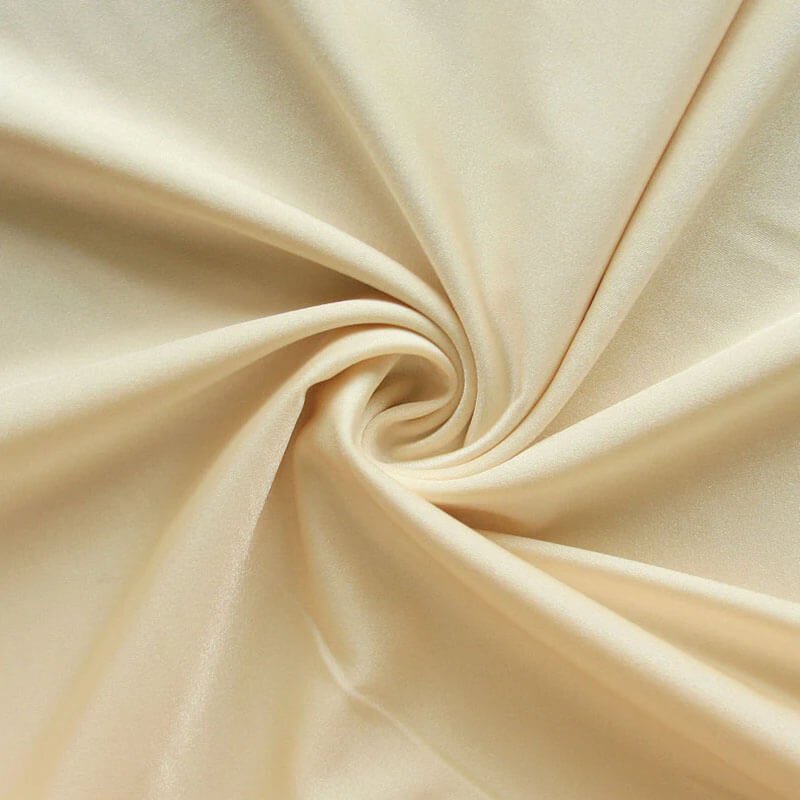
Verify Denier Accuracy As with other synthetic fibers, denier substitution — quoting fabric at one denier and delivering another — is a recurring cost-cutting shortcut. Buyers should require denier verification, particularly for premium constructions where fine-denier spandex is a key specification.
Document Sample-to-Bulk Consistency Spandex fabric performance can drift between sample and bulk production if finishing chemistry or heat setting is not tightly controlled. Approved samples should be signed and sealed as the standard against which bulk delivery is compared.
Fabric Selection Recommendations
End-Use Requirements Casual stretch apparel and stretch denim generally need only 2–5% spandex to deliver noticeable stretch benefit. Fitted athletic apparel and compression garments require 10–20% spandex and typically benefit from branded fiber choice. Swimwear requires chlorine-resistant spandex variants regardless of percentage.
Fabric Performance Buyers making stretch or recovery performance claims should require quantitative test data (stretch percentage, recovery percentage after N cycles) rather than qualitative descriptions from the supplier.
Comfort Requirements For skin-contact garments worn during physical activity, softer hand and moisture management matter alongside stretch. Nylon-spandex generally offers smoother, cooler hand than polyester-spandex at similar spandex percentage, at moderate cost premium.
Durability Expectations Long-term elasticity durability is heavily influenced by heat setting quality and spandex brand. Retail programs expecting extended garment life justify the premium for branded spandex and controlled heat setting; single-season fashion programs may not.
Washing Requirements Care requirements are more critical for spandex-blend fabric than for most other fabric categories, since improper care can permanently damage elasticity. Buyers should confirm care requirements before finalizing retail care labels.
Budget Considerations The two largest spandex-blend fabric cost levers are spandex percentage and branded vs generic fiber choice. Reducing spandex percentage to true product need and choosing generic spandex from a mill with good heat setting capability can produce meaningful savings without compromising perceived garment quality.
Procurement Considerations
MOQ Requirements Spandex-blend fabric MOQs vary by construction and spandex percentage. Higher-percentage compression fabrics typically carry higher minimums than basic low-percentage stretch fabrics. Confirm MOQ per specific construction and percentage rather than assuming a single MOQ applies across the spandex fabric category.
Lead Time Expectations Standard in-stock spandex-blend fabric with piece dyeing generally ships fastest. Custom yarn structure, custom color, or branded-fiber-required fabric typically requires longer lead times.
Quality Control Procedures Pre-shipment textile quality inspection should confirm not only fiber content and weight but stretch and recovery performance, particularly for higher-spandex-percentage constructions where elasticity is a core product feature.
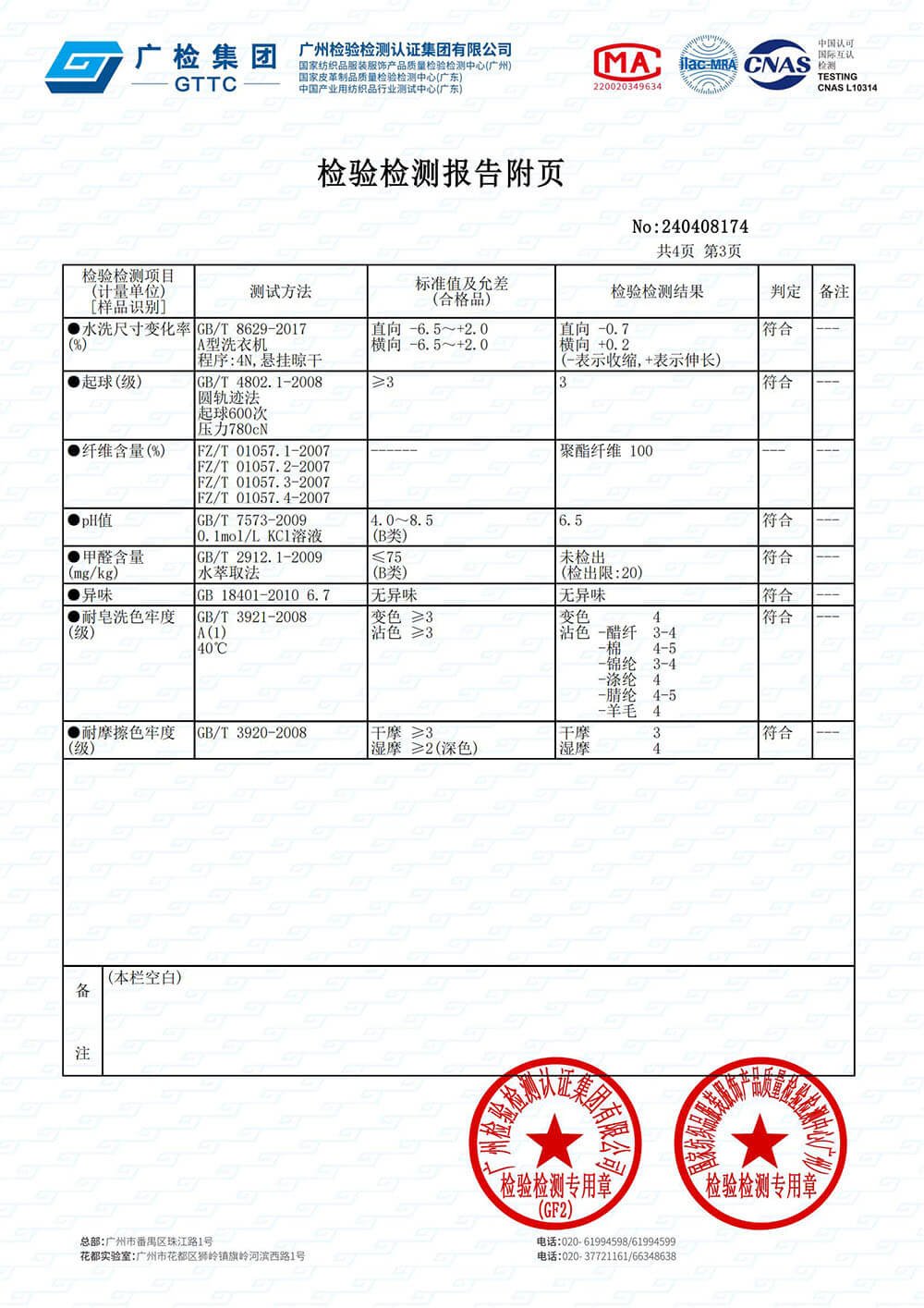
Fabric Testing Requirements Common spandex fabric tests include fiber content verification, stretch and recovery testing (per specific standard), colorfastness to washing and rubbing, dimensional stability, and chlorine resistance for swimwear applications.
Color Consistency Management Dye chemistry interaction with spandex is a common source of subtle color variation. Lab dip and bulk approval samples should be reviewed on the actual spandex-blend fabric, not on the base fabric alone.
Packaging Requirements Spandex-blend fabric should be rolled to prevent set-in creases, and should be protected from prolonged pressure or humidity that can affect elasticity during storage.
Shipping Considerations Because spandex is heat-sensitive, buyers sourcing from tropical or hot-climate ports should confirm that shipping and warehousing conditions do not expose fabric to prolonged high temperatures, which can degrade spandex performance before the fabric reaches the buyer.
Supplier Evaluation Factors Buyers learning how to choose a fabric supplier should evaluate its heat-setting equipment, spandex fiber sourcing relationships, in-house vs subcontracted finishing, and track record with the specific spandex percentage and construction being ordered.
Frequently Asked Questions
What is the difference between spandex, elastane, and Lycra? All three refer to the same class of highly elastic synthetic fiber. “Spandex” is the generic term commonly used in North America, “elastane” is the term used in Europe and on international textile labels, and “Lycra” is a brand name owned by Invista. Creora (Hyosung) and Roica (Asahi Kasei) are other major spandex brands.
Why is branded spandex more expensive than generic spandex? Branded spandex generally offers more consistent elasticity, better colorfastness under heat setting, stronger warranty support, and traceable supply chain documentation. The premium reflects both fiber cost and program support. Whether the premium is worthwhile depends on the buyer’s specific retail claims and durability requirements.
How much spandex should be in stretch denim? Most stretch denim uses 1–3% spandex, which delivers noticeable stretch and recovery without significantly changing the visual denim character. Higher percentages produce more athletic-feeling denim that departs further from traditional rigid denim appearance.
Is spandex fabric always synthetic? Yes. Spandex itself is a synthetic polyurethane-based fiber. However, spandex-blend fabric can include natural fibers as the base — cotton-spandex, wool-spandex, or viscose-spandex blends are all common.
Does spandex lose elasticity over time? Yes, spandex elasticity degrades over time, particularly with heat exposure, repeated stretching, harsh detergents, and chlorine. Better spandex brands and better fabric heat setting slow this degradation but do not eliminate it.
What is chlorine-resistant spandex? Chlorine-resistant spandex refers to specific spandex fiber variants engineered to withstand chlorinated pool water without significant elasticity loss. Standard spandex degrades meaningfully in pool exposure, making chlorine-resistant variants essential for swimwear intended for pool use.
Can I get stretch fabric without any spandex? Some mechanical stretch is possible through knit construction alone (particularly interlock and jersey structures), but stretch and recovery performance is significantly lower than with spandex-blended fabric. Fabrics marketed as “mechanical stretch” or “comfort stretch” without spandex may work for casual apparel but are generally not suitable for performance or fitted applications.
Key Takeaways
- Spandex is a fiber, not a fabric — “spandex fabric” refers to blended fabric containing 2–20% spandex, and pricing reflects the full blend structure.
- Spandex percentage, brand (Lycra, Creora, Roica, or generic), denier, and covered-yarn structure are the largest cost drivers within any given base fabric.
- Mill heat setting capability meaningfully affects long-term elasticity performance and is a hidden cost driver often overlooked in supplier comparison.
- Spandex percentage shortfall, generic fiber substitution for branded fiber, and degraded heat setting are the most common cost-cutting shortcuts to watch for.
- Matching spandex percentage and brand tier to the specific retail claim being made — rather than defaulting to higher percentages or premium brands — is the largest single lever for optimizing spandex fabric cost.
Conclusion
Spandex-blend fabric pricing rewards buyers who understand what percentage and brand tier they actually need, rather than treating “spandex fabric” as a single specification. Blend ratio, brand choice, and mill heat setting capability together drive most of the meaningful cost and performance differences that buyers see across supplier quotations. For related sourcing context, buyers can review guides on lycra fabric, sportswear fabric, and the spandex fabric product page. Manufacturers such as SJZ Fabric are frequently evaluated by apparel brands sourcing spandex-blend fabric where elasticity durability, heat setting quality, and blend ratio accuracy all need to hold up across a full production run. A clear grasp of what drives spandex fabric pricing ultimately supports more confident supplier negotiation and more predictable stretch performance in finished garments.