
Tencel occupies a specific and often misunderstood position in the fabric pricing landscape. Unlike “viscose” or “rayon,” which are generic fiber names any producer can use, Tencel is a registered trademark owned by the Austrian company Lenzing AG, and its use is legally restricted to fabric containing lyocell or modal fiber produced by Lenzing under a licensed program. This branded structure changes the pricing dynamic significantly: buyers are not simply paying for a fiber’s raw material cost, they are paying for the fiber’s raw material cost, plus Lenzing’s licensing margin, plus the traceability infrastructure that allows verified retail claims.
This structure also creates a very specific pricing risk. Because Tencel commands a meaningful retail premium and is prominently marketed as a sustainable fiber, “Tencel” is one of the most frequently misrepresented fiber names in commercial fabric sourcing. Standard non-Lenzing lyocell or even standard viscose can be sold as Tencel to buyers who do not verify the underlying fiber authorization. Understanding what distinguishes genuine Tencel fibre from lookalikes — and what buyers pay for when they pay the Tencel premium — is essential to sourcing this fiber responsibly.
This guide focuses specifically on Tencel-branded fabric pricing, covering the specific Tencel product lines and their price positioning, how the Lenzing authorization system affects sourcing economics, how to source competitive Tencel fabric from China without accepting misrepresented fabric, and the verification steps in a disciplined bulk fabric purchasing process.
What Drives Tencel Fabric Price
Which Tencel Product Line Tencel is not a single fiber. It is a brand family covering several distinct product lines, each at a different price point:
- Tencel Lyocell — the flagship product, produced through Lenzing’s closed-loop solvent-spinning process, which recovers 99.8% of the solvent. Standard Tencel Lyocell is the most widely used variant in commercial apparel.
- Tencel Modal — high-strength modal fiber produced by Lenzing under the Tencel brand, positioned for softness-focused applications like sleepwear and undergarments. Generally sits at a moderate premium over standard viscose.
- Tencel Luxe — a premium filament lyocell positioned as a silk alternative for luxury apparel. Significantly higher price tier than standard Tencel Lyocell.
- Tencel with Refibra Technology — Tencel Lyocell that incorporates recycled cotton scraps into the pulp feedstock, adding a circular-economy retail claim. Moderate premium over standard Tencel Lyocell.
- Tencel Modal Micro — very fine denier Tencel Modal for lightweight premium apparel. Higher denier-related cost premium over standard Tencel Modal.
Denier and Yarn Count Within any given Tencel product line, finer deniers cost more per kilogram than coarser deniers. Tencel Luxe filament in particular is priced significantly higher at finer deniers used for silk-alternative fabric.
Blend Ratio Pure 100% Tencel fabric sits at the top of Tencel fabric pricing. Tencel blends — Tencel-cotton, Tencel-linen, Tencel-polyester, Tencel-viscose, Tencel-spandex — offer meaningful cost savings while retaining Tencel as a labeled fiber content. Because the Tencel premium applies per kilogram of Tencel content, blend ratio significantly affects total fabric cost. A 70% cotton / 30% Tencel blend costs meaningfully less than 100% Tencel of similar construction.
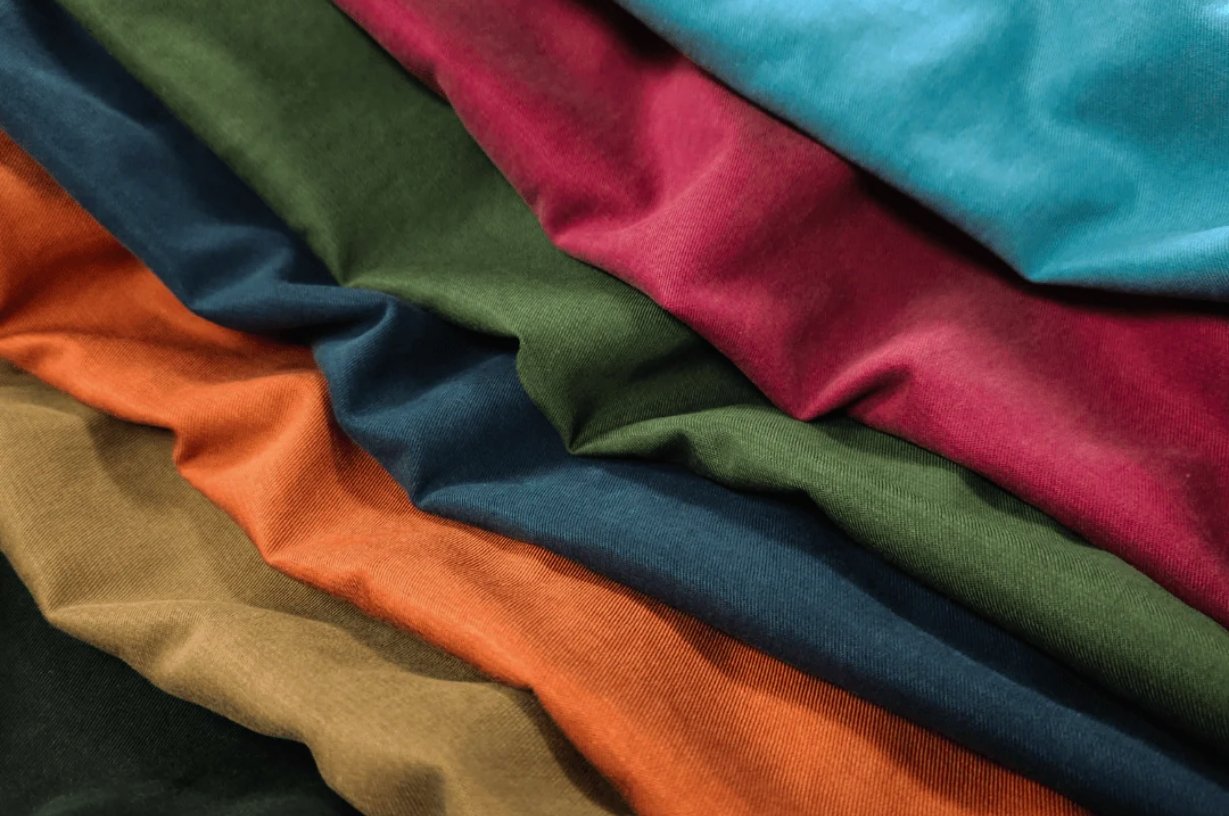
Fabric Construction Tencel is produced in a wide range of woven and knit constructions, and construction complexity drives per-meter cost in the same way it does for other fibers. Basic Tencel jersey knit sits at the lower end of Tencel fabric pricing, while Tencel jacquard, Tencel satin, and complex woven constructions carry higher premiums.
Fabric Weight (GSM) Tencel spans a wide weight range, from lightweight blouse fabric around 80–110 GSM to mid-weight dress fabric around 130–180 GSM and heavier constructions above 200 GSM. Heavier fabric requires more Tencel fiber per square meter, and given the fiber’s price premium over standard viscose, weight has an outsized effect on total per-meter cost compared to standard viscose.
Certification Bundle Requirements Tencel fabric is often sold with additional certifications bundled — EU Ecolabel, PEFC or FSC pulp certification, STeP by OEKO-TEX, or OEKO-TEX STANDARD 100. Because Lenzing itself maintains many of these certifications on the fiber side, converting a fabric to fully certified status is generally more streamlined than for uncertified fibers, but each additional certification layer adds some cost.
Dyeing Method Tencel accepts dye particularly well due to its highly ordered fiber structure. Piece-dyed Tencel is the standard commercial option. Spun-dyed Tencel (with color added at the fiber level) is also available, offering enhanced colorfastness at a moderate cost premium. Yarn-dyed and specialty-printed Tencel fabric carry higher processing costs, as with other fibers.
Finishing Treatments Tencel fabric can be finished for softer hand (enzyme washing, mechanical softening), sanforized to reduce shrinkage, or treated with specialty finishes. Each additional finishing step adds to base fabric cost. Enzyme washing is particularly common on Tencel jersey to enhance the fiber’s naturally smooth hand.
Lenzing Authorization Level This is a Tencel-specific dimension that does not exist for generic fibers. Fabric producers must be authorized by Lenzing to source Tencel fiber and market fabric as containing Tencel. Different authorization levels — including the ability to display the Tencel brand hangtag on finished garments — carry different economic implications, and fabric from authorized suppliers with full brand-usage rights generally costs more than fabric from suppliers with more limited authorization.
Order Volume Tencel fabric mills operate on standard dyeing and finishing economics; small orders bear disproportionate setup cost per meter. Larger orders unlock better pricing tiers, particularly when aligned to a mill’s standard weight and construction.
Sourcing Region China hosts a significant concentration of Lenzing-authorized Tencel fabric mills, particularly in Zhejiang and Jiangsu, where established viscose infrastructure has been extended to accommodate Tencel production. Turkey, India, and Portugal are also notable Tencel fabric production regions, each with distinct positioning.
Tencel Fabric Price Reference Table
| Tencel Fabric Type | Product Line | Relative Price Level | Common Application |
|---|---|---|---|
| Tencel-Polyester Blend | Lyocell + polyester | Lower-Medium | Mid-market apparel, uniforms |
| Tencel-Cotton Blend | Lyocell + cotton | Medium | Casualwear, T-shirts, denim |
| 100% Tencel Lyocell Woven | Lyocell | Medium-High | Blouses, dresses, drapey apparel |
| 100% Tencel Lyocell Knit | Lyocell | Medium-High | T-shirts, activewear, sleepwear |
| 100% Tencel Modal Knit | Modal | Medium-High | Sleepwear, undergarments, loungewear |
| Tencel with Refibra Technology | Lyocell + recycled cotton | High | Sustainable retail programs |
| Tencel Luxe Filament | Luxe | Very High | Luxury apparel, silk alternative |
Note: Lenzing fiber pricing shifts with dissolving pulp market movements and periodic company pricing adjustments. Current quotations should always be used for actual budgeting rather than category benchmarks.
How To Source Competitive Tencel Fabric From China
China hosts a large concentration of Lenzing-authorized Tencel fabric mills, and buyers can access more favorable pricing by understanding how the Tencel fabric sourcing market is structured across authorization tiers and product lines.
Match Tencel Product Line to Actual Retail Claim This is the largest single lever for optimizing Tencel fabric cost. Buyers frequently default to premium Tencel product lines (Luxe, Refibra) when standard Tencel Lyocell would fully satisfy the retail claim. Reviewing which Tencel variant is actually required by the retail positioning — rather than which is aspirationally desirable — is more effective than negotiating aggressively on a premium variant that the product does not need.
Consider Blends for Mid-Market Programs Tencel-cotton and Tencel-polyester blends allow the “contains Tencel” label to appear on garments at significantly lower cost than 100% Tencel programs. For mid-market retail where the marketing benefit is fiber-blend attribution rather than pure-fiber claims, blends offer strong price-to-marketing efficiency.
Verify Mill Is Actually Lenzing-Authorized Not all mills that quote Tencel fabric are Lenzing-authorized. Some suppliers quote “Tencel-like” or “similar to Tencel” fabric that may actually be non-Lenzing lyocell or standard viscose. Confirming Lenzing authorization at the mill level — and requesting the specific supplier certification — is essential before assuming a quotation is competitive on true Tencel pricing rather than substituted-fiber pricing.
Consolidate Small Color Orders Piece-dyeing Tencel requires precisely controlled dye chemistry. Small custom colors carry disproportionately high per-kilogram costs due to minimum dye-lot sizes. Consolidating design variants into fewer, larger dye lots meaningfully improves total order economics.
Use Standard Widths and In-Stock Constructions Mills carry in-stock greige Tencel fabric in common construction, weight, and width combinations. Buyers who can work within these standard specifications rather than requesting fully custom builds typically pay less and receive shorter lead times.
Consider Refibra For Sustainability-Focused Programs For retail programs specifically marketing circular economy or recycled-content claims, Tencel with Refibra Technology can be worth the moderate premium over standard Tencel Lyocell, since it enables both cellulose-fiber sustainability claims and recycled-content claims in a single fiber.
Confirm Certification Bundle Requirements Early Different retail markets and channels require different certification bundles alongside Tencel — EU Ecolabel for European markets, GRS if paired with recycled content, OEKO-TEX for baby and infant markets. Confirming certification requirements before requesting quotes avoids the need to re-quote or re-source when certification gaps emerge later.
Consider Fabric Markets for Smaller Volume Needs For buyers whose Tencel needs do not justify a direct mill relationship, wholesale fabric markets in Guangdong and Zhejiang carry ready-stock Tencel and Tencel-blend fabric across common constructions. Buyers should still verify Lenzing authorization even when purchasing through market channels.
Confirm Currency and Payment Terms Early Larger Tencel orders can involve substantial working capital due to the fiber’s price premium over standard viscose. Buyers should confirm currency, deposit percentage, and balance payment timing in writing before production begins.
Precautions When Buying Tencel Fabric
Verify Lenzing Authorization Documentation This is the single most important verification step in Tencel sourcing. Buyers should require the supplier’s Lenzing authorization documentation, confirming they are authorized to source Tencel fiber and market fabric as containing Tencel. This documentation should be current — Lenzing periodically updates its authorized supplier list.
Confirm Tencel Product Line Match “Tencel” alone is not a complete specification. Buyers should confirm whether the fabric contains Tencel Lyocell, Tencel Modal, Tencel Luxe, or Tencel with Refibra Technology, since pricing and performance differ significantly across product lines.
Request Fiber Identification System Testing If Uncertain Lenzing operates a Fiber Identification System that can chemically verify Tencel content in finished fabric. For orders where the buyer has reason to doubt authenticity, or for high-value programs where retail claims depend on Tencel content, buyers can request Fiber Identification System testing through Lenzing directly.
Watch for “Tencel-Like” or “Similar to Tencel” Descriptions Suppliers who describe fabric as “Tencel-like,” “similar to Tencel,” “Tencel-effect,” or “Tencel-type” are typically indicating that the fabric is not actually Tencel. This wording can be a first signal that the fabric contains non-Lenzing lyocell or another substitute fiber. Fabric marketed with these descriptions should not be paid for at Tencel pricing.
Confirm Blend Ratio Verification For Tencel-blend fabric, actual delivered Tencel percentage can differ from quoted percentage, since lower Tencel content is cheaper. Buyers should require blend ratio verification through fiber testing, particularly for orders where a specific Tencel percentage supports retail claims.
Confirm Shrinkage Testing Tencel Lyocell has generally better dimensional stability than standard viscose, but still requires proper finishing to minimize shrinkage. Buyers should require shrinkage testing using a relevant method such as ISO 5077 before bulk approval.
Verify GSM Against Specification Given Tencel’s per-kilogram price premium, weight shortfall represents a larger absolute cost saving for the supplier than for cheaper fibers. Buyers should require GSM verification on delivered goods, not just on the initial sample.
Confirm Colorfastness on Deep Shades Tencel dyes particularly well, but colorfastness testing should still be included in pre-shipment quality control, especially for deep shades intended for garments requiring repeated washing.
Document Sample-to-Bulk Consistency Tencel fabric performance can drift between sample and bulk production, particularly for finishing chemistry. Approved samples should be signed and sealed as the standard against which bulk delivery is compared.
Fabric Selection Recommendations
End-Use Requirements Blouses, dresses, and drapey woven garments generally benefit from Tencel Lyocell for its soft drape and cool hand. T-shirts, activewear, and sleepwear benefit from Tencel Lyocell knit or Tencel Modal for their softness and moisture management. Luxury apparel programs marketing silk-alternative claims may justify Tencel Luxe. Sustainability-focused programs may justify Tencel with Refibra Technology.
Fabric Performance Tencel offers noticeably better wet strength, dimensional stability, and dye uptake than standard viscose, which is central to its price premium. Buyers requiring these performance characteristics should recognize that generic viscose substitution defeats the purpose of specifying Tencel in the first place.
Comfort Requirements Tencel is particularly well-regarded for breathable skin-contact comfort, with a smooth surface, high moisture absorbency, and cool hand that makes it well suited for sleepwear, undergarments, and warm-climate apparel.
Durability Expectations Tencel Lyocell and Tencel Modal both offer meaningfully better durability than standard viscose, particularly on wet strength and repeated wash cycles. Garments intended for extended retail life justify Tencel more clearly than single-season fashion pieces.
Washing Requirements Tencel generally handles machine washing better than standard viscose, though care requirements should be confirmed with the supplier for specific fabric constructions before finalizing retail care labels.
Budget Considerations The two largest cost levers in Tencel fabric are product line choice (Lyocell vs Modal vs Luxe vs Refibra) and blend ratio (100% Tencel vs Tencel blend). Matching these to the specific retail claim rather than defaulting to premium options produces the most meaningful cost optimization.
Procurement Considerations
MOQ Requirements Tencel fabric MOQs typically run higher than generic viscose MOQs, reflecting both the fiber’s premium positioning and the smaller volume of Lenzing-authorized production. Specialty variants like Tencel Luxe and Tencel with Refibra Technology often require higher minimums than standard Tencel Lyocell.
Lead Time Expectations Standard Tencel Lyocell fabric with piece dyeing generally ships within reasonable lead times, while Tencel with Refibra Technology, Tencel Luxe, or fully certified sustainable programs typically require longer lead times.
Quality Control Procedures Pre-shipment textile quality inspection should verify Lenzing fibre content, GSM, shrinkage performance, and colorfastness. First-bulk sample approval is particularly important for Tencel due to potential drift between sample and bulk finishing.
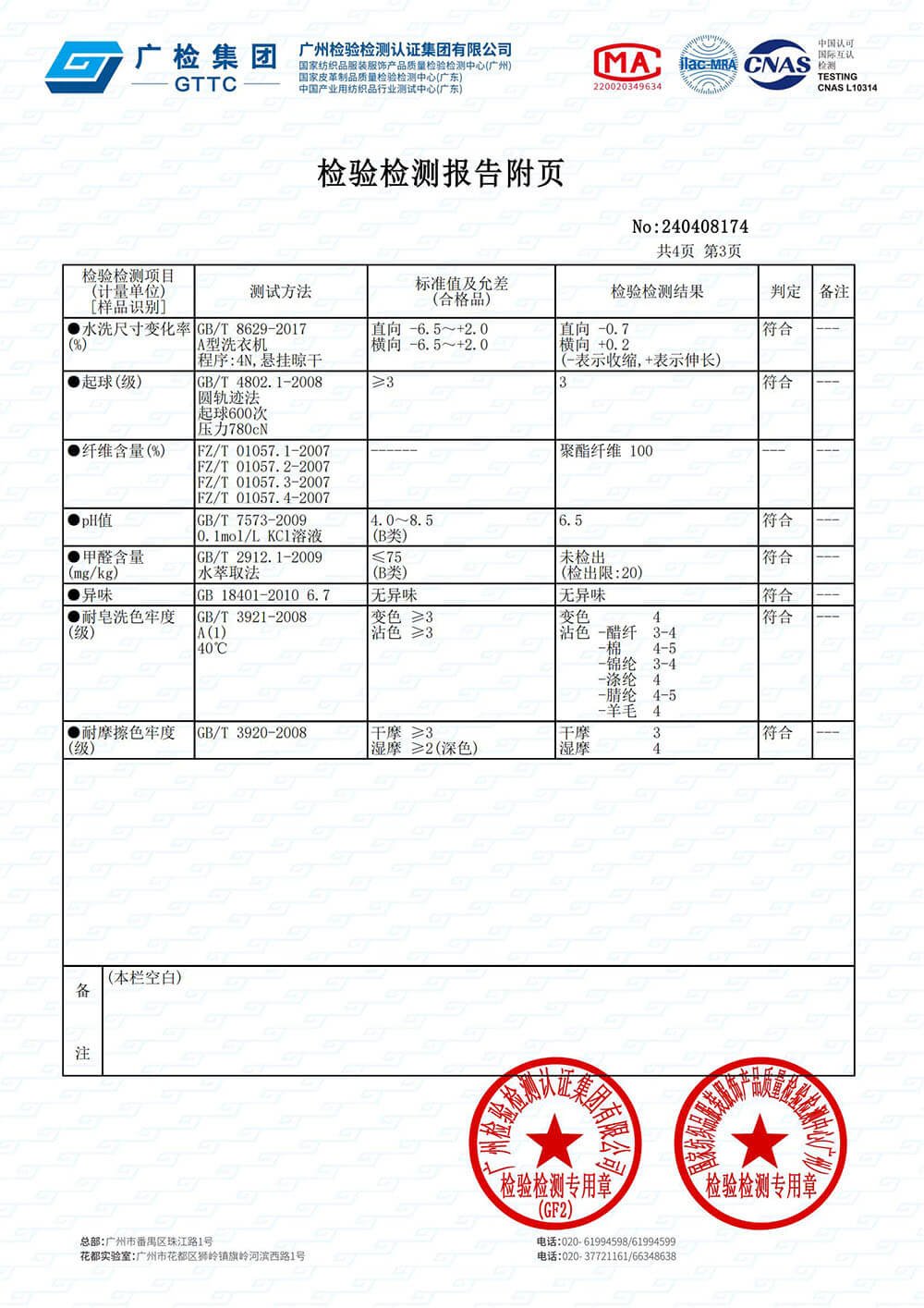
Fabric Testing Requirements Common Tencel fabric tests include fiber content verification, GSM verification, shrinkage testing, wet and dry tensile strength testing, pilling resistance, and colorfastness to washing and rubbing. For high-value programs, buyers can request Lenzing Fiber Identification System testing to verify authentic Tencel content.
Color Consistency Management Tencel accepts dye well, but dye-lot variation is still possible. Lab dip approval and bulk approval samples should be signed off before full production.
Packaging Requirements Tencel fabric should be rolled to prevent set-in creases, and should be protected from prolonged humidity exposure that can affect dimensional stability during storage.
Shipping Considerations Sea freight is standard for bulk Tencel orders. Buyers sourcing from humid transit routes should confirm packaging protection is adequate to prevent moisture-related damage.
Supplier Evaluation Factors Buyers deciding how to choose a Tencel fabric supplier should evaluate its Lenzing authorization status, specific product line experience, blend production capability, and track record with the certification bundle required for the buyer’s target retail markets.
Frequently Asked Questions
What is the difference between Tencel and lyocell? Lyocell is a generic fiber category — a type of rayon produced through closed-loop solvent spinning using NMMO solvent. Tencel is a brand name owned by Lenzing AG for its specific lyocell and modal fibers produced under Lenzing’s licensed program. All Tencel is lyocell or modal, but not all lyocell is Tencel — non-Lenzing lyocell exists and is sold at lower price tiers.
Why is Tencel more expensive than standard viscose? Tencel’s cost premium reflects several factors: the closed-loop NMMO solvent process is more capital-intensive than the traditional viscose process; Lenzing maintains fiber quality control and traceability infrastructure; and the Tencel brand licensing adds a margin layer that generic fibers do not carry. Together these factors position Tencel meaningfully above standard viscose.
How do I verify that a fabric actually contains Tencel? Two verification approaches: request the supplier’s Lenzing authorization documentation, and request Lenzing Fiber Identification System testing for high-value programs where authenticity verification is critical. Physical hand-feel evaluation alone cannot reliably distinguish Tencel from other high-quality lyocell.
Is Tencel more sustainable than standard viscose? Lenzing’s Tencel process uses NMMO solvent that is recovered at over 99% efficiency, meaningfully lower environmental impact than the traditional viscose process. Combined with Lenzing’s pulp sourcing from certified sustainable forestry, Tencel is generally recognized as one of the more environmentally responsible cellulosic fibers, which is central to its retail positioning.
Can I get the look of Tencel at a lower price? Standard non-Lenzing lyocell offers similar visual and hand-feel character at lower cost, though without Tencel branding rights and without Lenzing’s traceability infrastructure. Standard viscose approximates Tencel’s appearance at further reduced cost but with meaningfully less wet strength and durability. Buyers should be aware that substituting these fibers while marketing “Tencel” creates legal and reputational risk.
What is Tencel Luxe used for? Tencel Luxe is a premium filament lyocell positioned as a silk alternative for luxury apparel, particularly blouses, dresses, and eveningwear where a fluid drape and natural sheen are core to product positioning.
Which region in China is best for sourcing Tencel fabric? Zhejiang and Jiangsu host the largest concentration of Lenzing-authorized Tencel fabric mills in China, with established viscose infrastructure that has been extended to accommodate Tencel production. Buyers should verify Lenzing authorization at the specific mill level regardless of region.
Key Takeaways
- Tencel is a branded fiber from Lenzing AG, not a generic fiber name, and its pricing reflects fiber cost plus licensing margin plus certification infrastructure.
- Tencel product line choice (Lyocell, Modal, Luxe, Refibra) is the single largest driver of Tencel fabric price, and should be matched to specific retail claim rather than defaulting to premium options.
- Blends (Tencel-cotton, Tencel-polyester) enable “contains Tencel” retail claims at meaningfully lower cost than 100% Tencel programs and are common in mid-market retail.
- Fiber substitution — non-Lenzing lyocell or standard viscose marketed as Tencel — is the most common risk in Tencel sourcing, and buyers should verify Lenzing authorization documentation before paying Tencel prices.
- For high-value programs, Lenzing Fiber Identification System testing provides chemical verification of authentic Tencel content when documentation review alone is not sufficient.
Conclusion
Tencel fabric pricing rewards buyers who understand the specific product line, blend structure, and Lenzing authorization tier they are actually paying for, rather than treating “Tencel” as a single specification. Because Tencel is a branded fiber with active licensing and traceability infrastructure, verification is more structured than for generic fibers — but that structure only helps buyers who actually use it. For related sourcing context, buyers can review guides on what is viscose fabric, sustainable fabrics, and the Tencel fabric product page. Manufacturers such as SJZ Fabric are commonly included among the mills evaluated by apparel brands sourcing Tencel-labeled fabric where authorization documentation, product line match, and blend ratio accuracy all need to hold up across a full production run. A clear grasp of what drives Tencel fabric pricing ultimately supports more confident supplier negotiation and more defensible retail claims.