
Brocade is one of the oldest continuously produced luxury textiles in the world, associated for centuries with imperial court dress, ecclesiastical vestments, upholstery in stately interiors, and today with bridal wear, formal jackets, and high-end home décor. A brocade fabric is a richly decorative woven textile characterized by raised, embossed-looking patterns created with supplementary weft yarns — often metallic, silk, or contrasting-color threads — that appear to sit on top of a plain or twill ground weave, producing an ornate, dimensional surface without the pattern being embroidered on afterwards.
For apparel brands, product developers, and home textile buyers, the word “brocade” is used loosely across the market, covering everything from authentic silk-and-gold jacquard-woven brocade to inexpensive polyester lookalikes that mimic the appearance without the underlying construction. Understanding what distinguishes real brocade from decorative jacquard or from surface-printed lookalikes is essential to evaluating quotes, matching fabric to the intended end use, and communicating clearly with a supplier. This guide covers how brocade is constructed, its major regional and historical variants, how it differs from related fabrics like damask and jacquard, and what buyers should evaluate when sourcing brocade for a bulk order.
How Brocade Fabric Is Constructed
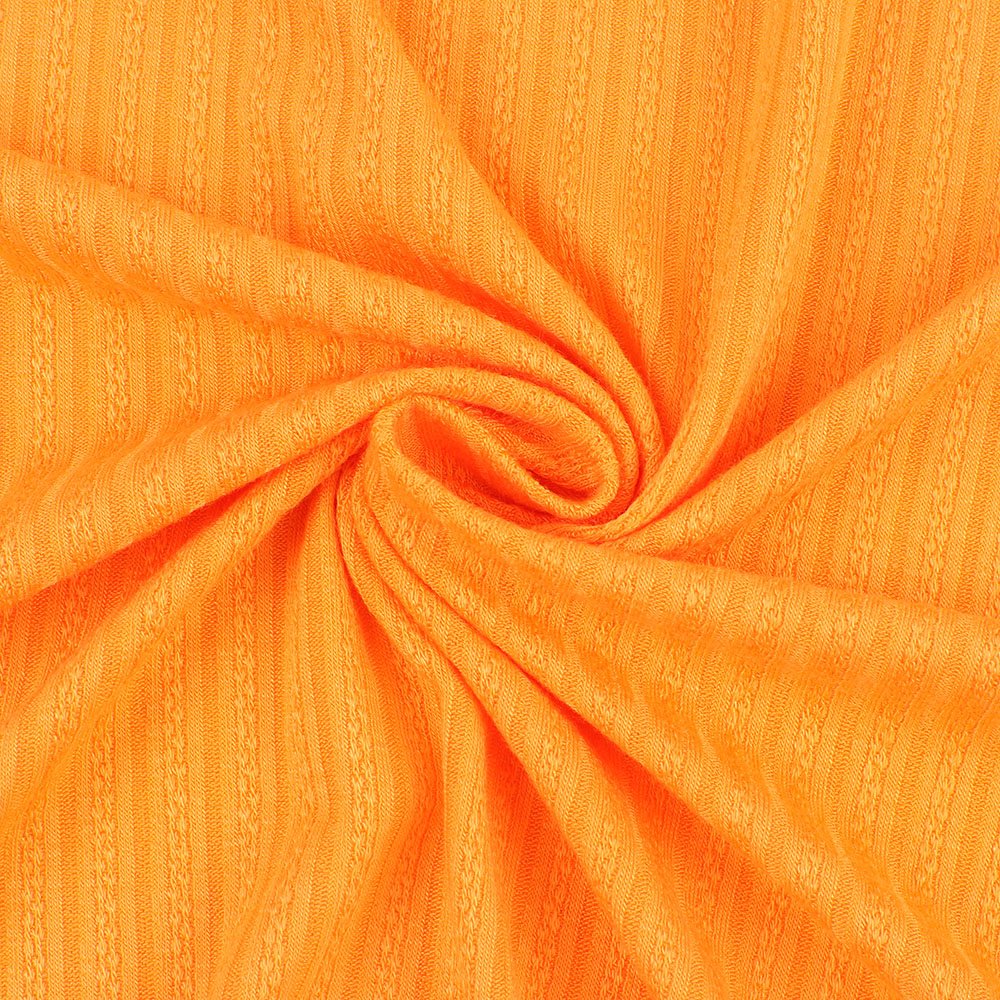
Brocade is woven on a jacquard loom, which allows individual warp threads to be controlled independently and produce highly complex patterns directly during weaving. What distinguishes brocade from other jacquard-woven fabrics is its use of supplementary weft yarns — additional weft threads that are woven into the pattern areas only, rather than running the full width of the fabric.
This construction has several practical consequences. The pattern side of a brocade shows a raised, embossed effect where the supplementary weft is present. The reverse side often shows the “floating” yarns being carried across the back of the fabric between pattern areas, which is one of the easiest ways to distinguish authentic brocade from surface-printed imitations. Because supplementary weft yarns add material and machine complexity, brocade is generally slower to weave and more expensive per meter than comparable weight jacquard fabric without supplementary weft patterning.
Common Fibers Used in Brocade Fabric
Brocade can be produced from a range of fibers, and fiber choice significantly affects both the fabric’s appearance and its price tier.
Silk Brocade Silk brocade is the traditional and most premium form of brocade, valued for its natural luster, drape, and depth of color. Silk brocade is central to Chinese ceremonial textiles (yunjin, songjin, and shujin brocades), Japanese Nishijin-ori, and Indian Banarasi brocade.
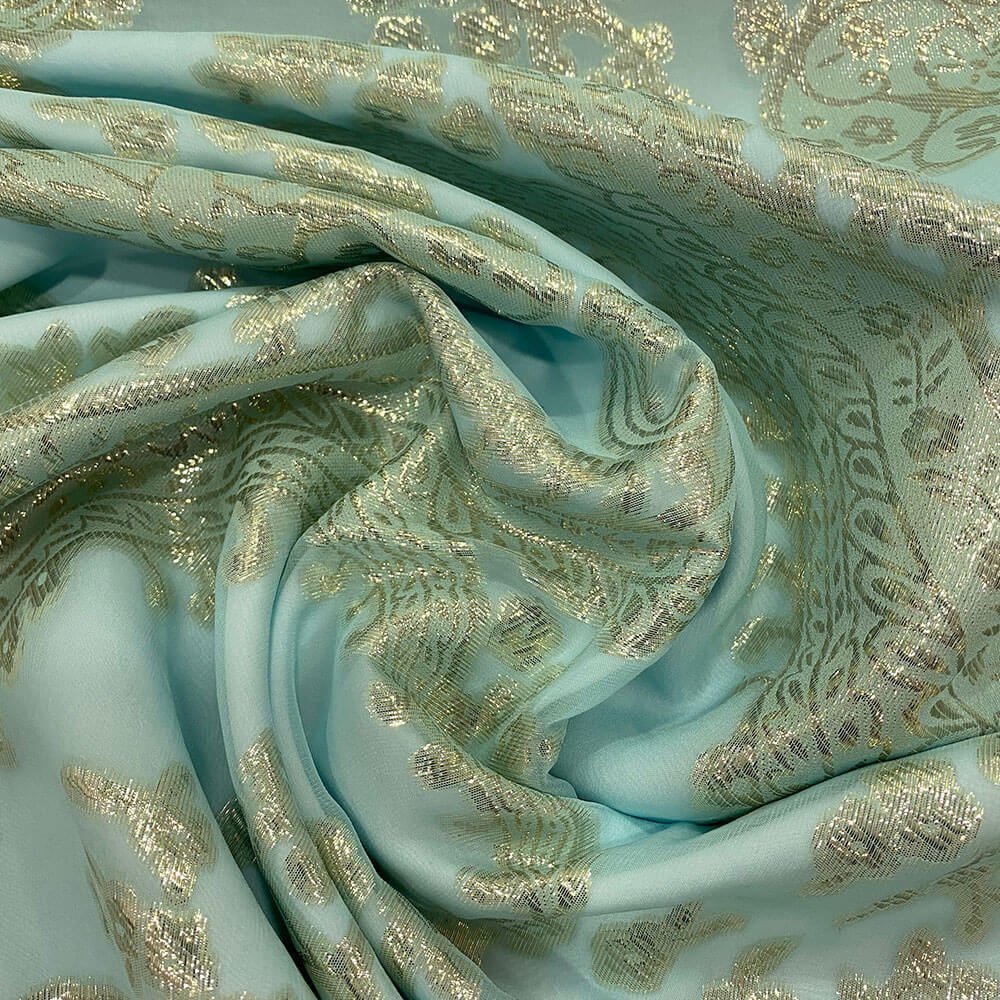
Metallic-Thread Brocade Many brocades incorporate metallic threads — historically gold or silver wire wrapped around a silk core, and today often polyester or metallic film — to create the reflective ornamentation associated with formal and ceremonial fabric. Kinkhab, a heavy metallic-thread brocade traditionally made in Varanasi, India, is a well-known example.
Cotton Brocade Cotton brocade offers a more casual hand and lower cost than silk brocade, and is used in decorative apparel, upholstery, and mid-range formal wear. Cotton brocade tends to feel more matte and less structured than silk or synthetic brocade.
Synthetic Brocade (Polyester, Acetate, Blends) Polyester and polyester-blend brocade dominate commercial-volume production today, offering the visual character of brocade at a fraction of the cost of silk. Synthetic brocade is widely used in costume design, budget bridal wear, and decorative home textiles.
Major Regional and Historical Brocade Traditions
Brocade is one of a small number of textiles where regional origin carries meaningful weight, both in terms of craft heritage and in what buyers are actually purchasing.
Chinese Silk Brocade China has produced silk brocade for over 2,000 years, with three regionally protected traditional varieties: Nanjing yunjin (cloud brocade), Sichuan shujin, and Suzhou songjin. Traditional Chinese silk brocade is hand-woven on draw looms and can carry substantial price premiums; the vast majority of “Chinese brocade” in commercial channels today is machine-woven silk or synthetic brocade rather than these heritage variants.
Japanese Nishijin Brocade Nishijin-ori is a highly refined silk brocade tradition from Kyoto, associated with obi (kimono sashes), theatrical costume, and high-end apparel. Authentic Nishijin brocade is protected as a Japanese cultural asset and carries significant price premiums over generic silk brocade.
Indian Banarasi Brocade Banarasi brocade from Varanasi is one of the world’s most recognized brocade traditions, characterized by silk-and-metallic-thread construction and elaborate floral or paisley patterns. Kinkhab and Kimkhwab are two of the heavier, more heavily gold-threaded variants.
European Brocade European brocade traditions, particularly Italian (Venetian, Genoese) and French (Lyon) production, historically supplied court dress, ecclesiastical vestments, and upholstery for grand interiors. Contemporary European brocade production continues at premium price points for luxury interiors and haute couture.
Brocade Fabric Comparison Table
| Brocade Type | Fiber Base | Relative Price Level | Common Application |
|---|---|---|---|
| Polyester Brocade | Polyester | Lower | Costumes, budget bridal, décor |
| Cotton Brocade | Cotton or blend | Lower-Medium | Casualwear, mid-range upholstery |
| Silk Brocade (Commercial) | Silk | Medium-High | Bridal wear, formal jackets |
| Metallic-Thread Brocade | Silk or synthetic + metallic | High | Ceremonial garments, luxury décor |
| Banarasi Kinkhab | Silk + gold/silver thread | High | Bridal saris, ceremonial wear |
| Heritage Nishijin / Yunjin | Silk + metallic (heritage) | Very High | Kimono, ceremonial, collector market |
Note: Brocade is priced across a very wide range, and prices for heritage and hand-woven variants can be several multiples of commercial machine-woven brocade of the same visual pattern.
How Brocade Differs From Damask and Jacquard
These three terms are frequently used interchangeably in supplier catalogs, which creates confusion for buyers. The technical distinctions matter both for price and for expected fabric behavior.
Brocade vs Jacquard All brocade is jacquard-woven, but not all jacquard-woven fabric is brocade. “Jacquard” refers to the loom type used to weave complex patterns; “brocade” specifically refers to jacquard-woven fabric where the pattern is created with supplementary weft yarns that produce a raised, embossed appearance. A jacquard fabric with a flat pattern integrated into the ground weave (rather than raised on top of it) is not technically brocade.
Brocade vs Damask Damask is a reversible jacquard-woven fabric where the pattern is created by the interplay of warp and weft in a single-shuttle weave, producing a flat, matte pattern that reads as light-and-dark contrast. Damask does not use supplementary weft yarns, is generally reversible, and typically has a smoother, less dimensional surface than brocade. Buyers should not assume a “damask brocade” description reflects a single fabric type; the terms describe different constructions.
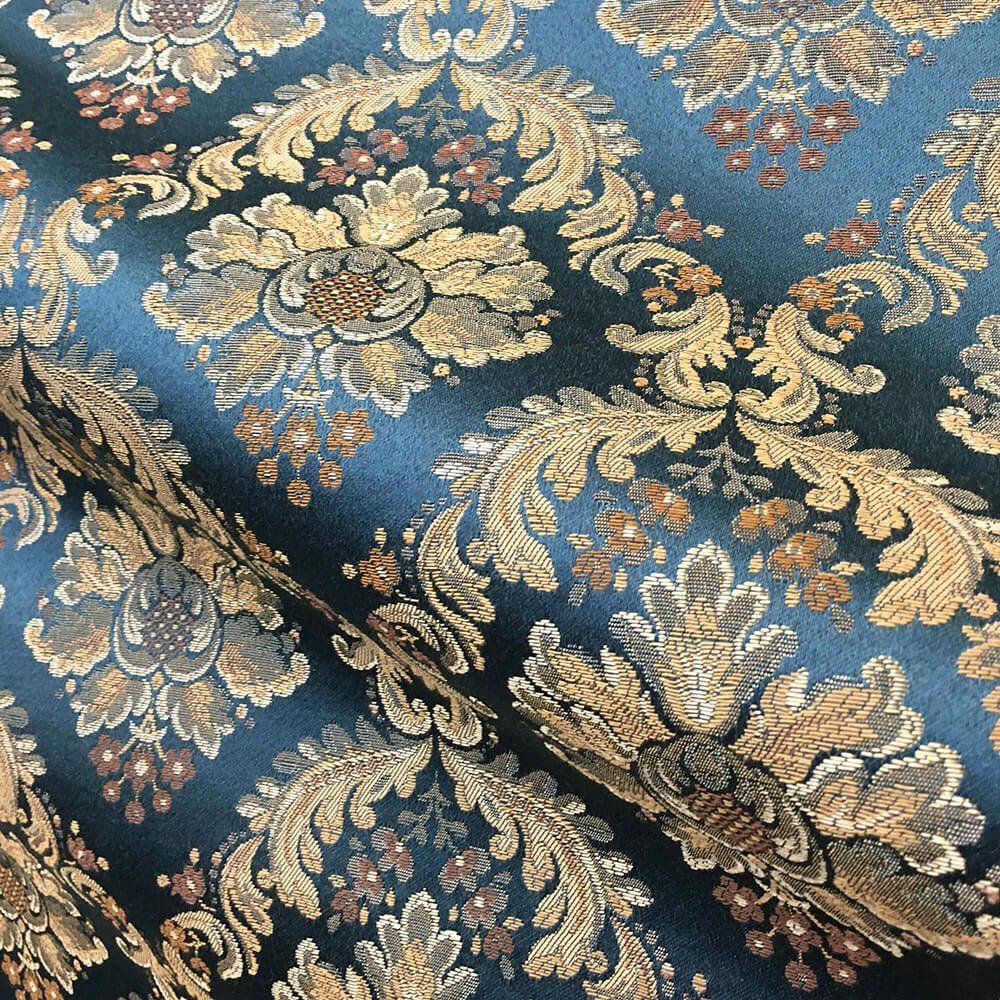
Brocatelle Brocatelle is a related fabric with a raised pattern created by a linen or cotton binding weft that pushes the pattern into higher relief than standard brocade, often used in heavy upholstery.
Fabric Selection Recommendations
Selecting the right brocade type depends on matching fiber, weight, and pattern complexity to the intended end use.
End-Use Requirements Bridal wear, formal jackets, and structured ceremonial garments generally justify silk or high-quality synthetic brocade for their drape and visual depth. Home décor and upholstery applications typically call for heavier cotton or polyester brocade constructions designed to withstand wear. Costume and single-season fashion pieces are often well served by lower-cost polyester brocade.
Fabric Performance Brocade with metallic-thread content should be evaluated for the durability of the metallic surface, since low-cost metallic threads can tarnish or shed metallic coating over time. Buyers should request textile quality test data or samples that have been subjected to abrasion and cleaning cycles before finalizing bulk orders.
Comfort Requirements Brocade is generally not chosen for skin-contact comfort, since its raised weft floats and metallic threads can feel stiff or scratchy. Garments in direct contact with the skin often include a lining, and buyers should factor lining fabric into cost and construction planning.
Durability Expectations Supplementary weft yarns on the reverse of brocade can catch, snag, or wear over time, particularly in high-friction garment areas. Upholstery-grade brocade uses tighter weaves and heavier ground yarns to reduce this risk. Apparel-grade brocade may benefit from lining not only for comfort but for structural protection of the reverse floats.
Washing Requirements Most brocade is dry-clean only, particularly silk brocade and metallic-thread brocade. Polyester brocade may tolerate delicate machine washing, but buyers should verify care requirements before making retail claims.
Budget Considerations Where budget is constrained, polyester brocade in high-quality construction is often visually indistinguishable from silk brocade at typical retail viewing distance, and represents the most cost-efficient way to achieve the brocade aesthetic. Buyers making silk claims for retail should verify silk content through testing.
Procurement Considerations
Buyers using a structured fabric sourcing process should evaluate the following factors to reduce risk of quality inconsistency or misrepresentation.
MOQ Requirements Standard commercial polyester or cotton brocade in in-stock patterns typically carries lower MOQs than custom-woven or heritage silk brocade. Custom pattern development can carry substantial minimums due to jacquard loom setup and card programming costs.
Lead Time Expectations In-stock brocade patterns can ship relatively quickly. Custom pattern development follows the broader fabric manufacturing process and involves loom programming, sampling, and approval cycles, which extend lead time significantly compared to standard production.
Quality Control Procedures Pre-shipment inspection should verify fiber content, pattern accuracy against the approved sample, weight, and the quality of supplementary weft integration (no loose or frayed floats, no visible weft skips within pattern areas).
Fabric Testing Requirements Common tests for brocade include fiber content verification (particularly for silk claims), colorfastness across the multiple colors typically used in a brocade pattern, and abrasion resistance for upholstery applications.
Color Consistency Management Because brocade patterns typically involve multiple colors, dye-lot consistency across colors is more complex to manage than for solid fabrics. Buyers should require lab dip approval on each dominant color plus a bulk-approval sample of the finished woven fabric.
Packaging Requirements Brocade should be rolled, never folded, to prevent permanent crease marks in the raised pattern areas. Silk brocade requires additional moisture protection during transit.
Shipping Considerations Because brocade tends to be a lower-volume, higher-value fabric, air freight is often used for smaller premium orders while sea freight is standard for larger commercial polyester brocade orders.
Supplier Evaluation Factors Buyers learning how to choose a fabric supplier should evaluate a brocade supplier’s jacquard loom capability, pattern programming experience, willingness to provide fiber content testing, and track record with the specific fiber tier being purchased (heritage silk brocade suppliers and commercial polyester brocade suppliers are typically different businesses).
Precautions When Buying Brocade Fabric
Verify Actual Fiber Content “Silk brocade” is frequently used to describe synthetic brocade with a silk-like sheen. Buyers specifying real silk should require fiber content testing rather than accepting a marketing description; the same due diligence applies when reviewing textile certifications.
Confirm Whether Metallic Threads Are Real Metallic or Metallic-Film Traditional brocade uses real metallic threads (gold, silver, or metal-wrapped yarn), while most commercial brocade today uses metallic film or polyester with metallic coating. The visual and long-term wear characteristics differ; buyers should clarify which is being supplied.
Watch for Origin Overclaims Terms like “Chinese brocade,” “Banarasi,” or “Nishijin” carry heritage weight that suppliers sometimes apply loosely to commercially machine-woven fabric with visual similarity but no actual heritage lineage. Buyers making retail heritage claims should require verifiable origin documentation.
Confirm Pattern Repeat and Cutting Requirements Brocade patterns can have large repeats (sometimes 30–60 cm or more), which affects yardage calculations for garment cutting and can meaningfully affect total fabric cost. Buyers should confirm pattern repeat dimensions before finalizing yardage estimates or a bulk fabric purchase.
Check the Reverse Side of the Fabric The reverse of authentic brocade shows the supplementary weft floats. A “brocade” fabric with a clean, plain reverse side may be a printed or embroidered lookalike rather than actual supplementary-weft brocade, at a very different price point.
Verify Colorfastness on Multi-Color Patterns Colorfastness testing should cover each dominant color in the pattern, since one weak color can bleed onto adjacent yarns during washing or dry cleaning and damage the entire fabric aesthetically.
Frequently Asked Questions
What is the difference between brocade and jacquard? Brocade is a specific type of jacquard-woven fabric that uses supplementary weft yarns to create a raised, embossed pattern effect. All brocade is jacquard-woven, but not all jacquard fabric is brocade — flat-patterned jacquard fabric without supplementary weft is not brocade.
Is brocade always made from silk? No. Historically brocade was primarily silk, but today brocade is produced in silk, cotton, polyester, and blended fibers, with polyester and synthetic brocade dominating commercial-volume production.
How can I tell real brocade from a printed lookalike? Real brocade shows a raised, dimensional pattern on the face and supplementary weft floats on the reverse. Printed lookalikes have flat, printed patterns and clean reverse sides. Feeling the raised pattern with fingertips and inspecting the reverse are the two simplest verification methods.
Is brocade fabric expensive? Brocade price varies enormously by fiber, origin, and construction. Polyester brocade can be very affordable, while silk metallic-thread brocade and heritage-origin brocade can carry significant price premiums.
Can brocade fabric be machine washed? Most brocade is dry-clean only, particularly silk and metallic-thread brocade. Some polyester brocade tolerates delicate machine washing; buyers should verify care requirements with the supplier before making retail claims.
What is brocade fabric commonly used for? Common uses include bridal wear, formal jackets, evening wear, ecclesiastical vestments, ceremonial garments, decorative pillows and cushions, drapery, and upholstery for formal interiors.
Which region in China is best for sourcing brocade fabric? Commercial polyester and synthetic brocade production is concentrated in Zhejiang, particularly around Shaoxing. Traditional silk brocade production is associated with Nanjing (yunjin), Suzhou (songjin), and Sichuan (shujin), though most commercial “Chinese brocade” in international markets today is machine-woven synthetic brocade rather than traditional heritage variants.
Key Takeaways
- Brocade is a jacquard-woven fabric distinguished specifically by the use of supplementary weft yarns that create a raised, embossed pattern effect on the face of the fabric.
- Brocade spans a very wide price range, from commercial polyester brocade to heritage silk-and-metallic-thread brocade with legally or culturally protected origin status.
- The reverse side of the fabric is the easiest way to distinguish authentic brocade (supplementary weft floats visible) from printed or embroidered lookalikes (clean reverse).
- Fiber content, metallic thread type, and origin claims are the three most common areas of supplier over-claiming in brocade sourcing and should be verified through testing and documentation.
- Pattern repeat size, dye-lot consistency across multiple colors, and reverse-side construction quality are brocade-specific procurement factors that do not apply to most other fabric categories.
Conclusion
Brocade is one of the few fabric categories where construction, fiber, and origin all meaningfully affect what a buyer is actually purchasing, which makes clear specification and supplier verification particularly important in bulk sourcing. For related context on jacquard-woven fabric more broadly, buyers can review guides on what is jacquard fabric, textile fabric design, and the jacquard fabric product page. Manufacturers such as SJZ Fabric are commonly referenced by apparel brands sourcing brocade where pattern accuracy, fiber content verification, and supplementary weft construction quality all need to hold up across a full production run. A clear grasp of what makes brocade genuinely brocade ultimately supports more accurate quotation review and more defensible retail positioning.